
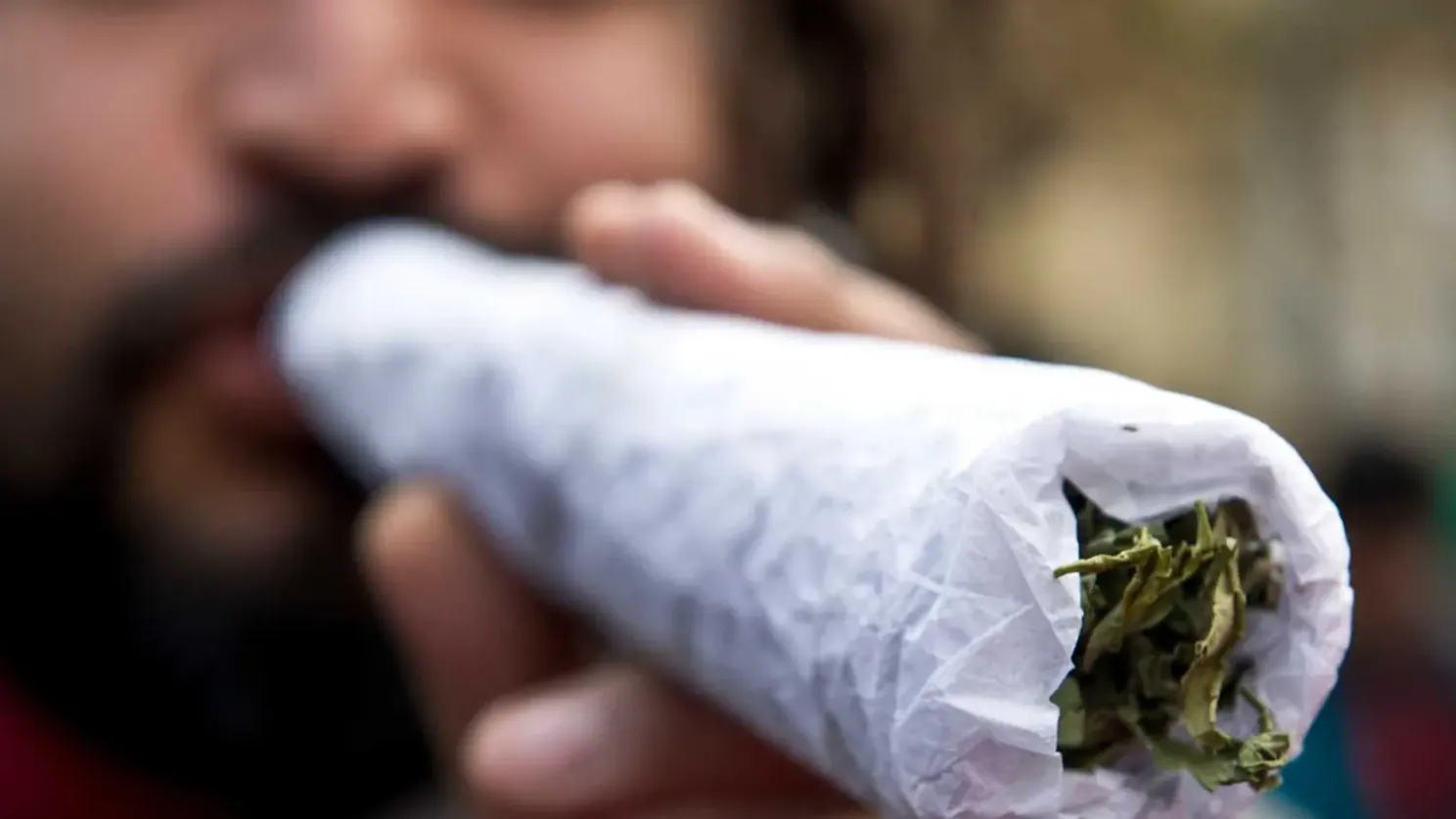
People often hear two opposing claims about cannabis. One says that overdosing is impossible. The other suggests that a strong THC product poses the same kind of overdose risk as opioids or other potent drugs.
Both claims overlook an important distinction: THC can cause acute poisoning, but its mechanism of action and typical dangers differ from an opioid overdose.
It is possible to take more THC than a person can tolerate. This can cause acute cannabis poisoning: an intense, unpleasant reaction involving anxiety, panic, confusion, a racing heart, nausea or even hallucinations.
THC poisoning differs from opioid overdose, but can still be serious. Slowed breathing, unconsciousness and the need for intensive care have been reported, particularly in children. Breathing difficulties after cannabis use must therefore never be dismissed as harmless intoxication.
The most accurate answer is yes: someone can take too much cannabis and develop acute poisoning. However, a typical THC overdose differs substantially from a life-threatening heroin or fentanyl overdose.
What does ‘overdose’ mean with cannabis?
The word often brings to mind someone who has stopped breathing and needs immediate resuscitation. That is not the only medical meaning of overdose.
More broadly, an overdose means taking more of a substance than the body can tolerate. With THC, more specific descriptions often include:
- excessive use;
- acute THC poisoning;
- cannabis poisoning;
- a severe adverse reaction.
Someone can feel extremely unwell without necessarily being in immediate danger of death.
Can a THC overdose be fatal?
Fatal cannabis poisoning is rare, but saying it can never be life-threatening is misleading. Health Canada warns that poisoning in children can threaten life and require mechanical ventilation.
This is an important distinction when comparing cannabis with other psychoactive substances.
At high doses, opioids can suppress the brain’s breathing control so severely that breathing stops. THC does not usually act in this way. Nevertheless, a situation involving THC can become serious. Cannabis intoxication can contribute to:
- road crashes;
- falls;
- severe disorientation;
- panic reactions;
- psychosis-like symptoms;
- repeated vomiting;
- problems involving other substances taken at the same time.
It is therefore useful to distinguish THC’s direct toxicity from the indirect risks associated with intoxication.
Why does cannabis have such a different risk profile from opioids?
THC and opioids act through different receptor systems in the body.
Opioids can strongly affect mechanisms in the brainstem that control breathing.
Too much of an opioid can therefore dangerously slow or stop breathing. THC’s main intoxicating effects primarily involve CB1 receptors in the endocannabinoid system. A severe THC reaction consequently tends to look different. More common effects include:

- anxiety;
- confusion;
- paranoia;
- a racing heart;
- impaired coordination;
- nausea;
- intense intoxication.
This difference is one reason that assessing cannabis harm requires more than treating every prohibited or intoxicating substance as equally dangerous medically.
What are the symptoms of too much THC?
THC’s effects vary greatly with the person and the amount taken.
An excessively strong reaction can involve:
- severe anxiety;
- panic;
- paranoia;
- a racing heart;
- dizziness;
- impaired coordination;
- confusion;
- a markedly altered sense of time;
- nausea;
- vomiting;
- extreme drowsiness.
More severe reactions can also involve:
- hallucinations;
- delusions;
- severe disorientation;
- temporary disturbances in the perception of reality.
These symptoms can be frightening even when the poisoning is not life-threatening.
Why do some people panic?
THC can intensify both positive and negative psychological responses.
For some people, excessively strong effects take the form of panic.
They may feel:
- that their heart is beating too fast;
- that they cannot control their thoughts;
- that something terrible is about to happen;
- that time is passing unusually slowly;
- that their surroundings are unreal;
- that the intoxication will never end.
This can lead someone to seek emergency care, even if observation and the effects wearing off reveal no lasting injury.
An extremely unpleasant experience and immediately life-threatening poisoning are therefore different situations.
Can THC cause psychosis-like symptoms?
Yes. Particularly with a large amount of THC, some people can experience:
- severe paranoia;
- hallucinations;
- delusions;
- disorientation;
- a disturbed perception of reality.
Symptoms associated with acute intoxication often subside as THC’s effects diminish. However, people predisposed to psychotic disorders may face a higher risk.
It is therefore inaccurate to claim that THC can never cause serious psychological adverse effects.
Why do edibles cause more problems?
A common reason for unintentionally taking too much THC is the delayed effect of edibles. Inhaled THC takes effect relatively quickly.
Edible THC can take considerably longer. Problems arise when someone assumes a product was weak or ineffective and takes more before the full effect appears. When both amounts eventually take effect, the experience can be much stronger than expected. Edible THC can also last much longer.
Read more about these differences in our cannabis gummies guide.
Unregulated products add another problem
On an illegal or unverified market, consumers may not know how much THC a product actually contains.
The number on the packaging may be:
- inaccurate;
- unverified;
- incorrectly labelled;
- entirely invented.
THC may also be distributed unevenly in homemade products, making their effects less predictable. Laboratory testing, standardised labels and known THC content do not make cannabis risk-free, but provide more information than a product of unknown origin.
What changes under a regulated cannabis market?
This matters in debates about legalisation and regulation. Legalisation does not eliminate THC poisoning.
A regulated system can, however, impose requirements that are largely absent from illegal markets. Governments can require:
- laboratory testing of THC and CBD content;
- active ingredients listed on the packaging;
- child-resistant packaging;
- health warnings;
- production standards;
- testing for contaminants;
- limits on THC in edible products.
In Canada, for example, legal cannabis products must state their THC and CBD content and generally use child-resistant packaging. Edibles also have a maximum THC content per package. These measures aim to reduce accidental poisoning and make product effects more predictable.
Experience in jurisdictions that have legalised cannabis nevertheless shows that regulation does not prevent every poisoning. Accidental exposure in children remains a particular concern.
Why are children much more sensitive to THC?
Young children weigh far less than adults. An amount that strongly intoxicates an adult can therefore represent a very large dose per kilogram for a child. Products resembling ordinary foods are particularly concerning, including:
- gummies;
- chocolate;
- cookies;
- other familiar sweets.
Children cannot reliably tell the difference. They may develop severe drowsiness, confusion, impaired coordination or slowed breathing. If you suspect a child has consumed THC in Estonia, immediately call the Poison Information Centre on 16662. For unconsciousness or difficulty breathing, call 112.
Child-resistant packaging and secure storage are therefore practical areas where regulation can reduce risk.
Can cannabis itself cause vomiting?
Yes. Taking too much THC on one occasion can cause nausea and vomiting. Cannabinoid hyperemesis syndrome, or CHS, is a separate condition that can develop in some people after long-term, frequent cannabis use. It involves recurrent episodes of:
- severe nausea;
- vomiting;
- abdominal pain.
This differs from an unusually strong reaction to THC on a single occasion.
Do cannabis-related emergency visits mean cannabis is highly toxic?
Not necessarily.
An emergency visit shows that someone needed or sought medical help.
Possible reasons include:
- a severe panic attack;
- a product of unknown origin;
- too much edible THC;
- an injury while intoxicated;
- severe vomiting;
- a child’s accidental exposure;
- using cannabis alongside other substances.
These cases cannot all be treated as the same kind of toxic overdose.
Healthcare data still matter: they help identify gaps in prevention and regulation.
Combining cannabis and alcohol
Using cannabis and alcohol together can intensify intoxication. It may increase:
- dizziness;
- balance problems;
- nausea;
- slower reactions;
- impaired judgement.
When someone has taken several substances, a severe reaction cannot always be attributed solely to THC. This also calls for care when interpreting hospital statistics: cannabis being involved does not necessarily mean cannabis alone caused severe poisoning.
Cannabis and synthetic cannabinoids are different
This distinction matters. Products known as Spice, K2 and other synthetic cannabinoids are not simply stronger cannabis strains.
These laboratory-made compounds can affect cannabinoid receptors much more powerfully and unpredictably than THC. They have been associated with:
- seizures;
- severe psychosis;
- heart problems;
- kidney damage;
- unconsciousness;
- deaths.
Their toxicity should not be used to describe ordinary cannabis, or vice versa. Our THC, HHC and THCP guide also compares THC with other intoxicating cannabinoids.
Is there an antidote for cannabis poisoning?
There is no specific antidote for THC comparable to naloxone for opioids. Care generally involves monitoring and managing symptoms until the effects pass.
Hospital staff may monitor:
- pulse;
- blood pressure;
- consciousness;
- fluid balance;
- breathing.
The absence of a specific antidote does not mean that every situation should simply be waited out at home.
When should someone seek medical help?
Strong cannabis intoxication can be alarming, but not every uncomfortable symptom is an emergency.
Seek urgent medical help when someone:
- has difficulty breathing;
- has severely impaired consciousness;
- cannot be woken normally;
- has a seizure;
- has severe chest pain;
- has uncontrollable vomiting and a deteriorating general condition;
- behaves in ways that endanger themselves or others;
- has taken an unknown substance.
For a life-threatening situation in Estonia, call 112.
Poison information line: 16662
If the situation is not immediately life-threatening but poisoning is suspected or you are unsure what to do, call Estonia’s Poison Information Centre on 16662.
The line is staffed by healthcare professionals trained in poisoning.
You can call even when you are unsure whether hospital care is needed.
Is there a definite ‘lethal dose’ of THC?
There is no simple, universal THC amount established as a lethal dose for humans.
THC’s effects vary substantially between people.
Factors include:
- tolerance;
- age;
- body weight;
- health;
- route of administration;
- the product’s THC concentration;
- other substances taken at the same time.
It is therefore unhelpful to look for a single number below which THC is completely safe for everyone and above which an overdose occurs.
Does stronger cannabis mean greater risk?
A higher THC concentration generally means that a smaller amount of product delivers more THC.
This can increase the likelihood of:
- very intense intoxication;
- anxiety;
- panic;
- paranoia;
- psychosis-like symptoms.
This is one reason accurate THC labelling matters. Unknown potency makes effects harder to predict.
Does that make cannabis safe?
There is no reason to replace one extreme claim with another. THC’s relatively low direct fatal toxicity compared with opioids does not make cannabis entirely risk-free.
Cannabis risks depend substantially on:
- the user’s age;
- THC content;
- frequency of use;
- mental health history;
- method of use;
- other substances used at the same time.
Those risks should be discussed proportionately. They should neither be minimised nor treated as identical to those of substances where a small overdose can directly stop breathing.
What does this mean for cannabis policy?
Poisoning risk alone does not provide a simple answer to Estonia’s cannabis policy. Supporters of legalisation argue that a regulated market can control THC content, production quality, packaging and labelling in ways an illegal market cannot.
Critics point out that greater legal availability may increase some measures of use and accidental poisoning, and regulation must account for those risks. International experience suggests the question involves more than labelling cannabis ‘safe’ or ‘dangerous’.
The system in which it is produced, sold, labelled and used also matters. Read more about Estonia’s current framework in our guide to cannabis legality.
FAQ
Can you overdose on cannabis?
Yes, if overdose means acute poisoning or a severe adverse reaction caused by more THC than the body can tolerate.
Is cannabis overdose the same as opioid overdose?
No.
At high doses, opioids can stop breathing. Typical THC poisoning works differently, and fatal overdose from cannabis alone is very unlikely.
Can too much THC lead to hospital care?
Yes. Severe confusion, panic, psychosis-like reactions, vomiting or other serious symptoms may require medical care.
Can cannabis cause death?
Fatal overdose from the direct toxicity of cannabis alone is considered extremely unlikely. However, intoxication can contribute to accidents, injuries and other health risks, and serious poisoning can be life-threatening, particularly in children.
Is it easier to take too much THC with edibles?
Yes. Their effects take longer to appear and can last longer, making unintended excessive consumption more likely.
Does legal cannabis eliminate poisoning?
No. Regulation can require THC limits, packaging, labelling and quality control, but cannot remove every risk.
Are synthetic cannabinoids the same as cannabis?
No. Synthetic cannabinoids can act much more strongly and unpredictably than ordinary THC, and their health risks differ.
Who should you call about poisoning in Estonia?
In Estonia, call the Poison Information Centre on 16662. For a life-threatening situation, call 112.
Conclusion
Saying cannabis overdose is impossible is inaccurate. Too much THC can cause acute poisoning, with severe anxiety, confusion, paranoia, a racing heart, vomiting or psychosis-like symptoms.
It is also inaccurate to present THC as having the same overdose risk as opioids. THC does not usually suppress breathing in the same way, and fatal overdose from cannabis alone is considered very unlikely. Severe poisoning can nevertheless threaten life, particularly in children.
Much of the practical risk involves product potency, unknown composition, delayed effects of edibles, accidental exposure in children and combining substances. This also makes the way cannabis is regulated relevant.
Verified THC content, laboratory testing, clear labels and child-resistant packaging cannot make cannabis risk-free. They can, however, make composition and effects more predictable than on an unverified market. Cannabis risks can be discussed honestly without minimising or exaggerating them.
Sources
- CDC: cannabis poisoning and the risks of edibles
- Health Canada: cannabis poisoning in children, symptoms and help
- MedlinePlus: cannabis intoxication, treatment and warning signs
- Health Canada: cannabis packaging and labelling requirements
- Estonian Poison Information Centre: 16662
- Estonian Health Board: life-threatening conditions and first aid