
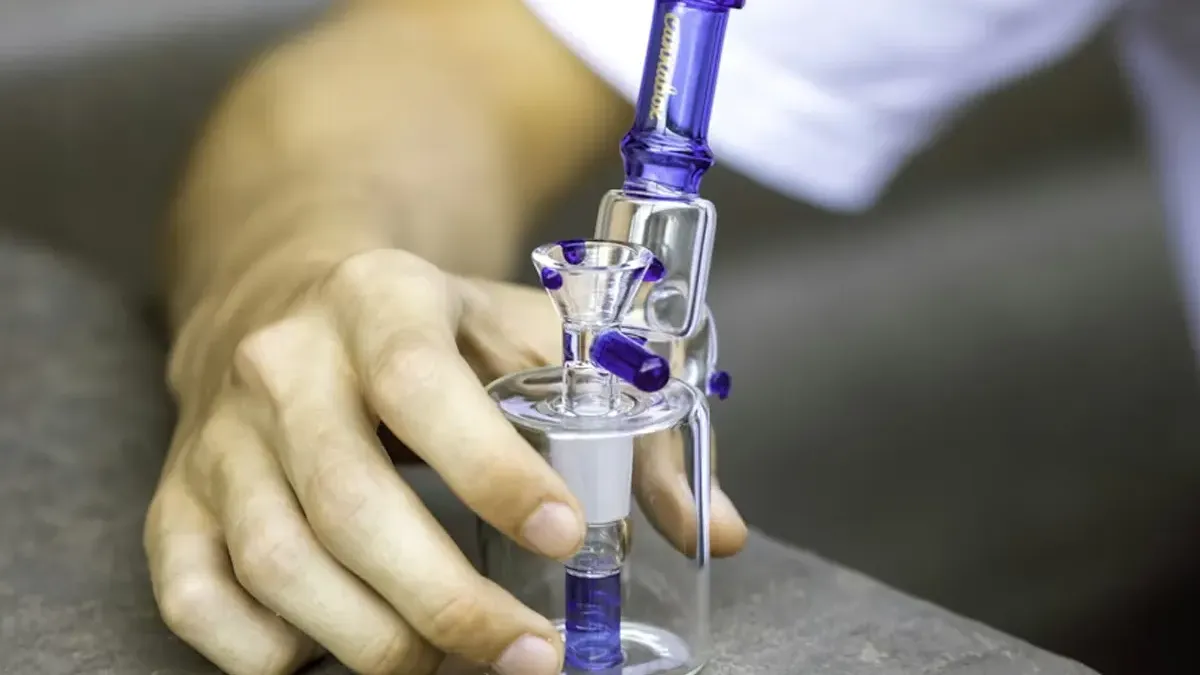
A bong is a water-chamber smoking device familiar in cannabis culture. Cooling smoke with water does not make inhalation safe. Although the basic arrangement can look similar across models, construction, dimensions and maintenance requirements vary substantially.
What do 14.5 mm and 18.8 mm joints mean? How do beaker and straight-tube designs differ? Does a percolator improve a bong? Why might a simple glass model be more practical than a complex, much more expensive one?
This guide explains materials, construction, standard dimensions, accessories and maintenance, including what passing smoke through water actually means.
What is a bong and how does it work?
A bong directs smoke through a water chamber before inhalation.
A typical design includes a water chamber, air path, bowl, often a removable downstem, and a mouthpiece. Percolators, ice catchers and other parts may be added.
Bubbling creates heat transfer. Water can also trap some particles and water-soluble compounds, but it does not make smoking safe. Many harmful combustion products remain.
Assess technical features, materials, cleaning and convenience rather than promises that a particular design makes smoking healthy.
Glass, silicone, acrylic or ceramic?
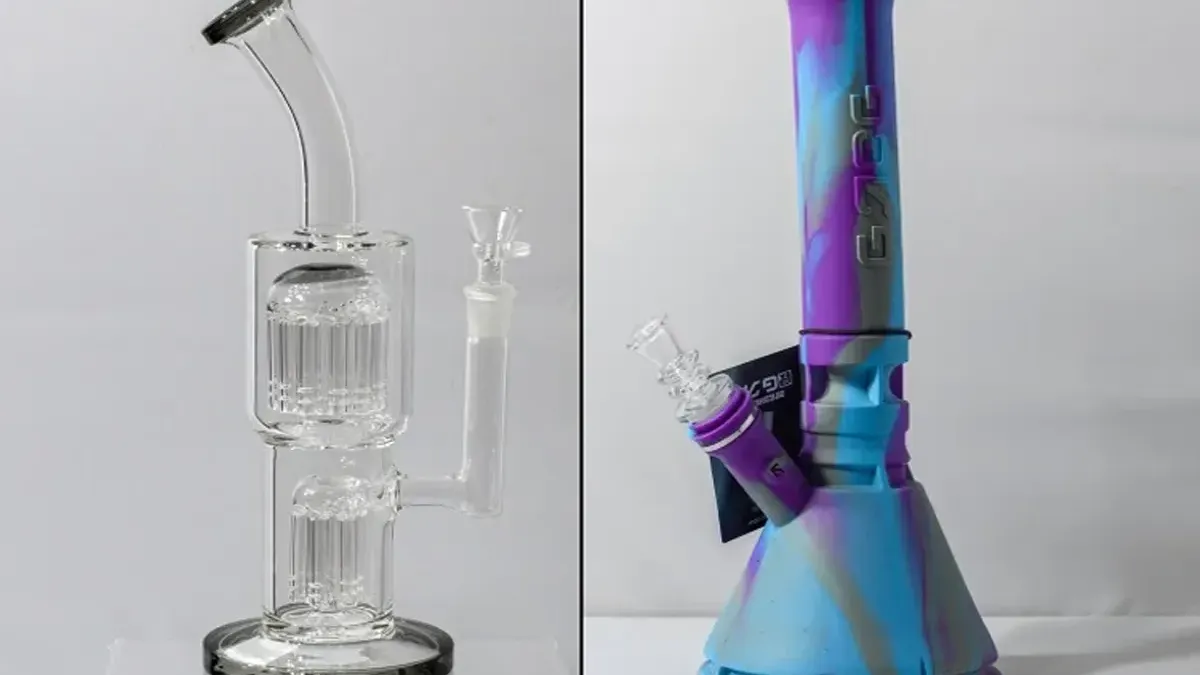
Material is a major distinction, with advantages and drawbacks for each.
Glass: traditional and versatile
Glass is among the most common materials.
Borosilicate generally tolerates temperature changes better than ordinary soda-lime glass and is also used for laboratory and kitchen equipment.
Glass offers chemical stability and a smooth surface. Transparent models make water levels, deposits and internal parts easy to inspect, while allowing many chamber, tube and percolator shapes.
It is still fragile. Thick glass can break when dropped, particularly at projecting joints or thinner connections. Base stability, joint quality and balance matter alongside thickness.
Silicone: flexible and resilient
Silicone’s main advantage is flexibility. A suitable heat-resistant silicone body generally tolerates drops better than glass, and some models dismantle or fold.
That does not make every silicone bong unbreakable. Many retain glass or metal parts. Check material quality and manufacturer limits: silicone must suit its intended conditions and should not be overheated.
Cleaning requirements differ too. Some strong solvents are incompatible with certain silicone materials.
Acrylic: lightweight and simple
Acrylic models are often lightweight and simple.
They are less prone to shattering than glass and can be produced inexpensively in different colours.
Drawbacks include scratching and limited chemical and heat resistance. Surfaces can become dull, and cleaners suitable for glass may damage acrylic.
Ceramic: distinctive designs
Ceramic models often emphasise decorative shapes, glazes and colours. Properly made ceramic with suitable glaze can be durable, but remains breakable when dropped.
Opacity makes the internal chamber harder to inspect. Cleaning depends on shape and access to internal surfaces.
What size should you choose?
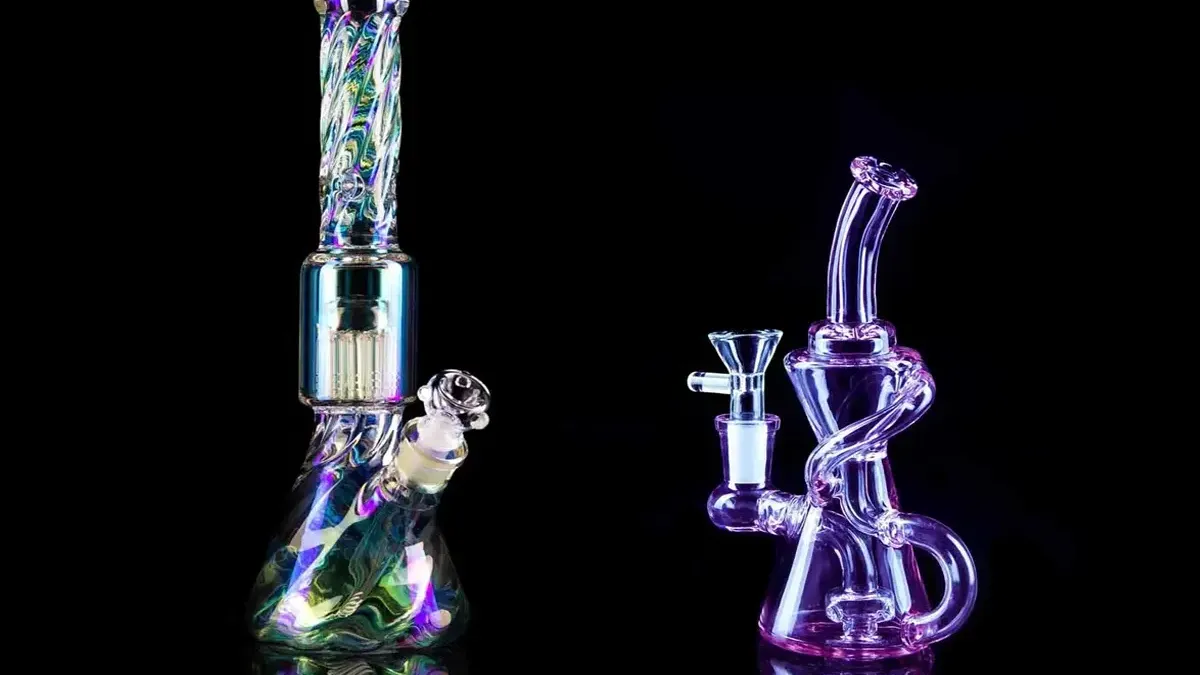
Heights range from under 10 cm to over half a metre. Dimensions influence stability, internal volume and cleaning, but do not alone determine quality.
Small bongs: approximately 10–20 cm
Small models save space and generally have smaller, simpler chambers. Narrow openings can nevertheless make cleaning difficult.
Check base stability particularly carefully: a lightweight model can tip with an accidental movement.
Medium bongs: approximately 20–35 cm
Medium models often provide more room for chambers and removable parts. Beaker and straight-tube designs are common, but base shape, neck diameter and internal layout determine practicality.
Large bongs: approximately 35 cm and above
Large models allow longer air paths and multiple chambers, but need more storage space and can be harder to clean.
Centre of gravity matters: tall, narrow models can be less stable than lower, wider ones. Larger size does not automatically mean better quality or lower health risks. See ‘Large vs Small Bongs: Which Should You Choose?’ for more.
Beaker or straight tube: what differs?
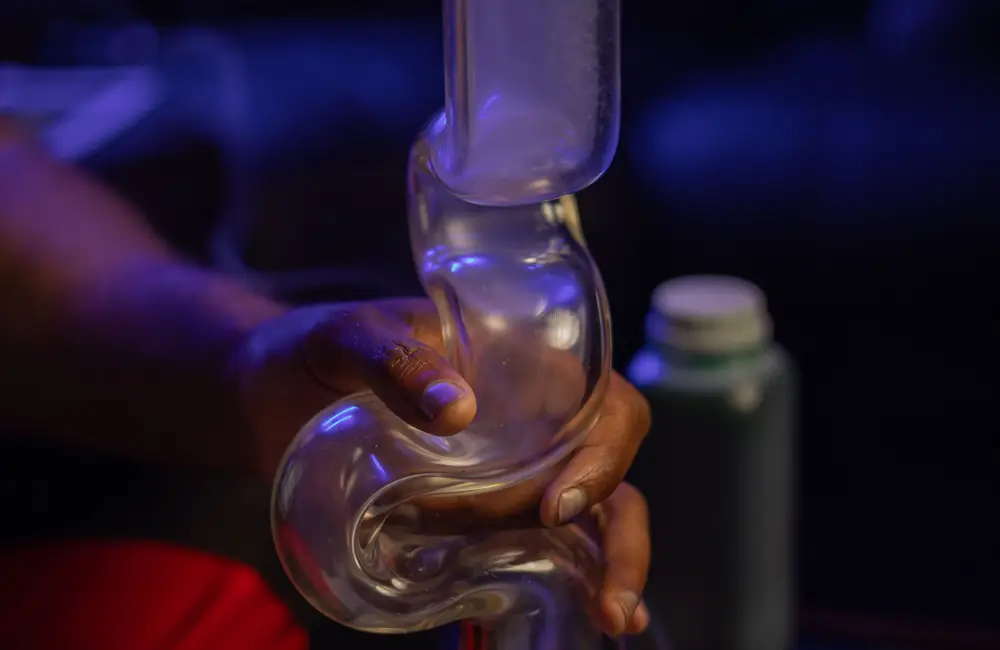
These are two familiar glass-bong shapes.
Beaker bongs
A beaker has a chamber widening towards the base.
Its broader footprint can improve stability, while the lower section can accommodate more water.
Beakers often have a classic appearance and removable downstem. The roomy base may rinse easily, but thorough cleaning still depends on neck width.
Straight-tube bongs
A straight-tube bong has a simple tubular body and often fewer complex internal chambers.
It can be easy to clean, but a narrow base can increase tipping risk. Neither design is automatically better: assess the particular construction.
What do 14.5 mm and 18.8 mm mean?
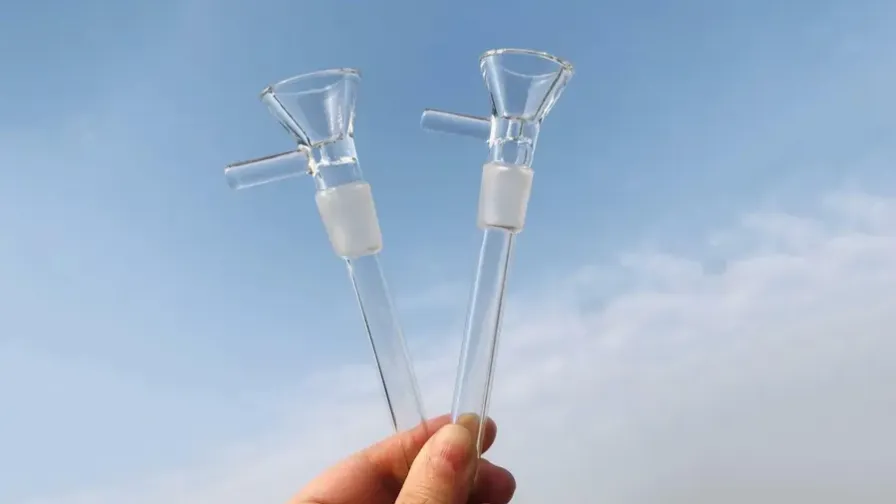
These common ground-glass joint sizes connect bowls, downstems, adapters and other removable parts. Some manufacturers abbreviate them to 14 mm and 18 mm.
14.5 mm joints
14.5 mm is common on smaller and medium glass models, with many compatible bowls, downstems and adapters available.
18.8 mm joints
18.8 mm appears frequently on larger and modular designs. A larger opening can alter airflow, but overall draw resistance depends on the entire air path.
Different connections on one bong may use different sizes: an 18.8 mm body joint may have a downstem accepting a 14.5 mm bowl. Identify the specific connection being measured.
Our guide ‘Bowls, Downstems and Adapters: Choosing the Right Size’ explains these distinctions.
What is a downstem?
The downstem connects the bowl to the water chamber.
In a conventional design, it directs smoke below the water, creating bubbles.
It may be removable or fixed. Removable parts require the right diameter and length: identical joint sizes do not help if one tube is too long or too short.
A diffuser downstem has several small openings dividing airflow into multiple bubble streams. Performance depends on their placement, water level and airflow.
A broken downstem does not necessarily require replacing the whole bong.
The bowl
The bowl is the removable cup holding plant material.
Designs vary in capacity, shape, handles and integrated screens.
Compatibility depends mainly on joint type and size. 14.5 mm and 18.8 mm are common, but other systems exist. Bowls can be fragile, making standard replaceable components useful.
What is a percolator, and does it help?
A percolator, or perc, divides air or smoke into smaller bubbles to increase water contact and affect movement and cooling.
It is not automatically an effective filter for harmful compounds. Removal depends on chemical properties, contact time and system design. Bubble numbers alone cannot establish greater safety.
Tree percolators
Tree percs have multiple arms with small openings near their ends or sides. They can be visually interesting, but thin glass branches can complicate cleaning.
Honeycomb percolators
Honeycomb percs use a disc with numerous holes. These divide airflow into small bubbles but can clog as deposits accumulate.
Inline percolators
Inline percs use a more horizontal tube with openings along the sides or bottom, distributing bubbles through a longer chamber.
Showerhead and matrix percolators
Showerhead percs often use circular or domed opening arrangements. Matrix percs use denser multidirectional structures. Both can be complex, with cleaning dependent on internal access.
Do more percolators mean a better bong?
Not necessarily. Multiple percs add internal connections, passages and glass parts.
They may increase resistance and maintenance complexity. A simple single-chamber design can be more reliable and easier to clean.
Glass thickness and construction quality
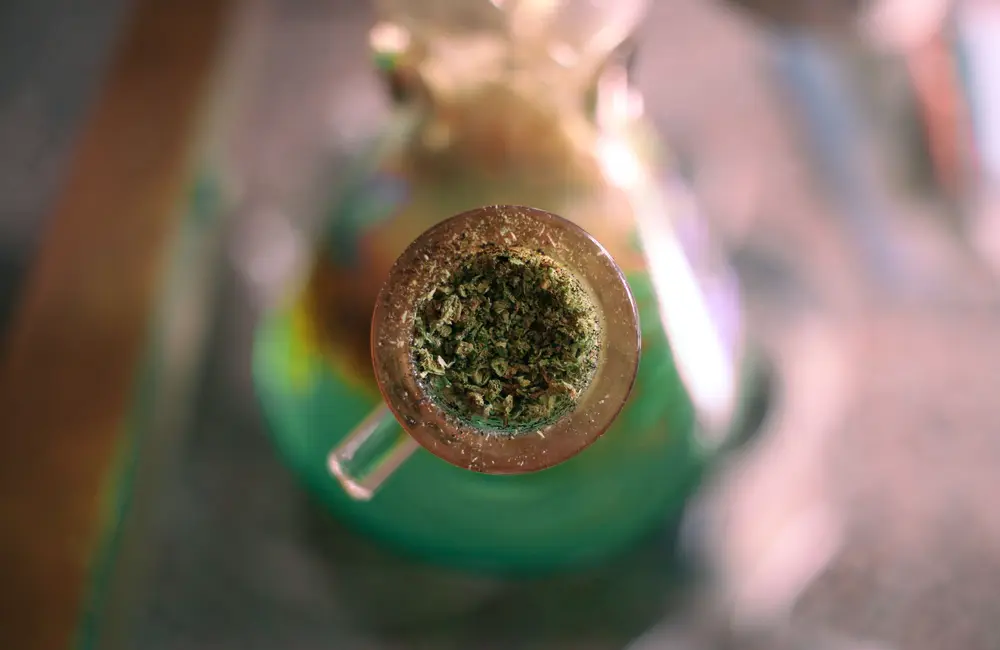
Descriptions commonly specify 3 mm, 5 mm or thicker glass. Thickness can improve resilience in some circumstances, but is not sufficient to judge quality.
Manufacturing quality, connection shapes and internal stresses also matter. A thick body can fail at a weak side joint, while a well-designed thinner piece may hold up in ordinary handling.
Look for a stable base, even joints, a properly finished mouthpiece and well-fitting removable parts.
Is a more expensive bong always better?
No.
Price reflects material, size, production method, complexity, design, brand and production volume.
A simple well-made glass model can be more practical than an expensive multi-percolator design. Handmade artistic pieces may cost more mainly for their design and workmanship.
That does not diminish artistic value, but higher cost does not automatically improve function. Distinguish practical features from visual design.
Ash catchers, ice catchers and other additions
An ash catcher sits between bowl and bong to collect some ash and residue before the main chamber. Some have their own water chamber or perc. An ice catcher holds ice above the water chamber to cool passing smoke.
Cooler smoke may feel less irritating without becoming harmless. Adapters connect different sizes, requiring checks of dimensions, male/female type and sometimes angle.
Every addition changes the system. Heavy glass attachments can alter balance and increase tipping risk.
Cleaning and maintenance

Regular care matters for function and hygiene. Plant particles, combustion residue and contaminants collect in water and on internal surfaces.
Dirty stagnant water can encourage microorganisms. Do not leave used water standing for long periods. Glass is often cleaned with purpose-made products or compatible solvents, but materials need different care.
A cleaner suitable for glass may damage acrylic or some silicone. Follow the particular manufacturer’s instructions.
Remove cleaning residues and allow parts to dry fully before reuse. Complex percs can make cleaning harder because not every surface is reachable.
Simple construction offers a practical advantage here.
Common problems and prevention
A glass joint becomes stuck
Ground-glass joints can stick through resin and dirt. Avoid forceful pulling or metal tools that could break glass.
A downstem does not fit
A correct-diameter downstem can still be the wrong length. Check both measurements and compare with the old part where possible.
The bong becomes unstable
Large adapters and chambers shift the centre of gravity. Reassess stability if additions make the assembly easy to tip.
A percolator is difficult to clean
Small perc openings can accumulate deposits beyond brush reach. Regular care and manufacturer instructions are particularly important.
Is a bong safer than other smoking methods?
Water can cool smoke and alter some constituents, but does not make it safe. Combustion still produces particles, carbon monoxide, irritants and potentially harmful compounds.
A smoother sensation does not reliably indicate a smaller harmful exposure. Cannabis and tobacco may affect airways differently, and research continues.
Our article ‘Cannabis and Tobacco Smoke: Research on Airway Effects’ examines this further. Water does not eliminate combustion-related or cannabinoid-related risks.
What should you know about Estonian law?
Several laws regulate sales and advertising of products intended for tobacco use and related accessories. The Tobacco Act includes age restrictions, while the Advertising Act restricts relevant promotion.
Technical information and sales promotion are legally distinct. Owning a bong also does not legalise every substance used with it.
For the substance’s status, see ‘Cannabis Legality in Estonia: Laws, Rules and Reality in 2026’.
Where can different designs be compared in Estonia?
420Eesti’s directory lists several physical headshops.
A physical shop lets visitors inspect actual dimensions, construction and component compatibility.
Compare the locations and contact details of physical stores in the 420Eesti shop directory.
Frequently asked questions
Is borosilicate stronger than ordinary glass?
Borosilicate generally tolerates temperature changes better, but mechanical strength also depends on thickness and construction. It is not unbreakable.
Is an 18.8 mm joint better than 14.5 mm?
Not automatically. These are different standard sizes; the larger joint does not inherently mean higher quality.
Does a percolator remove harmful compounds?
A perc increases water contact but does not remove every harmful compound or make smoke safe.
Does every bowl fit every bong?
No. Joint size and type determine compatibility; an adapter may be needed.
Is a silicone bong unbreakable?
The silicone body is flexible, but attached glass or rigid parts can still break.
Does a larger bong cool smoke more?
A larger body can provide a longer path and more cooling possibilities, but the result depends on chamber design, airflow and other features.
Should water be changed regularly?
Yes. Dirty stagnant water is unhygienic and can encourage microorganisms.
Does a more complex bong last longer?
Not necessarily. Greater complexity can mean more fragile parts and difficult-to-clean connections.
Summary
Bongs differ in materials, dimensions, internal passages and joint standards.
Glass offers a stable surface and varied designs; silicone offers flexibility; acrylic often offers simplicity; ceramic frequently emphasises decoration.
14.5 mm and 18.8 mm joints determine much replacement-part compatibility. Percolators affect water contact but do not make smoking safe. Construction, stability, standard spare parts and cleaning access are central practical considerations.
More complex or expensive does not necessarily mean better. A simple, well-made, maintainable design is often practical. For community discussion of construction, parts and maintenance, visit 420Eesti on Reddit.