
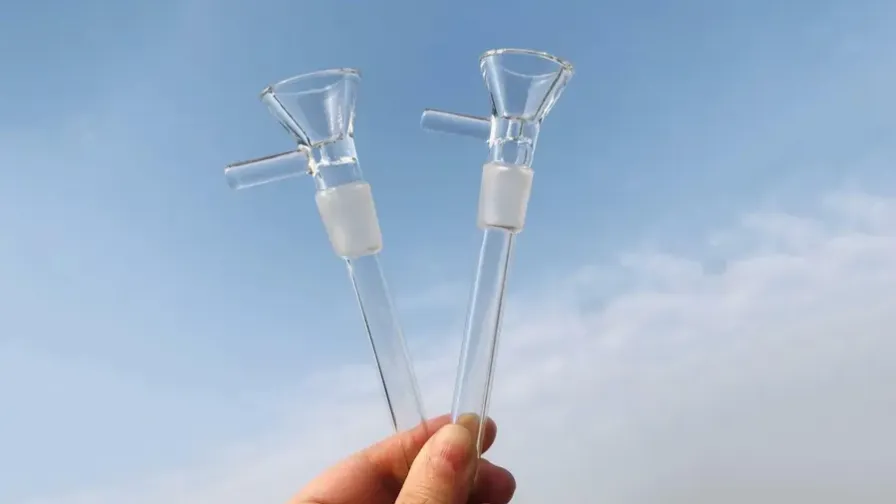
A broken bowl or downstem usually does not mean replacing the entire bong. First check whether the existing part needs replacement or simply maintenance. Finding a suitable replacement requires the joint size and type, plus the length for a downstem. Parts that look similar in photographs can have different dimensions, so check these three things first.
If you are choosing a new bong instead, start with our bong buying guide. Here, we focus on replaceable parts and compatibility.
14.5 or 18.8 mm: which size do you need?
These are two common ground-glass joint sizes. Product descriptions may abbreviate the same nominal sizes to 14 mm or 18 mm. Follow the particular manufacturer’s specifications and check the connection type as well as the diameter. Similar numbers are no reason to force a part into place.
The best starting point is an old part that fits or the bong’s product description. If possible, use callipers to measure the ground joint rather than the bowl’s upper opening or the downstem’s narrower tube. A tapered joint gives different measurements at different points.
The bowl and downstem are often separate parts
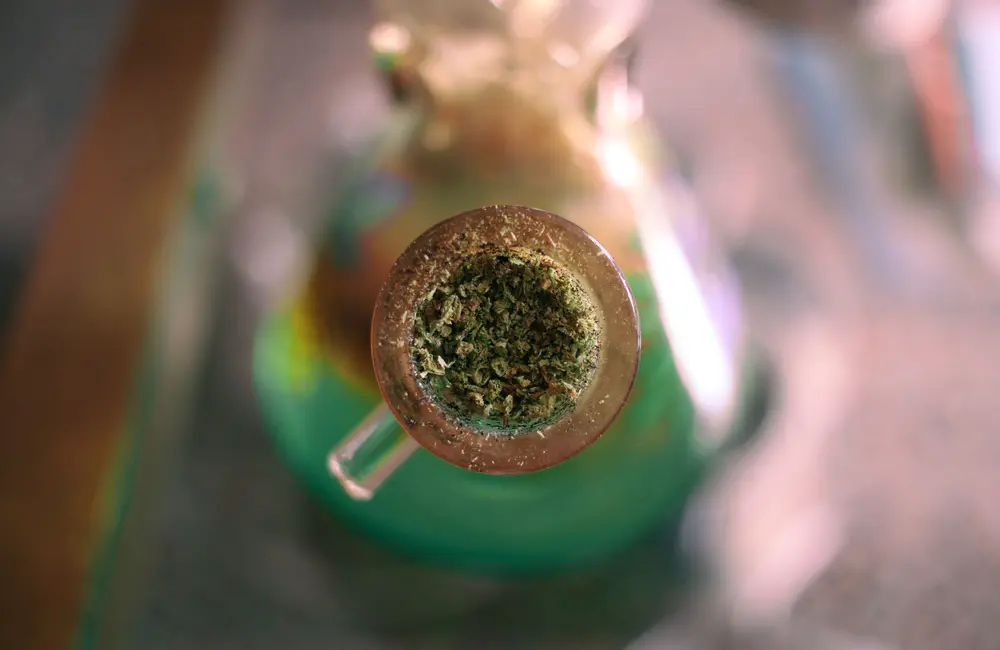
The bowl is the removable cup for plant material. The downstem is the tube extending into the bong’s water chamber. Some models use separate components; others combine them. Check your bong’s design before looking for a replacement.
For a bowl, check the joint first. You can then choose capacity, shape, handle and the opening at the bottom. A large or XL bowl is not automatically better: it simply has more space. The opening’s size affects how easily fine material passes through and how quickly it becomes dirty.
For a downstem, check both connections. An 18.8 → 14.5 mm downstem, for example, may fit an 18.8 mm bong socket while accepting a 14.5 mm bowl. The technical description of ROOR’s reducing downstem provides an example.
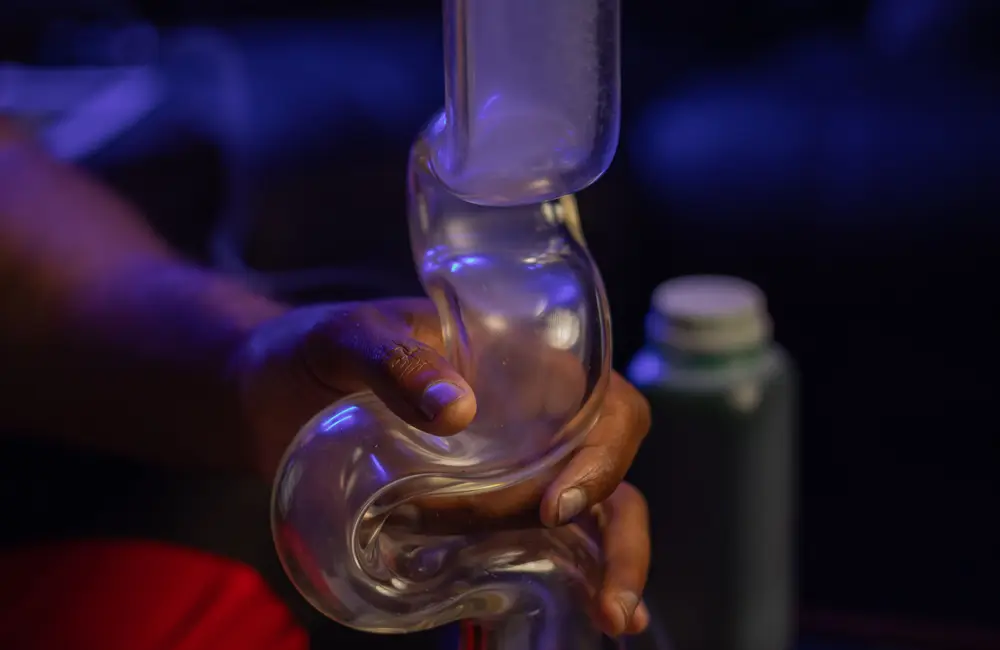
Measure downstem length separately
Downstems with the same joint size can have very different lengths. A tube that is too long can touch the bong’s base or wall; one that is too short may not reach the appropriate water level. An intact old downstem is therefore a useful reference. Be mindful of sharp edges when handling broken glass.
Always check where the seller measures from. Some give the total length; others measure from below the ground joint to the tube’s end. These figures are not interchangeable. Compare old and new parts using the same starting point.
A standard downstem may have one opening at its end. A diffuser downstem instead has several small holes or slits that change how bubbles form. This is a design difference; compatibility still depends on joints and length.
Male and female: which part goes inside which?
A female connection is a socket that accepts another part. A male connection fits into that socket. Two sockets or two male ends of the same diameter do not connect directly. An adapter must therefore match the size and type at both ends.
An 18.8 mm male → 14.5 mm female adapter, for example, fits a suitable 18.8 mm socket and accepts a part with a 14.5 mm male joint. The reverse arrangement requires a different adapter. Check each connection separately rather than relying on the largest printed measurement.
For an ash catcher, check the angle too
An ash catcher sits between the bowl and bong, catching some ash and residue before it reaches the main chamber. Some have a separate water chamber or percolator. Joint size, male/female type, angle and weight all matter.
45° and 90° connections are common, but the bong’s design determines the right option. An incorrect angle or an overly heavy attachment can sit awkwardly or make the bong unstable. Multiple adapters also increase height and strain on the glass joint.
If a part does not fit or becomes stuck
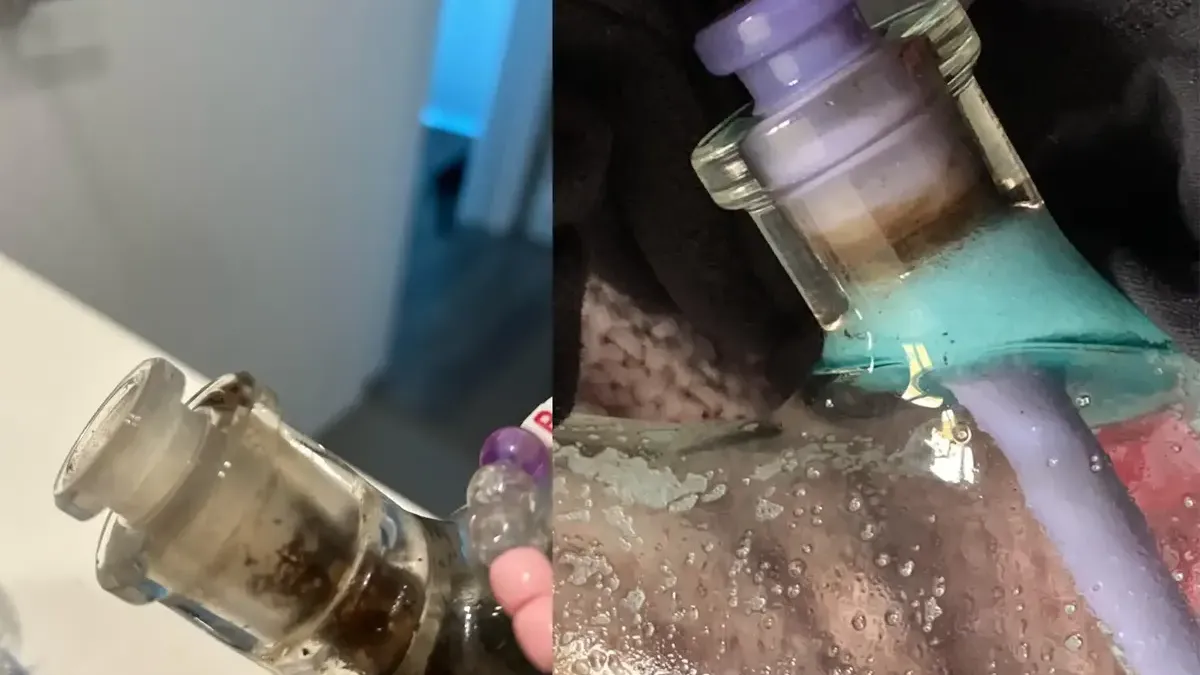
Do not push or lever glass parts with force. Check that the size and joint type match and that the connection is clean and undamaged. Metal pliers and sudden temperature changes can break glass. For a stuck downstem, see our separate removal guide.
Regular maintenance helps reduce resin build-up and stuck joints. Our bong and pipe cleaning article explains how to approach it.
Quick checks before choosing a replacement
- Bowl: joint size and type, followed by a suitable shape and capacity.
- Downstem: the bong-side joint, bowl-side joint and length measured consistently.
- Adapter: the size and male/female type at both ends.
- Ash catcher: also check angle, weight and the stability of the whole assembly.
If product details are insufficient, take a clear photograph of the connection with a measurement or bring an intact old part for comparison. Our headshop and CBD shop directory can help locate physical shops. The manufacturer’s bowl specifications also provide examples of standard sizes.