
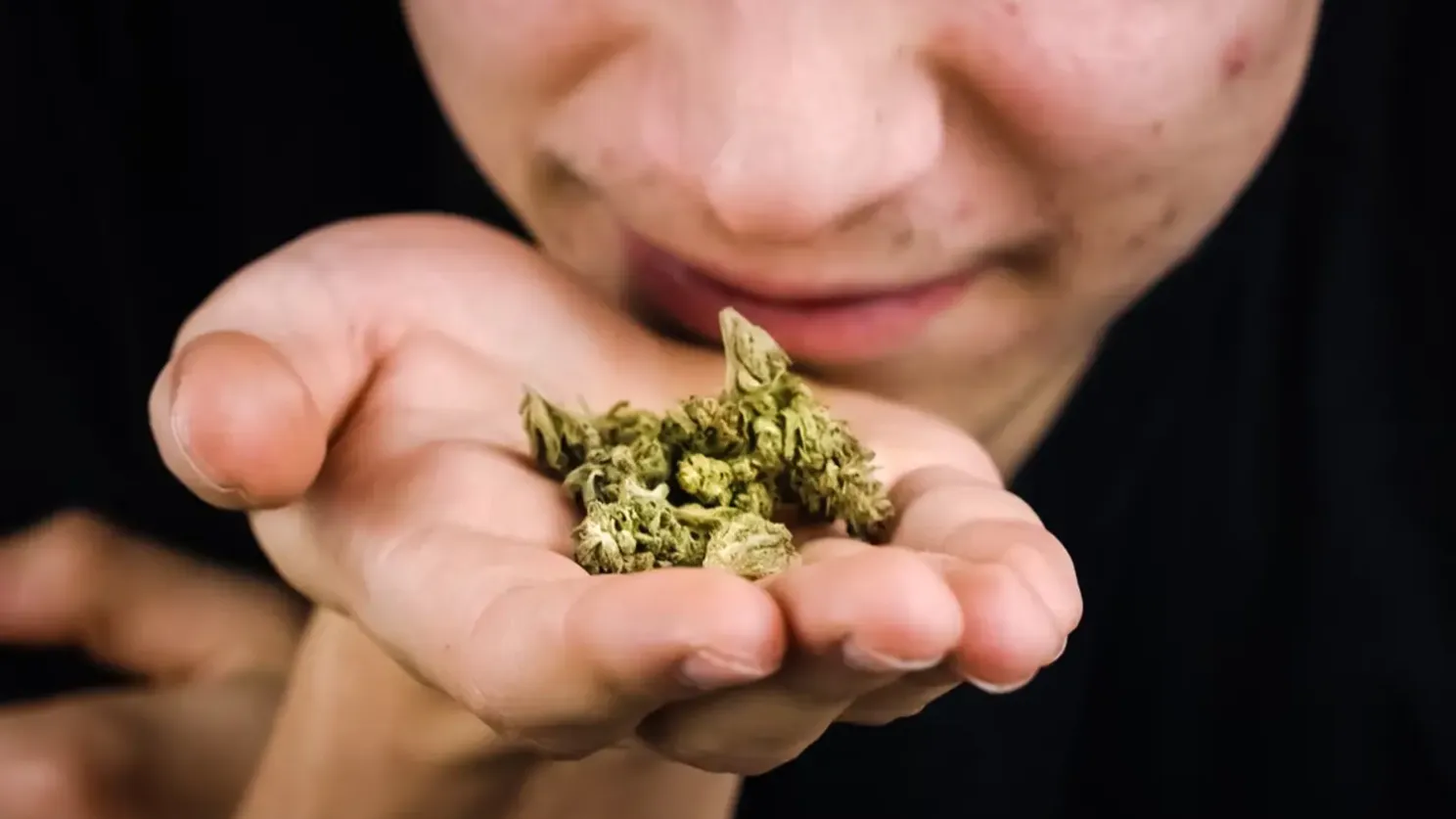
Cannabis has a distinctive smell because of volatile aromatic compounds. That aroma can become a problem when it lingers in clothes, curtains or living spaces much longer than intended.
First distinguish the plant’s own aroma from the smell of smoke. Fresh cannabis releases volatile compounds, including terpenes and sulfur compounds, and containing it in a well-sealed vessel usually reduces further release. Smoke is more persistent because combustion particles and compounds settle on fabrics, furniture and other surfaces.
The right approach depends on which smell you are dealing with.
Remove the source first
It sounds obvious, but this is the most important step. No spray can work miracles while an open grinder, ashtray, unfinished joint or loose cannabis remains in the room.
Seal the cannabis, empty the ashtray and remove other strong-smelling items. Grinders themselves can smell strongly, particularly when resin and flower fragments have accumulated.
Only then does it make sense to freshen the air or fabrics.
Removing cannabis odour from a room: start with ventilation
For a fresh smell, air exchange is the most useful first step. If possible, open windows on opposite sides, or a window and a door, to create a cross-draught.
Aim a fan towards the window rather than simply circulating air around the room. This helps move stale air outside.
A fresh aroma may dissipate quickly with good ventilation. If smoking has been regular, ten minutes with a window open will rarely be enough: residues have already accumulated on surfaces.
Why does smoke linger indoors?
Cannabis smoke behaves much like other combustion smoke. Airborne particles settle on surfaces, especially soft, porous materials. Common odour reservoirs include:
- curtains;
- sofas;
- carpets;
- bedding;
- clothing;
- blankets and cushions.
If the room still smells hours after thorough ventilation, the problem probably extends beyond the air.
Curtains, sofas and other fabrics
Washing curtains exposed to smoke can make a bigger difference than an air freshener.
The same applies to removable sofa covers, blankets and cushion covers. Follow their care instructions and dry them fully.
An odour treatment designed for upholstery, or deeper cleaning, may help with carpets and furniture. Long-established smoke odours can require more than one cleaning.
Removing cannabis odour from clothes

For brief exposure to the plant’s aroma, airing clothes may be enough. Hang them outdoors or somewhere well ventilated and allow time.
For smoke, washing is usually more reliable. Use ordinary detergent and the temperature on the care label. Dry clothes completely afterwards: damp fabric can retain unpleasant odours of its own.
If the smell remains, wash again rather than covering it with strong perfume or deodorant.
Does steaming help?
Steam can freshen clothes and reduce some fabric odours, but does not replace washing for heavy smoke exposure.
A steamer can be useful between cleans for jackets, coats and other garments that cannot conveniently be washed after every wear.
Check that the material tolerates steam first.
Odour neutraliser or another fragrance?
These do different things.
Incense, scented candles and essential oils add a new smell. They may make a room more pleasant, but do not remove the original source.
Neutralisers are intended to reduce existing odour rather than merely add fragrance. Start by removing the source and ventilating, then use a suitable treatment if needed. Add fragrance afterwards only if wanted. For purpose-made products, see Bleiz’s odour-control range.
Lighting strong incense in a smoky room may simply leave cannabis and incense smells together.
Can an air purifier help?
It may, but the filter matters. HEPA filters capture fine airborne particles. Activated carbon is more relevant to odorous gases because it can adsorb some of these compounds.
For cannabis smoke, a useful combination is generally:
- a HEPA filter;
- an activated-carbon filter.
A small purifier cannot instantly freshen a poorly ventilated, smoky room. It works best alongside adequate air exchange.
What if odour has settled on walls and surfaces?
Regular smoking can leave residues on hard surfaces too. Wipe down:
- tables;
- shelves;
- windowsills;
- doors;
- other smooth surfaces.
Warm water and a suitable general cleaner are usually sufficient. Check compatibility first on painted surfaces or kitchen cabinets.
Persistent, heavy smoke exposure may require wall washing or deep fabric cleaning.
The simplest prevention: proper storage
If the smell comes from a cupboard or drawer rather than smoke, the solution is easier. Do not leave cannabis in an open zip bag on a table. A well-sealed container limits odour release while helping keep flower in a more stable environment. Options include:
- an airtight jar;
- a vacuum or TightVac-style container;
- a storage box with a sound seal.
Compare options in Bleiz’s storage and freshness category. A suitable container can solve much of the problem straight away.
For more detail, read our guide to storing cannabis properly.
Is an ordinary zip bag smell-proof?
Not completely. A zip bag may reduce odour, but thin plastic is not equivalent to an airtight container or a purpose-made odour-resistant bag. Strong aromas can remain noticeable.
Zip bags are useful for organising small items or temporary storage. For longer storage, a properly sealed container is preferable.
Smell-proof bags: useful or just marketing?
A well-made bag can be useful, particularly with an activated-carbon layer and a reliable closure.
It can hold more than cannabis itself: a grinder, container and accessories that might otherwise make an entire drawer or larger bag smell.
Examples include the activated-carbon and lockable designs in Bleiz’s smell-proof bag range. Organisation is another benefit: grinders, jars and accessories stay together.
Some bags also have combination locks, adding a practical storage feature.
A grinder can be a surprisingly strong source
If cannabis is sealed but the drawer still smells, check the grinder. Flower and resin accumulate around teeth, chambers and threads, producing an aroma even when it appears empty.
Clean it regularly and, if needed, keep it with other accessories in an odour-resistant bag or box.
Bongs and pipes can smell too
Old bong water and resin-coated pipes can contribute more odour than expected. If used water sits for days, the storage jar may not be the main culprit.
Regular water changes and glass cleaning help with smell and the overall experience. The same applies to pipes and bowls: more residue generally means more odour.
Reducing persistent odour
Combustion creates the most persistent smell. The aroma from flower usually disperses more readily once the source is sealed, while smoke settles on curtains, clothes and furniture.
Whether smoke is produced indoors therefore matters. Dry-herb vaporisers still create a recognisable cannabis aroma, but without the same combustion it tends to be less smoky and to disperse faster. A vaporiser does not make cannabis odourless.
What tends not to work?
A common mistake is trying to overpower an existing smell with:
- large amounts of perfume;
- several scented candles;
- excessive incense;
- strong air freshener sprayed into a smoky room.
These change the mixture of smells while smoke residues remain. The most useful sequence is:
- remove the source;
- ventilate;
- clean fabrics and surfaces;
- use an appropriate neutraliser if necessary;
- add a pleasant fragrance afterwards only if wanted.
Be cautious with ozone generators
These are sometimes marketed as powerful odour removers. Ozone can react with odour compounds, but can also damage lungs and should not be generated in occupied rooms with people or animals.
Cannabis odour rarely warrants experimenting with ozone. Ventilation, fabric cleaning, proper storage and activated-carbon filtration are simpler approaches.
A quick response to a fresh smell
If a room has just become smelly:
- remove the smoke or odour source;
- open windows;
- create cross-ventilation where possible;
- aim a fan out of the window;
- empty the ashtray and change bong water;
- seal cannabis and accessories away.
If a strong smell remains an hour later, fabrics may also need attention.
Preventing the whole home from smelling
Preventing odour build-up is easier than repeatedly cleaning afterwards.
In practice:
- keep flower in an airtight container;
- keep grinders and other smelly accessories enclosed;
- do not leave old bong water standing;
- ventilate regularly;
- wash heavily smoke-exposed fabrics;
- use an odour-resistant storage bag if needed;
- consider activated-carbon air filtration for an ongoing problem.
These habits generally achieve more than a supposed miracle spray.
FAQ
How long does cannabis smell last indoors?
It depends on the source. Fresh flower aroma may disperse fairly quickly once the source is sealed and the room ventilated. Smoke absorbed into soft materials can linger for hours or longer.
Will clothes lose the smell without washing?
A light aroma may disappear with airing. Washing is more reliable for smoke.
Can an air purifier remove cannabis odour?
Activated-carbon filtration can reduce some odours. HEPA filtration helps with smoke particles, while carbon is more relevant to gases responsible for smell.
Do smell-proof bags work?
Well-sealed designs with carbon layers can substantially reduce odour release. A cheap, thin zip bag may not perform similarly.
Can a glass jar contain the smell?
A glass jar with an airtight lid can work well. The seal matters more than glass alone.
Why does a cupboard smell when cannabis is sealed?
Check the grinder, used accessories and jar seal. Resin residues or a poor closure often explain the smell.
Does incense remove cannabis odour?
No. Incense adds another fragrance. It can temporarily mask odour but does not remove smoke residues.
Conclusion
Cannabis odour is easier to manage once you distinguish the flower’s natural aroma from combustion smoke.
Good airtight storage addresses much of the fresh-flower problem. For smoke, ventilation and cleaning fabrics and surfaces matter most.
Odour-resistant bags, sealed containers, carbon filters and neutralisers are useful additions that work best alongside ordinary cleaning and storage habits.
The aim is not necessarily to eliminate the flower’s aroma: good flower naturally has a smell. The goal is to contain it where intended rather than leave it in the curtains for a week.
Sources
Oswald et al. (2021): volatile sulfur compounds and cannabis aroma