
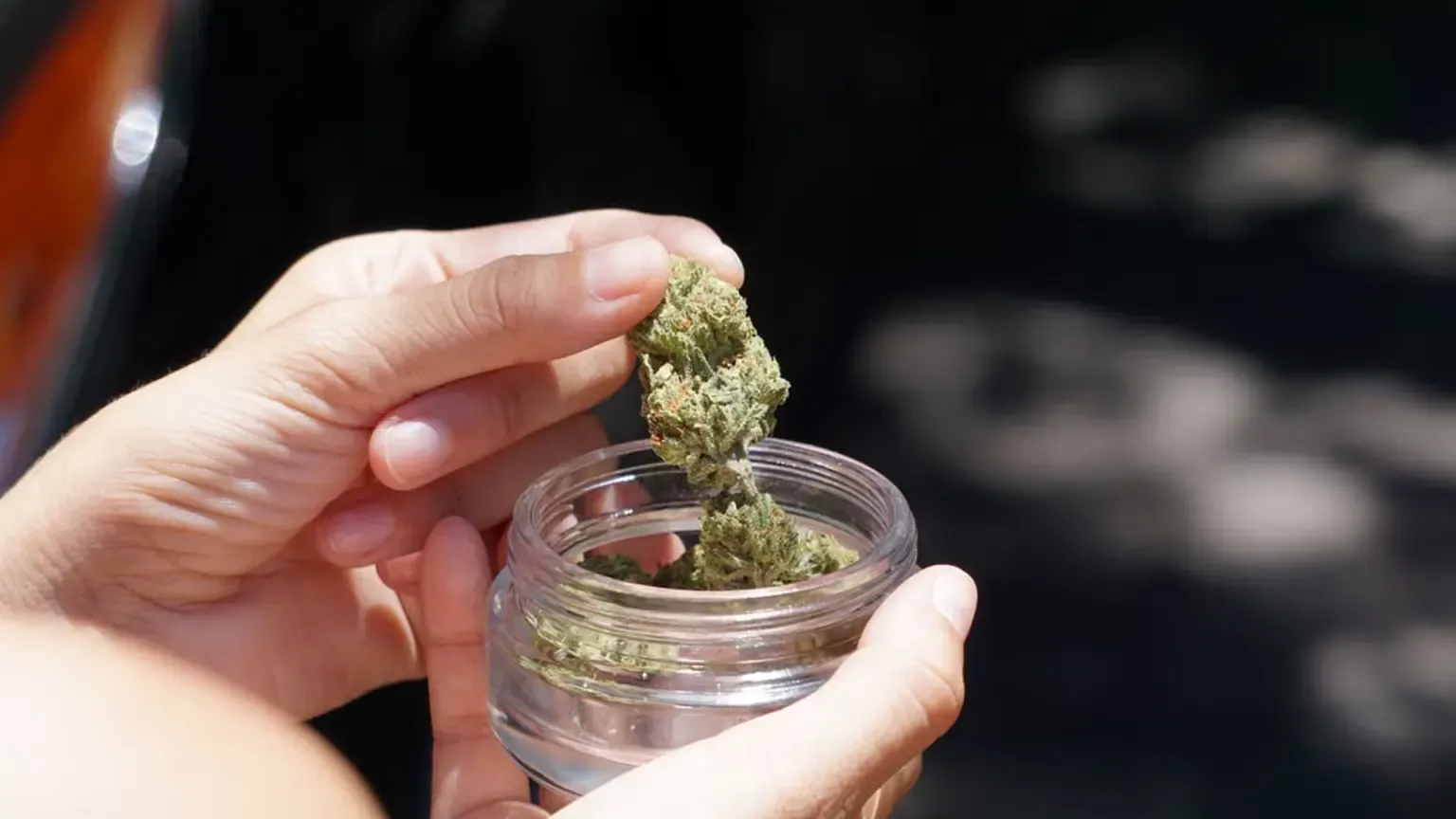
Cannabis flower’s smell can indicate its aromatic composition, but smell alone does not prove quality or safety. One variety may smell fresh and citrusy, another like pine, berries or pungent diesel. These properties do not last forever. Even good flower can dry out, lose its characteristic aroma and change substantially if stored poorly.
Storage is not particularly complicated. Four factors matter most: light, temperature, air and moisture. Controlling them helps retain the original character and reduces spoilage risk.
This guide looks at humidity, ordinary glass jars, TightVac containers and common storage mistakes.
Why does cannabis change over time?
Flower contains hundreds of compounds, including cannabinoids and terpenes. THC and CBD are familiar cannabinoids, while terpenes contribute much of a variety’s characteristic aroma and flavour.
These compounds are not indefinitely stable. Light, oxygen and heat encourage chemical changes. Some terpenes evaporate, some compounds oxidise, and cannabinoid levels and proportions can change.
THC can, for example, degrade into compounds including CBN. A few weeks do not suddenly transform the material completely, but longer-term differences can become noticeable.
Aroma is often an early sign of poor storage. Strongly scented flowers may become relatively neutral or smell like dry hay. Flowers that also lose elasticity and crumble easily are probably too dry.
Good storage therefore aims to preserve aroma, flavour, texture and initial quality, as well as reduce mould risk.
1. Use an airtight container
Choosing a suitable container is the first step. An ordinary zip bag may be convenient briefly, but is less suitable for longer storage.
Thin plastic does not protect against crushing, may not contain odour well and can allow air exchange depending on the material and closure. Flowers can also break apart inside.
A clean, dry container with a tight seal is a better option.
Glass jars: a simple, reliable option
A well-sealed glass jar is a practical, affordable choice. Glass does not impart unwanted flavours, is easy to clean and physically protects the contents.
Check that the lid seals properly. Keep clear glass in a dark cupboard or drawer, because glass itself does not block light.
Match container size reasonably to the contents. A few grams do not need a large one-litre jar mostly filled with air.
TightVac and other airtight containers
Specialised containers can offer easier closures, better odour control or more robust construction.
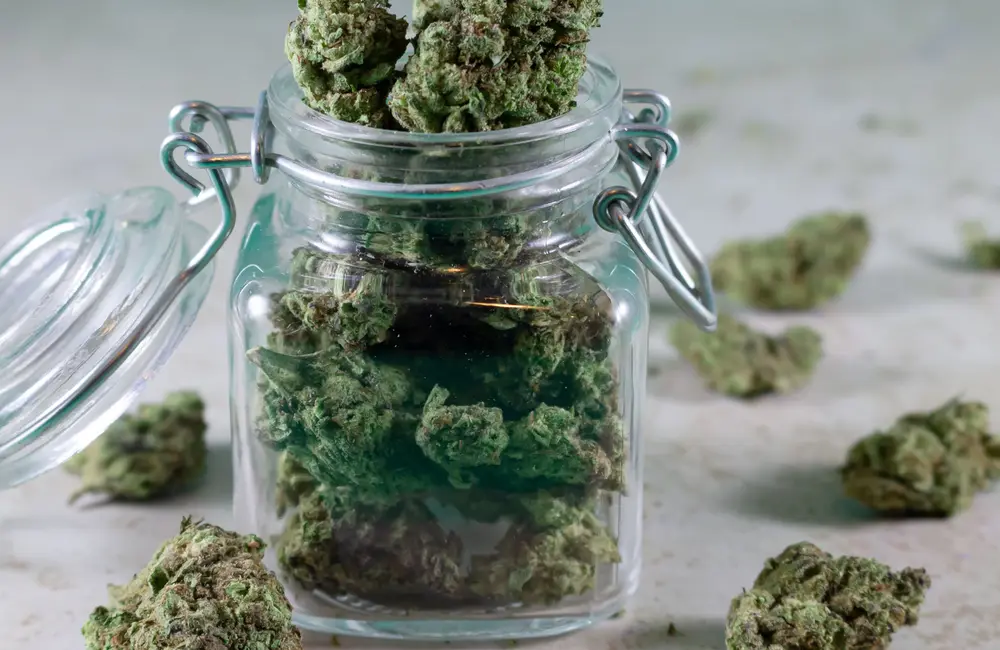
TightVac-style containers, for example, use a closure designed to limit air movement between the container and surroundings. They are convenient for everyday access and come in different sizes.
Despite the name, TightVac does not necessarily create a complete vacuum. Its main value is a tight seal rather than removing all oxygen.
A good glass jar and a well-made specialised container can both work. The choice depends on price, convenience, portability and odour control.
Bleiz Headshop’s storage container range includes glass jars, TightVac containers and other airtight options.
2. What humidity is suitable?
Moisture is central to storage. Overly dry flower becomes brittle and loses texture, while excess moisture can favour mould.
A relative humidity of roughly 58–62% is commonly used for properly dried flower. This means humidity inside the sealed container, rather than throughout the room.
It is a practical target, not a guarantee. Microbiological safety also depends on initial condition, water content and previous handling.
58% or 62%: which is better?
Two common humidity-pack settings are 58% and 62%.
58% suits a preference for slightly drier, easier-to-handle flower, which can be convenient when grinding.
62% helps retain a somewhat softer, more elastic texture and is also commonly used for properly dried flower.
Both are used for ordinary storage. The difference is modest, and neither is automatically superior.
How do humidity packs work?
Two-way humidity packs help maintain a specified relative humidity in a closed container. They release moisture when the air is too dry and absorb some when it is too damp.
Boveda and Integra Boost are familiar examples, used for cannabis and other moisture-sensitive products.
Choose pack size according to manufacturer instructions and the amount stored. Replace a pack when its useful capacity is exhausted.
A humidity pack is not a cure-all: it cannot make wet cannabis safe or remove existing mould. It works best by stabilising moisture in properly dried material.
For example, Bleiz Headshop lists Boveda 58% and 62% humidity packs for use in airtight containers.
3. Keep it dark and reasonably cool
Light and heat work against long-term preservation.
Avoid direct sunlight in particular: ultraviolet radiation can accelerate cannabinoid degradation. Higher temperatures also encourage loss of volatile aromas and other chemical changes.
A cool cupboard or drawer with a stable temperature is usually suitable at home. Around 15–21 °C is often suggested for longer storage, but moderate room temperature can also work if stable and protected from light.
Avoid windowsills, radiators, cars and cupboards directly above a cooker, where temperatures can rise quickly or fluctuate substantially.
Dark glass or opaque containers provide additional light protection, but should still be kept away from the sun.
4. What about a refrigerator or freezer?
A refrigerator initially seems ideal: cool, dark and colder than living spaces. In practice, it creates some problems.
Humidity and temperature can fluctuate, particularly with frequent door opening. Poorly sealed containers can also admit moisture and food smells.
A cold container brought into a warm room and opened immediately can develop condensation on the flowers or interior surfaces.
Freezing makes trichomes, the flower’s resin glands, more brittle and easier to detach during handling. Repeated freezing and thawing also increases condensation problems.
Professional producers use freezing for particular products and processes, but it is generally unnecessary for ordinary home storage of flower.
An airtight container in a dark, moderately cool location remains the simplest practical option.
5. How can you reduce escaping odour?
A strong smell is part of cannabis’s character. Some appreciate skunky or pine-like aromas; others prefer not to have them spread through a room, bag or wardrobe.
Odour comes mainly from volatile aromatic compounds, including terpenes and certain sulphur-containing compounds. These can escape through an inadequate seal.
Start with a properly airtight container. An ordinary fabric bag will not solve a container that leaks air and odour.
If odour has already spread into a room or clothing, see our guide to removing cannabis smells from clothes and rooms.
When is a smell-resistant bag useful?
Smell-resistant bags and cases aim to reduce escaping odour. Many include activated carbon to bind volatile compounds.
They can be useful for keeping a container, grinder and accessories together. Robust cases also protect against crushing and scratches during transport.
Distinguish airtight storage from odour-resistant carrying. A soft bag may not maintain suitable humidity, and no such product automatically guarantees complete odourlessness.
A sensible combination is a tightly sealed container and, if needed, an additional odour-resistant bag or case.
Bleiz Headshop’s smell-resistant bag and case range offers examples for organising accessories and reducing odour spread.
6. Avoid grinding everything at once
A grinder is practical, but flowers are better left as intact as possible for longer storage.
Breaking flower into smaller pieces increases the surface exposed to air and light, encouraging aroma loss and faster drying.
Break up only the amount needed and keep the remainder sealed.
Our grinder buying guide explains differences between models and how construction affects consistency.
Avoid repeatedly opening a jar unnecessarily. Each opening exchanges some air and can temporarily disturb humidity balance.
For longer storage, a smaller everyday container and a separate reserve container can reduce repeated opening of the entire supply.
7. Avoid common mistakes
Even a good container cannot compensate fully for poor conditions. Some traditional household tips can worsen quality.
Orange peel or bread in the jar
One familiar suggestion is to add orange or lemon peel, an apple slice or bread to overly dry cannabis.
These can raise moisture unpredictably, introduce microorganisms, change the smell and create conditions favourable to mould.
A purpose-made humidity pack is a more controlled option for maintaining stable humidity.
Using an oversized container
Keeping a small amount in a very large jar leaves substantial air space. More oxygen allows more oxidation.
Choose enough room to avoid compressing flowers without excessive unused capacity.
Sealing wet cannabis airtight
An airtight container does not make overly wet cannabis safe. If material was not properly dried, sealing it can worsen mould problems.
A storage humidity pack does not replace proper drying or microbiological quality control.
Leaving cannabis in a car
Cars can heat rapidly, especially in sunlight, and often experience large temperature swings.
Even a good container cannot fully prevent heat-related deterioration.
Leaving cannabis accessible to children or pets
Store cannabis and cannabis products out of reach of children and pets, preferably in a locked location.
A smell-resistant bag is not automatically child-resistant, and an ordinary screw-top jar does not replace locked storage.
How long does well-stored cannabis stay fresh?
There is no universal shelf life. Initial quality, drying, moisture, conditions and frequency of opening all matter.
Properly dried flower can retain a substantial part of its initial quality for several months under suitable conditions. Six to twelve months is often discussed for good conditions, but this is not a guaranteed freshness or safety period.
Terpene profiles and cannabinoid levels change over time. Flower can look normal while its original aroma has weakened considerably.
A pleasant smell also does not establish microbiological safety. Both initial quality and storage conditions matter.
How can you distinguish dryness from mould?
These are separate problems and should not be confused.
Overly dry cannabis is often brittle, crumbles easily and has lost much of its aroma. That does not automatically mean mould, although quality has probably declined.
Possible signs of mould include a musty smell, unusual white or grey fluffy patches, thread-like growth and suspicious internal changes.
Trichomes can also look like pale crystals, but usually differ structurally from fuzzy or thread-like mould. Visual inspection alone cannot always establish the presence or absence of mould.
Do not smoke, vaporize or otherwise consume material suspected of mould contamination. Removing only the visibly affected area does not ensure the rest is safe.
Which storage option should you choose?
Not everyone needs an expensive system. The suitable option depends on quantity, access frequency and whether odour reduction or stable humidity matters most.
| Situation | Suitable option |
|---|---|
| Keeping a small amount at home | A small airtight glass jar |
| Daily access | An easy-opening container with a tight seal |
| Longer-term storage | An airtight container with a suitable humidity pack |
| Reducing escaping odour | An airtight container and odour-resistant case |
| Keeping accessories together | A robust odour-resistant bag or case |
| Storing several varieties | Separate small labelled containers |
Frequently asked questions
Can cannabis be kept in an ordinary zip bag?
For a short period, yes, but a rigid, well-sealed container is better for longer storage. A zip bag provides limited protection against crushing, air exchange and odour spread.
Must the glass jar be opaque?
No. Clear glass works well in a dark cupboard or drawer. Avoid direct sunlight.
What humidity is best for cannabis?
Roughly 58–62% relative humidity inside a sealed container is commonly used for properly dried flower. Avoid excessive dryness and moisture that could encourage mould.
Is TightVac better than a glass jar?
Not necessarily. Both can work. Glass is simple and affordable; TightVac-style containers offer convenient closures and different formats. The choice depends on preferences.
Can overly dry cannabis be rehydrated?
A humidity pack may help rebalance overly dry material, but cannot fully restore lost terpenes or original quality. Avoid adding fruit peel or other wet foods.
Can cannabis develop mould in a sealed jar?
Yes. Material that starts too wet or contaminated can develop mould in a sealed container. Airtight closure does not replace proper drying and cleanliness.
Should cannabis be refrigerated?
Usually not for ordinary storage. A cool, dark cupboard is simpler and reduces condensation-related problems.
Summary: preserving quality through good storage
The main principle is protecting flowers from excessive air, direct light, heat and unsuitable moisture levels.
A good airtight container and dark cupboard are usually sufficient. For longer storage, a suitable humidity pack may help. A well-made odour-resistant bag or case can provide additional odour control.
Storage cannot turn mediocre material into top-quality flower or recover lost terpenes. It can help preserve the aroma, flavour and quality present at the start.
For an introduction to accessories, see ‘Cannabis Accessories for Beginners’, which explains their purposes and which items may actually be useful.