
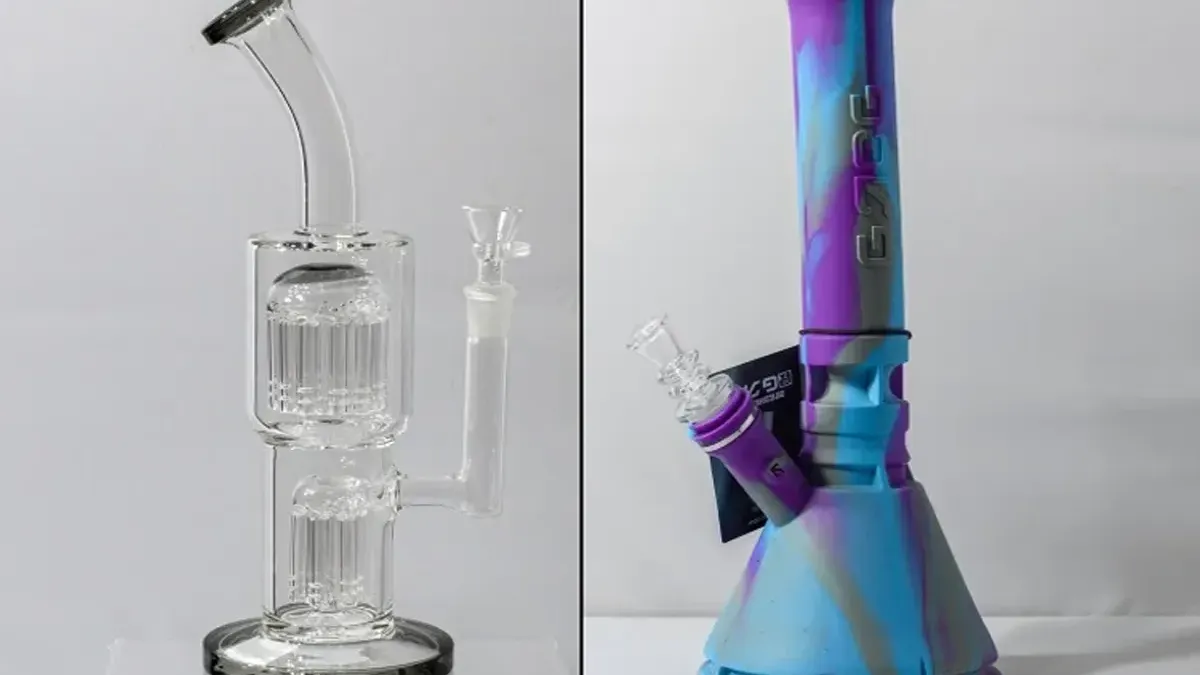
Choosing a bong often comes down to glass or silicone. Both have advantages and limitations depending on handling and maintenance.
Glass is the traditional rigid, transparent and neutral option. Silicone’s main advantage is resilience: its body is much harder to break in a drop.
Neither is universally better. The choice depends on whether transparency, flavour neutrality and design variety matter more than drop resistance and portability.
Why is glass popular?
A properly made glass surface is smooth and nonporous, so it does not retain smells and flavours in the same way as some softer materials can.
Transparency makes it easy to check:
- water level;
- whether the downstem sits at an appropriate depth;
- internal deposits;
- when cleaning is needed.
Glass also supports varied designs: straight tubes, beakers, multiple percs, ice catchers and different dimensions.
Which type of glass?
Not all glass is identical.
Borosilicate is common and generally tolerates temperature changes better than ordinary glass, helping with repeated handling and cleaning.
It is not unbreakable. Durability also depends on:
- thickness;
- shape;
- base stability;
- joint quality;
- the design of percs and other delicate parts.
A robust, stable glass model can last years but still break in one fall onto a hard floor.
Advantages of glass
Its main strength is a neutral surface.
Well-cleaned glass usually adds little unwanted flavour, and transparency makes maintenance easier.
Design options are often broader, including:
- different heights;
- straight-tube or beaker shapes;
- percolators;
- removable downstems;
- 14.5 mm or 18.8 mm joints;
- ice catchers;
- different wall thicknesses.
Standard glass joints provide flexibility for replacement bowls, downstems, ash catchers and other attachments.

Drawbacks of glass
Breakage is the main drawback.
Even thick, well-made glass remains breakable.
Risk can rise with:
- frequent moving;
- children or pets near an unsecured object;
- small or unstable supporting surfaces;
- outdoor handling;
- transport without suitable protection.
Complex percs can also make cleaning awkward.
Nonstandard or permanently attached broken parts may be expensive or difficult to replace.
What is a silicone bong?
The main body is flexible silicone, while bowls and downstems may still be glass or metal. A soft body withstands ordinary drops differently from glass and may bend or compress for storage.
It can suit people for whom fragile glassware is a recurring problem.
Advantages of silicone
A fall does not usually mean a shattered body. Portability can be useful in settings such as:
- travel;
- a holiday home;
- outdoors;
- festivals where permitted;
- visits to friends;
- homes where fragile objects are more likely to be knocked over.
Silicone models are generally lighter than similarly sized glass designs. Some fold or dismantle into compact forms.
Drawbacks of silicone
It generally lacks glass’s transparency and rigidity, making these harder to inspect:
- water level;
- resin accumulation;
- cleaning needs.
Material quality matters. Unknown low-quality silicone should not be equated with a properly specified heat-resistant product.
Models usually offer fewer intricate percs and design options. Glass is generally the more flexible platform for modular glass additions.
Which affects flavour less?
A clean glass surface is highly neutral.
Many prefer that neutrality. Good silicone may also be relatively neutral, but the particular formulation and maintenance matter.
Persistent smells or deposits may be harder to remove from silicone. In practice, stale water and dirt often affect flavour more than body material.
Which has better airflow?
Material alone does not determine it. More influential features include:
- downstem;
- percolator;
- internal diameter;
- bowl;
- water level;
- airflow restrictions;
- overall design.
Glass allows precisely formed complex internals and therefore many perc options, but not every glass model performs better than every silicone model.
A simple well-designed silicone model can be more practical than poorly designed glass.
Which is easier to clean?
There is no universal winner.
Glass
Simple glass construction is often easy to clean.
Dirt is visible and plain glass tolerates many appropriate cleaning methods.
Intricate percs complicate matters because inner surfaces may be inaccessible.
Silicone
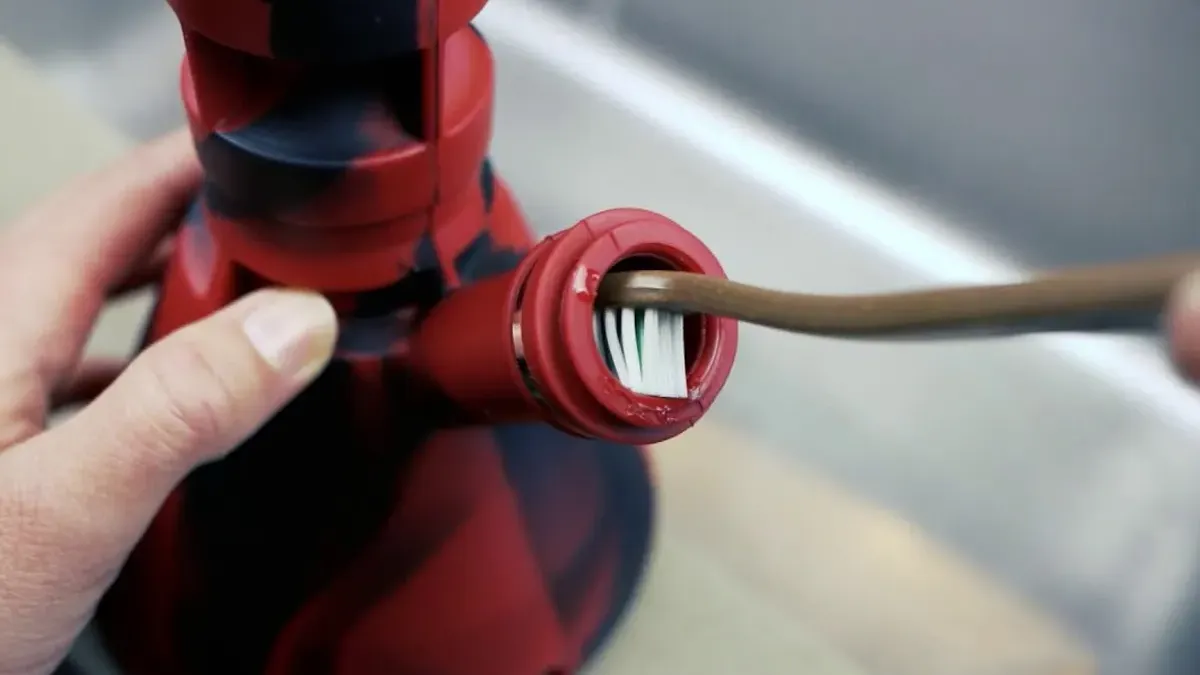
Silicone offers flexibility.
Bending can help release some dried deposits.
Follow the particular manufacturer’s cleaning instructions. Strong solvents and dishwashers are not suitable for every silicone product.
Can silicone be frozen for cleaning?
Some designs tolerate freezing to make deposits more brittle and easier to detach.
Do not apply this universally, particularly with fixed inserts, adhesives or specific care restrictions.
Which lasts longer?
For ordinary drops, silicone bodies are generally much more resilient. Glass can break in one accident, yet high-quality glass can last years with careful stationary use. Silicone can gradually:
- become dirty;
- discolour;
- retain odours;
- change with material quality and maintenance.
Neither material lasts longer in every situation.
What suits home use?
Glass can be an appealing option when kept securely in one place.
Reasons include:
- broader design choice;
- transparency;
- neutral surfaces;
- more percolator options;
- standard attachments.
Reduced handling and transport can make fragility less of a practical problem.
What suits carrying?
Silicone has a portability advantage.
Its body can generally be packed with less concern than glass.
Nevertheless, glass bowls or downstems remain vulnerable. An intact flexible body does not make the complete assembly unbreakable.
Which is less expensive?
Silicone is often affordable, but inexpensive glass also exists. Price also reflects:
- size;
- manufacturer;
- construction;
- percolators;
- glass thickness;
- hand craftsmanship;
- accessories.
Material alone is a poor price indicator. A simple glass model may cost less than a well-made silicone design or vice versa.
What suits a beginner?
Both can. Glass suits a traditional design mainly kept at home.
Silicone suits a priority on avoiding accidental breakage. Other important features include:
- dimensions;
- stability;
- cleaning access;
- standard bowls and downstems;
- simple construction.
A highly complex first model is usually unnecessary.
What about hybrid designs?
Some combine silicone and glass.
A silicone body may include:
- a glass bowl;
- a glass downstem;
- a partly glass water chamber.
The idea is to combine a resilient body with neutral glass contact surfaces, offering a compromise for someone concerned about a large fragile piece.
Quick comparison
Glass: advantages:
- neutral surface;
- transparency;
- wide design choice;
- many perc and attachment options;
- widely available standard replacements.
Drawbacks:
- breakage risk;
- less convenient transport;
- difficult cleaning with complex designs.
Silicone:
Advantages:
- drop-resistant body;
- low weight;
- portable;
- flexible;
- practical for moving between places.
Drawbacks:
- usually opaque;
- fewer intricate designs;
- possible persistent odours or deposits;
- restricted cleaning compatibility;
- glass inserts can still break.
Which should you choose?
Choose glass when transparency, a traditional design and modular options matter, mainly for a secure home location.
Silicone is practical when drop resistance and portability are the main priorities.
The comparison depends on material properties, storage conditions and the risk of breakage. No material is the best choice in every situation.
Summary
Glass offers a neutral surface, transparency, varied designs and standard attachments.
Silicone offers resilience, low weight and portability. Glass does not automatically provide better airflow, nor does silicone necessarily create poor flavour. Design and cleanliness matter greatly.
Assess the complete design rather than material alone. Our complete bong buying guide explains size, joints, downstems and percs.