
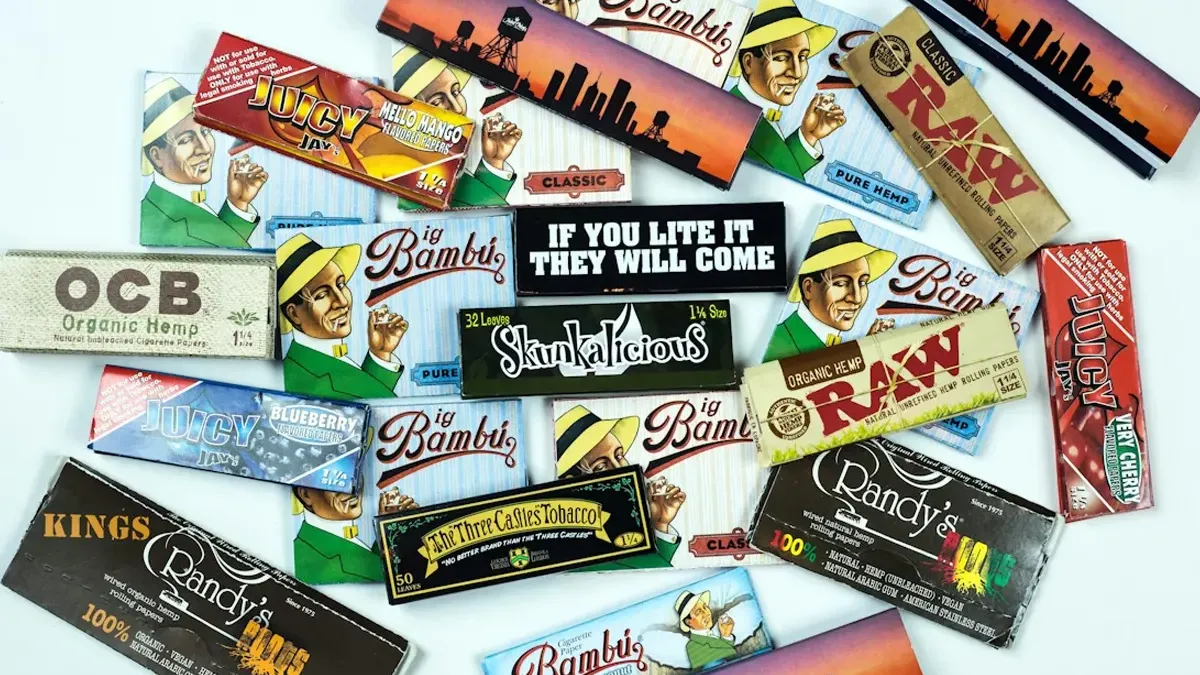
Rolling papers vary in material, size and thickness, affecting how they handle. Gum strips, colour and manufacturing methods also influence handling and burning behaviour.
Rice, hemp, flax and wood-pulp papers are common. Formats include Single Wide, 1¼, King Size and King Size Slim.
There is no universally best paper. Some prefer a stronger, easier-to-handle sheet; others want the thinnest option. This guide explains the labels and useful comparisons.
What are rolling papers made from?
Material affects texture, strength, thickness and burning. Common fibres include wood pulp, rice, hemp and flax, sometimes blended.
Wood-pulp papers
Wood pulp is the traditional option. These papers are often somewhat thicker than rice or hemp alternatives and easier to handle. Thicker sheets tend to crease less and may be more manageable for beginners.
They come in white and brown, unbleached versions. Material alone does not determine burn speed: thickness, porosity and manufacturing also matter.
Rice papers
Rice papers are usually thin and relatively smooth. Less paper mass is burned, and the paper’s own flavour may be less noticeable.
Very thin sheets can be harder to handle and more sensitive to humidity. They may become brittle in very dry conditions or harder to light when damp. They suit a preference for thin paper where ease of rolling is not the main priority.
Hemp papers
Hemp-fibre papers often fall between conventional wood pulp and very thin rice sheets. Their slightly textured surface can make them easier to handle than extremely thin rice paper.
They are often sold with a brown or natural appearance, but colour alone does not reveal processing. The word ‘hemp’ does not establish lower health risks than other plant fibres.
Flax papers
Flax is used alone or blended with other fibres. Papers can be thin and strong, with properties depending on the manufacturer and blend. Check actual composition rather than inferring every property from brand or colour.
White or brown?
A common misconception is that brown, unbleached paper is automatically healthier and white paper necessarily ‘full of chlorine’. The reality is more complex.
Different bleaching processes exist. Modern white paper does not automatically mean treatment with elemental chlorine. Unbleached sheets undergo less processing specifically to change colour and retain a more natural brown tone.
Colour is a reasonable preference, but not a reliable basis for claiming one paper is safer.
Is thinner better?
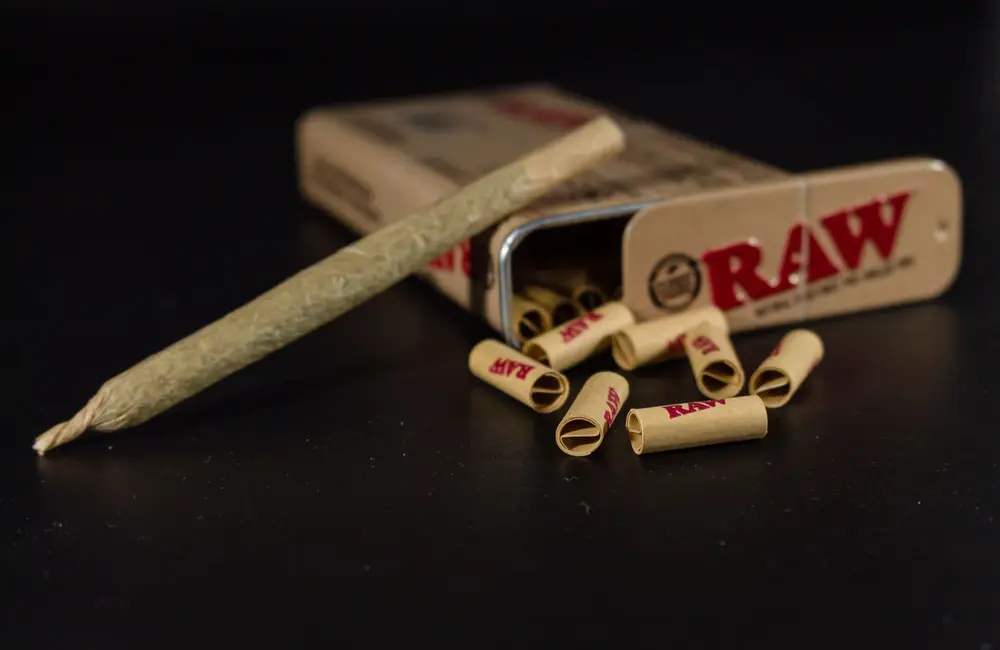
A thinner sheet mainly means less paper mass is burned.
Many experienced users prefer very thin papers because their flavour can be less noticeable.
They also tear more easily, need more careful handling and can be more moisture-sensitive. Thicker sheets are generally stronger and easier to use. A ‘premium’ label alone is not a reason to choose the thinnest option.
How does paper affect burning?
Burn rate depends on thickness, density, porosity, moisture and manufacture, not just fibre. It is inaccurate to say all rice papers burn slowly or all wood-pulp papers quickly. Similar materials from different manufacturers can behave differently.
Consider thickness and the manufacturer’s description of production alongside material.
Rolling paper sizes
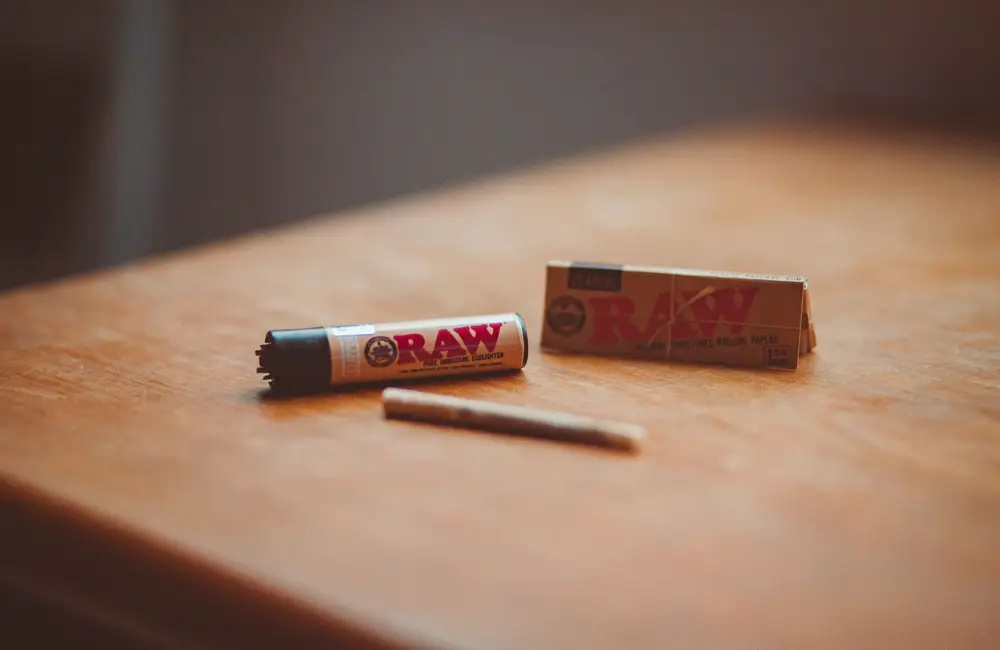
Exact dimensions vary by manufacturer, but familiar names give an approximate guide. Single Wide is a smaller traditional format, usually around 70 mm long.
1¼, or 1 1/4, is usually around 76–79 mm long and 44 mm wide. King Size is generally around 100–110 mm long and wider than King Size Slim. King Size Slim is about 107–110 mm long and typically around 44 mm wide. A Roll lets the user cut a chosen length.
Check product dimensions rather than treating the names as exact standards.
King Size and King Size Slim: what differs?
Width is the main difference. Slim is long and relatively narrow; standard King Size is generally wider at a similar length.
A narrower sheet uses less paper per roll, which some prefer. A wider one offers more room and may be easier for others. Neither is universally better or necessarily the most popular in every setting.
What does the gum strip do?
Most papers have a narrow adhesive strip along one edge. Plant-based adhesives such as gum arabic, derived from acacia, are common. The strip affects how well the sheet seals when moistened. Poor adhesion in an old packet may reflect overly dry or damp storage rather than an inherently poor product.
The tip also affects handling. See our comparison of glass and paper tips.
Are coloured and printed papers worse?
Coloured, metallic-looking and heavily printed papers use additional dyes or pigments. This does not make every coloured sheet automatically dangerous, but their composition should not be assumed equivalent to plain paper.
Chemical studies have found substantial differences in some metal levels between products, with some higher measurements associated with pigments and manufacturing. Plain, uncoloured paper without heavy printing is the simplest option when seeking fewer decorative additions.
This does not make smoking risk-free. Burning any material produces combustion products; fibre choice does not justify calling a paper healthy.
What about flavoured papers?
These aim to change smell or taste and may contain flavourings, making composition more complex.
Estonian Tobacco Act requirements also matter. Restrictions for cigarettes and roll-your-own tobacco cover certain flavour-containing components used with them.
Availability from a foreign website does not establish unrestricted sale in Estonia.
What are pre-rolled cones?
A cone is paper already formed into a conical shape. Convenience is the main difference: the shape does not need to be rolled manually. Cones come in different materials and sizes and are another format rather than inherently better or worse paper.
An individual cone usually costs more than a sheet from a standard booklet, although products and pack sizes vary.
How does a wrap differ?
A wrap is generally larger and thicker than ordinary rolling paper, but wraps do not form one uniform category.
Traditional blunt wraps may contain tobacco, carrying tobacco- and nicotine-related risks. Hemp wraps can be tobacco-free, while cellulose and other plant-based versions also exist. Always check the actual composition.
Does the brand matter?
A brand may suggest dimensions or manufacturing quality, but its logo is insufficient. Material, thickness, size, gum strip and handling matter more.
Ranges within a brand can differ greatly. One manufacturer may offer rice, hemp and wood-pulp products. Calling a whole brand the ‘best rice paper’ or universally best option is unhelpful.
How should papers be stored?
Keep them in their original packaging in a dry place at normal room temperature. High humidity can affect sheets and gum; very dry conditions can make thin paper brittle and weaken adhesion over time. Avoid direct sun, heat and damp bathrooms.
A closed drawer or box is usually sufficient.
Can rolling papers be ordered online in Estonia?
Estonia classifies cigarette papers as tobacco-related products. Domestic and cross-border distance selling of tobacco-related products to consumers is prohibited.
They therefore cannot be sold to Estonian consumers through ordinary online distance sales, and sales to minors are prohibited. A headshop may provide general shop information online, but cigarette-paper rules differ from those for grinders and various other accessories.
Which paper suits different preferences?
There is no need to find a universally ‘best’ product. Slightly thicker wood-pulp or hemp paper may suit a preference for strength and easier handling.
Rice or thin flax paper may suit a preference for thin sheets. If format matters most, choose dimensions first: Single Wide and 1¼ are smaller, while King Size and King Size Slim are longer.
White versus brown can be a personal preference. Brown does not automatically mean healthier. Comparing a few materials and thicknesses is more useful than relying on that assumption.
For related equipment, see our guide to choosing a grinder.
Summary
Look beyond branding and packaging. Material affects feel and strength, thickness affects handling, and dimensions affect the amount of paper used.
Rice paper is often thin, hemp somewhat textured and traditional wood pulp stronger and easier to handle. Unbleached paper is not automatically healthier than white, and no paper intended for burning is risk-free.
Knowing your preferred dimensions, thickness and material makes comparison much easier.