
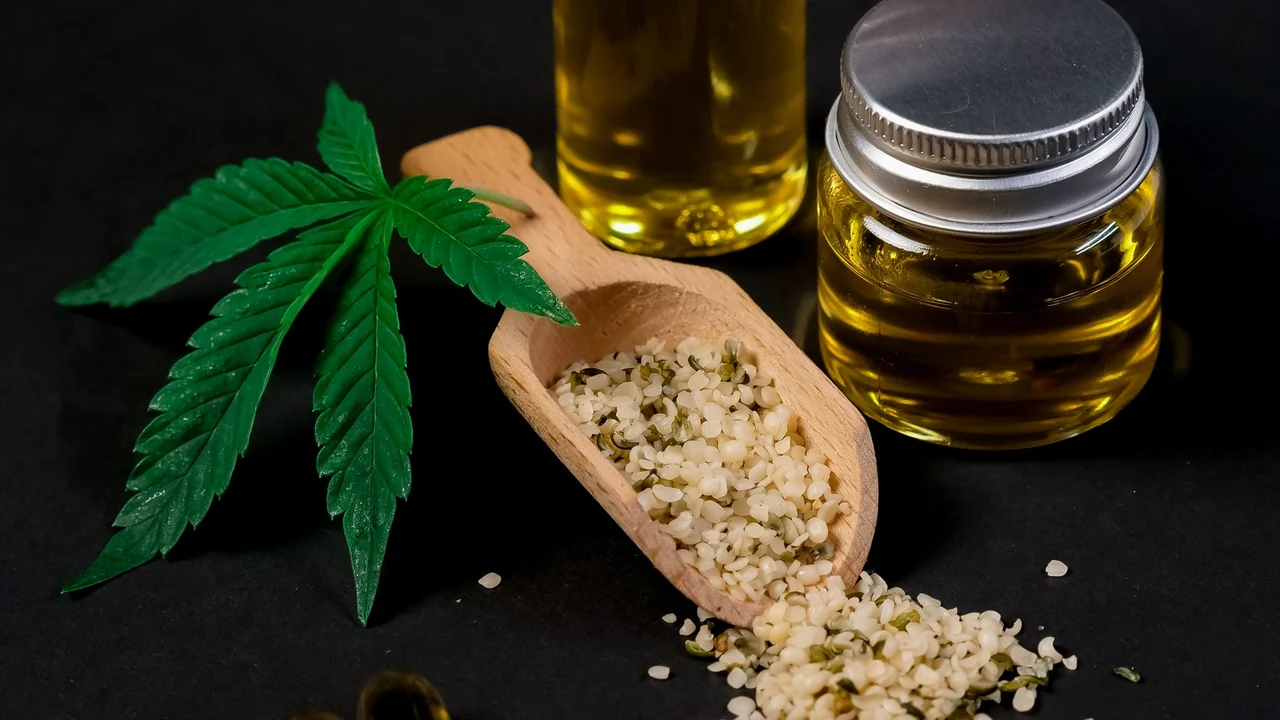
CBD, or cannabidiol, is one of the cannabis plant’s best-known cannabinoids. Its possible pain-relieving effects must be distinguished from established treatments. Interest has grown among researchers, people with chronic pain and those seeking options alongside conventional care, particularly for back, joint, muscle and nerve pain.
That interest is understandable. Chronic pain can affect sleep, work, mobility and quality of life, while existing treatments do not provide everyone with adequate relief. Cannabis compounds are therefore receiving closer investigation.
Does CBD reduce pain? Advertisements and personal accounts cannot answer this as reliably as controlled clinical trials.
Laboratory studies show effects on biological processes involved in pain and inflammation. Controlled human studies have not yet convincingly established CBD alone as a reliable painkiller.
Some THC-containing cannabinoid medicines have shown small possible benefits. It is therefore important to distinguish isolated CBD, cannabinoid combinations and personal experiences.
What is CBD and how does it work?
CBD is a cannabinoid found in cannabis. Unlike THC, it does not produce the usual cannabis high.
The body’s endocannabinoid system helps regulate processes including pain perception, stress responses and immune function.
Its familiar components include CB1 and CB2 receptors and internally produced endocannabinoids. THC acts more directly on cannabinoid receptors. CBD has more varied mechanisms involving several receptors, signalling pathways and enzymes.
Laboratory and animal experiments have examined effects on inflammation, nerve activity and pain sensitivity, providing a biological basis for further research.
An anti-inflammatory laboratory effect does not automatically mean a compound relieves human pain or becomes a clinically useful medicine.
Pain is complex, involving the nervous system, previous experience, sleep, mood and many other influences besides inflammation.
Our article ‘CBD, CBG and CBN Explained: What They Are, How They Are Used and What Is Allowed in Estonia’ explores cannabinoid differences.
Why are people interested in CBD for pain?
Many people with chronic pain find that existing medicines do not provide enough relief.
Long-term treatment can also cause adverse effects, and some patients need combinations of approaches.
CBD attracts attention because it lacks THC’s characteristic intoxication. Its possible relationships with inflammation, sleep and stress also receive substantial discussion.
Some users report better wellbeing, calmer sleep or less pain-related discomfort. Those experiences can be real and meaningful.
An individual account does not establish what caused a change. Pain fluctuates naturally, while activity, sleep, other medicines and expectations can change too. Controlled comparisons with placebo are needed.
What does research on CBD and pain show?
Several major reviews help distinguish earlier expectations from clinical findings.
A 2025 systematic review by the US Agency for Healthcare Research and Quality, AHRQ, found small short-term improvements from some THC-containing medicines for chronic, mainly neuropathic pain.
Low-THC, high-CBD preparations, including CBD alone, were not associated with clear improvements in pain or physical function compared with placebo.
A systematic review published in Annals of Internal Medicine in late 2025 reached a similar conclusion.
It analysed 25 randomised trials involving 2,303 people. Some higher-THC preparations showed small possible effects on pain intensity, without comparable benefits from predominantly CBD products with low THC. Cannabinoid medicines are not interchangeable.
A balanced THC/CBD medicine can have different results from CBD alone. Oral medicines, topical preparations and inhaled products also differ.
Findings for one medicine cannot automatically be applied to an ordinary CBD oil or cream.
Cochrane: evidence for nerve pain remains uncertain
In January 2026, Cochrane published an updated review of cannabis-based medicines for chronic neuropathic pain.
Neuropathic pain results from disease or damage affecting the nervous system. It may involve burning, electric-shock sensations, tingling or unusual pain sensitivity.
The review included 21 clinical trials with more than 2,100 adults, comparing different cannabis-based medicines with placebo or other controls.
Preparations were grouped into predominantly THC, balanced THC/CBD and predominantly CBD medicines.
The findings did not provide sufficiently certain evidence of consistent clinically meaningful relief from any group.
Some analyses suggested small improvements with THC/CBD combinations, but practical significance was limited.
Predominantly CBD medicines did not show clear evidence of achieving at least 50% pain relief.
This does not rule out all therapeutic potential. Many studies were small, short or methodologically uncertain, limiting firm conclusions.
Back pain: does CBD help?
Back pain is a common reason for interest in CBD. Acute and persistent chronic pain need distinction because causes and treatment requirements can differ.
Australia’s CANBACK trial involved 100 emergency-department patients with acute lower back pain. Alongside usual care, they received a single 400 mg CBD dose or placebo.
After two hours, pain reduction was not significantly better with CBD. This was a randomised placebo-controlled result, rather than a user survey.
A September 2026 systematic review also examined cannabinoids for lower back pain and migraine.
It found no convincing evidence for a single CBD dose in acute lower back pain, while a trial of a standardised THC-containing extract reported positive results for chronic lower back pain.
Again, a possible benefit from a THC-containing medicine does not establish the same benefit from isolated CBD.
Joint pain and osteoarthritis
Osteoarthritis can cause pain, stiffness and restricted movement. CBD attracts interest because of possible effects on inflammatory processes.
Laboratory and animal research has identified theoretically relevant mechanisms, but human findings have been less convincing.
Some small studies report subjective improvement, without sufficient evidence to establish CBD as an osteoarthritis treatment.
Composition matters: hemp seed oil studies are not CBD studies, because the products are different.
Advertisements and online health claims unfortunately often blur this distinction.
Fibromyalgia: a controlled trial found no CBD advantage
Fibromyalgia involves chronic widespread pain, often accompanied by fatigue, sleep problems and other symptoms.
Because existing treatments do not help everyone adequately, CBD has also been investigated.
A Danish randomised double-blind trial compared plant-derived CBD tablets with placebo in people with fibromyalgia. It was published in Annals of the Rheumatic Diseases.
The results did not establish a clear advantage for pain reduction. This matters because earlier user surveys had raised hopes of substantial benefit.
Controlled trials help separate specific drug effects from natural symptom variation and placebo effects.
Migraine and CBD: why cannabinoid composition matters
Migraine is a neurological condition that can involve severe headaches, nausea and light and sound sensitivity.
Several small and medium-sized trials have explored cannabinoid effects.
A September 2026 review included five randomised trials with 1,072 participants. In one trial, THC/CBD improved some acute migraine outcomes compared with placebo. A CBD-richer preparation did not show the same clear advantage.
This reinforces why cannabinoids should not be treated as equivalent painkillers. Positive results from a combination do not show that CBD alone treats migraine.
Independent confirmation, longer-term safety research and replication in different patient groups remain necessary.
Does CBD reduce inflammation?
Possible anti-inflammatory activity is a major reason for investigating CBD in pain.
Laboratory and animal work suggests effects on certain inflammatory pathways and immune-cell activity.
These observations matter scientifically, but changes in inflammatory markers differ from actual recovery or pain relief.
A laboratory change in inflammatory molecules may not occur in people under ordinary conditions of use.
Not all pain is inflammatory. Nerve damage and altered processing of pain signals are important in neuropathic pain, for example.
Possible anti-inflammatory activity cannot therefore establish effectiveness for every pain type.
Why do some users report positive experiences?
Online accounts describe less pain, improved sleep and better wellbeing. They need not be dismissed automatically.
Patient-reported health and quality of life are important in research, but individual experiences differ from established treatment effects.
Pain naturally rises and falls. A person may also change exercise, rest more, take other medicines or experience less stress while using CBD.
Placebo effects can meaningfully change perceived pain. Relief need not be imaginary for its cause to differ from a substance’s direct pharmacological action.
Some CBD products also contain other cannabinoids. Check whether a study tested pure CBD, a combination or another extract.

CBD oils, capsules and creams: what differs?
Products include oils, capsules, creams, ointments and other preparations, with differing compositions and routes of use.
Oral absorption depends on formulation, food and individual metabolism, among other factors.
For topical products, relevant questions include how much reaches deeper skin layers and whether it produces measurable clinical effects.
A cream containing CBD does not automatically relieve joint or muscle pain. Hemp seed oil, CBD oil and other extracts must also be distinguished.
A study of one product cannot establish benefits for every similarly marketed product.
Can CBD replace conventional painkillers?
Current evidence does not establish it as a general alternative to pain medicines.
Conventional medicines have possible adverse effects, especially with long-term use.
Their limitations do not automatically make a new or natural compound safer or more effective.
Medical cannabis surveys have described lower use of other medicines after treatment began.
For example, many respondents in Germany’s Bloomwell survey reported reduced prescription medicine use.
Such self-reported data do not show that CBD alone caused lower requirements.
Chronic pain care may also include physiotherapy, movement, psychological approaches and condition-specific treatments.
Stopping or replacing medicines with CBD without professional advice can be risky, especially for severe or persistent pain.
Adverse effects and interactions
CBD is often described as gentler because it lacks THC’s characteristic high. That does not make it free of adverse effects.
Possible effects include fatigue, drowsiness, diarrhoea, digestive problems and appetite changes. Higher doses and combinations with certain medicines can affect liver enzymes and drug metabolism.
People taking prescription medicines, including some epilepsy medicines, anticoagulants and other liver-metabolised treatments, require particular attention. Safety in pregnancy and breastfeeding is not adequately established.
Use by children and adolescents without a specific medical indication and clinical supervision also raises separate concerns.
Persistent or worsening pain should be assessed to establish its cause before trying new products.
What has EFSA said about CBD safety?
In February 2026, the European Food Safety Authority published an updated provisional safety assessment for CBD in food supplements.
For specified high-purity preparations, it set a provisional safe intake of 0.0275 milligrams per kilogram of body weight per day.
For a 70-kilogram adult, that is approximately 2 milligrams daily. This is not a treatment dose recommendation or evidence that it relieves pain.
The conservative assessment reflects continuing gaps in long-term safety data.
EFSA also stated that available evidence could not establish safety for people under 25, pregnant or breastfeeding people, or those taking medicines.
Large doses used in trials therefore cannot automatically be considered suitable for daily self-directed use.
Is CBD allowed in Estonia?
CBD itself is not listed as a narcotic or psychotropic substance in Estonia. That does not permit every CBD product to be sold without restrictions or marketed as a painkiller.
Status depends on composition, origin, intended use and health claims, among other factors.
Products marketed as medicines face separate requirements. A CBD product cannot claim to treat a disease without an appropriate basis.
Novel CBD food products also fall under EU novel food rules. Estonia has the prescription CBD medicine Epidyolex for certain rare epilepsies.
This demonstrates an evidence-based medical use for cannabidiol, but epilepsy efficacy does not establish efficacy for chronic pain.
Our cannabinoid overview provides more about CBD, CBG, CBN and Estonia’s legal position.
What should future studies clarify?
Research is continuing. Larger and longer controlled trials should focus on specific pain conditions.
They should better distinguish isolated CBD from preparations containing THC or other cannabinoids, compare routes and assess long-term adverse effects.
Another question is whether CBD might affect pain indirectly in certain groups through sleep or other symptoms, without acting directly as a painkiller.
These are reasonable questions, but answers require sufficiently strong evidence.
Our article ‘CBD and Sleep: What Does the Science Say?’ explores sleep in more detail.
Frequently asked questions
Is CBD a proven painkiller?
CBD alone has not shown convincing, consistent benefits over placebo for most studied pain conditions. Research continues.
Does CBD help back pain?
It was not superior to placebo in an acute lower back pain trial. Findings for other cannabinoid preparations cannot automatically be applied to CBD.
Does CBD help neuropathic pain?
The 2026 Cochrane review found insufficiently certain evidence of clinically meaningful relief from predominantly CBD medicines in chronic neuropathic pain.
Can CBD reduce inflammation?
Laboratory and animal experiments suggest effects on inflammatory processes, but do not establish relief of inflammatory pain in people.
Does CBD cream help joint pain?
Some small topical studies exist, but evidence is insufficient to establish CBD creams generally as effective joint-pain treatments.
Is CBD safe because it is natural?
No. Natural origin does not guarantee safety. CBD can cause adverse effects and interact with medicines.
Are CBD and medical cannabis the same?
No. Medical cannabis preparations may contain different cannabinoids, including THC. CBD is only one constituent.
Summary: what do we currently know?
CBD is scientifically interesting, with continuing research into pain and inflammation.
Laboratory studies identify mechanisms worth investigating further.
Larger clinical reviews nevertheless do not convincingly establish isolated CBD as an effective painkiller.
Some THC-containing medicines show small possible benefits for certain chronic pain conditions, but those findings cannot be attributed automatically to CBD.
Positive patient experiences merit attention alongside controlled studies clarifying who may benefit, when and under which conditions.
Further research into cannabis compounds is worthwhile, as is avoiding exaggerated promises.
A valuable outcome would be more precise, safer options for people whose chronic pain is inadequately controlled by existing approaches.
This article is informational and does not replace medical advice. Seek healthcare support for persistent or worsening pain. Do not independently stop or replace prescription medicines with CBD.
Illustrative featured photo: Kindel Media / Pexels (Pexels License). Cropped to 16:9.