
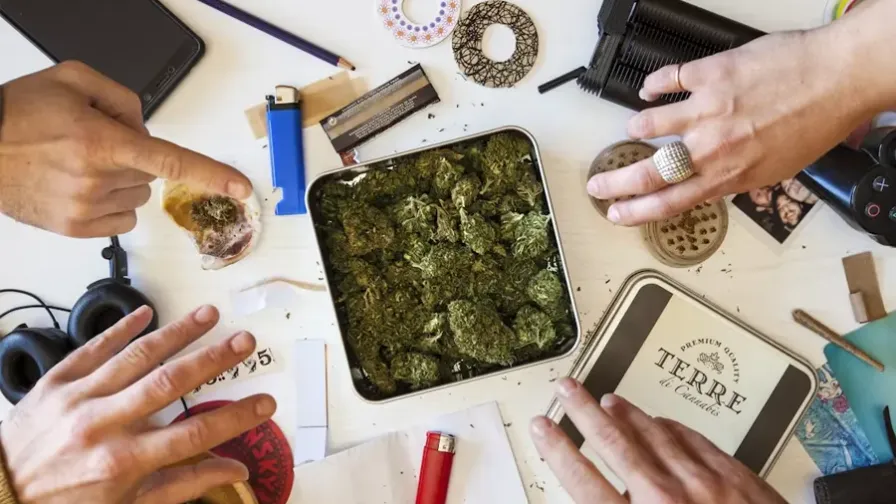
The range of cannabis accessories can be confusing at first. Grinders, bongs, pipes, rolling papers, filters, vaporizers, storage jars and smaller tools each have a purpose, but no one needs every item.
Accessories have evolved alongside cannabis culture. Traditional objects now sit alongside electronic devices, different filtration systems and more sophisticated storage options.
How do they differ, and when are they useful? Here are ten common categories, their purposes and key distinctions.
For an introduction to the plant, its active compounds and uses, start with ‘Cannabis: What It Is, How It Works and What You Should Know’.
1. Grinders
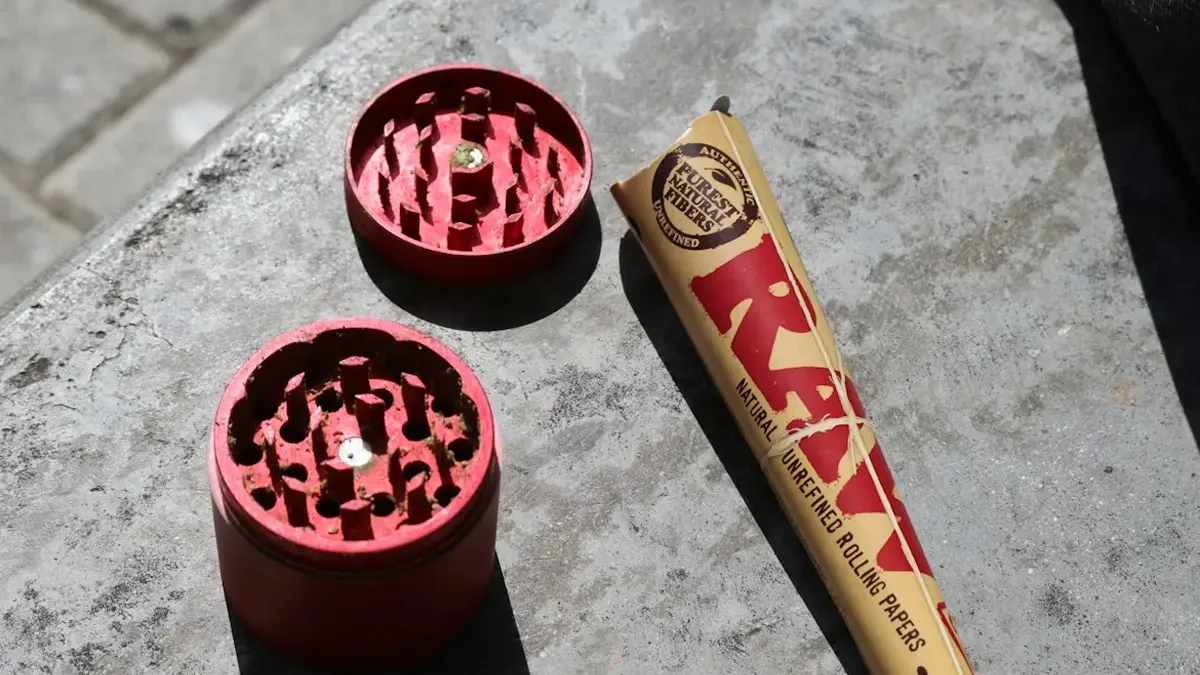
A grinder is one of cannabis culture’s best-known accessories: a small mechanical tool for breaking dried flower into more even pieces.
It usually has two rotating sections with teeth on the inside. Turning the sections against each other breaks up material between them.
The main differences concern construction and material. Plastic models are lightweight and simple, while metal grinders are usually more robust. Wooden models also exist.
Alongside two-piece designs, three- and four-piece versions are common. These may include a separate collection chamber and a screen for separating finer plant particles.
Smooth operation, durable materials and ease of cleaning are useful quality indicators. More complex construction does not automatically produce a better result.
2. Storage jars and airtight containers
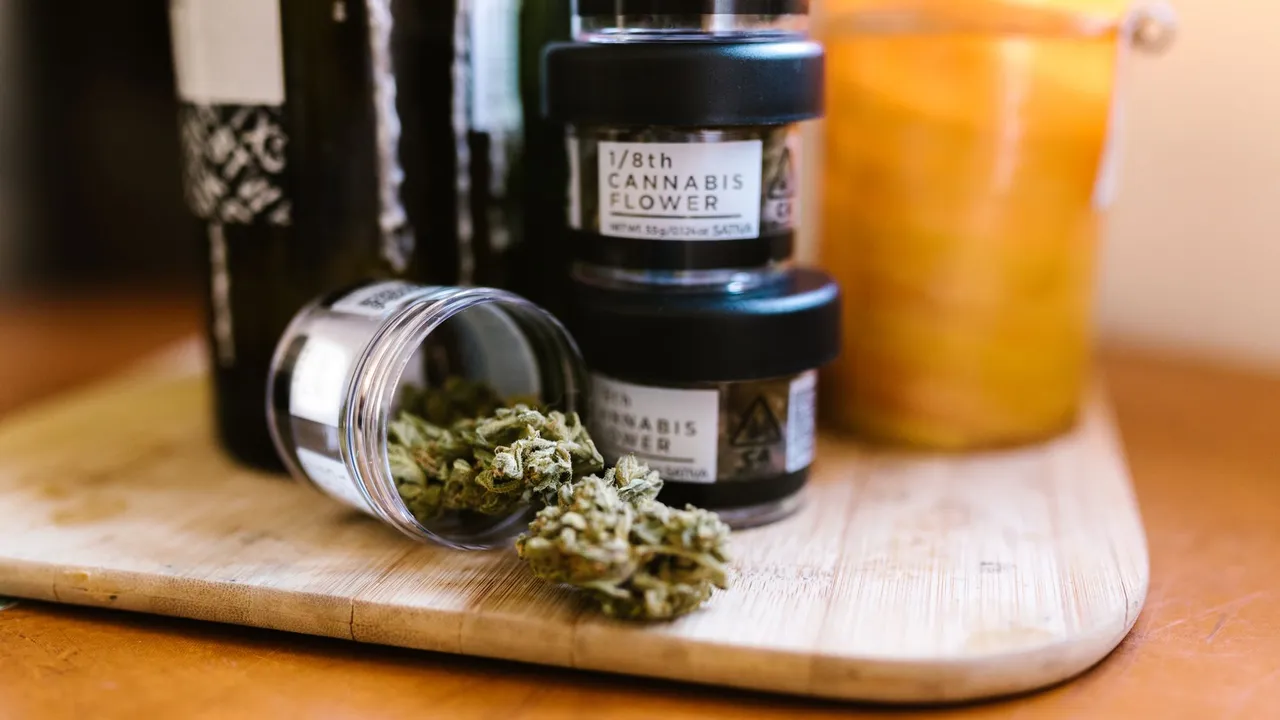
Light, air, temperature and moisture all matter when storing plant material.
Excess moisture and unsuitable conditions can encourage mould. Heat and strong light can affect the stability of plant compounds.
Storage options range from ordinary glass jars to containers with specialised seals and closures.
Glass is popular because it is easy to clean and does not readily absorb smells. Clear jars should still be protected from direct sunlight.
Airtight plastic or metal containers are another option. Some use closures designed to reduce air exchange.
These general-purpose storage products are sold in many homeware and accessory shops. For example, Bleiz also lists airtight containers of different sizes and designs.
3. Smell-resistant bags
So-called smell-proof bags aim to reduce odour escaping while keeping small items together. They usually use multiple layers; some incorporate activated carbon to bind certain odorous compounds.
Sizes vary considerably. Small versions resemble zipped pouches, while larger ones may include pockets, dividers and locks.

Actual odour resistance depends on materials, seams, zips and use. A manufacturer’s promise alone does not establish that a bag is completely odour-proof.
These bags also help organise small items. A lock may restrict casual access, but does not replace proper secure storage.
4. Rolling trays
A rolling tray has a flat base and usually raised edges, providing a dedicated surface for holding and organising small items.
Trays are made from metal, wood, glass or plastic. Basic versions are single-piece trays; more complex ones may have compartments or storage spaces.
In cannabis culture, trays are often decorative too, featuring illustrations, artwork and popular culture motifs.
Their basic function is simple, but their design often receives considerable attention.
5. Lighters and heating devices
Lighters are more varied than they initially appear. Options include ordinary soft-flame gas lighters, refillable designs, replaceable flints and jet lighters with concentrated flames.
Differences mainly concern ignition, fuel, flame shape and construction. Clipper is a familiar example in cannabis culture: its refillable construction and distinctive appearance have made it a popular accessory brand.
Open-flame devices carry burn and fire risks. Concentrated-flame models need particular care because their heat can damage surrounding objects.
6. Rolling papers and tips
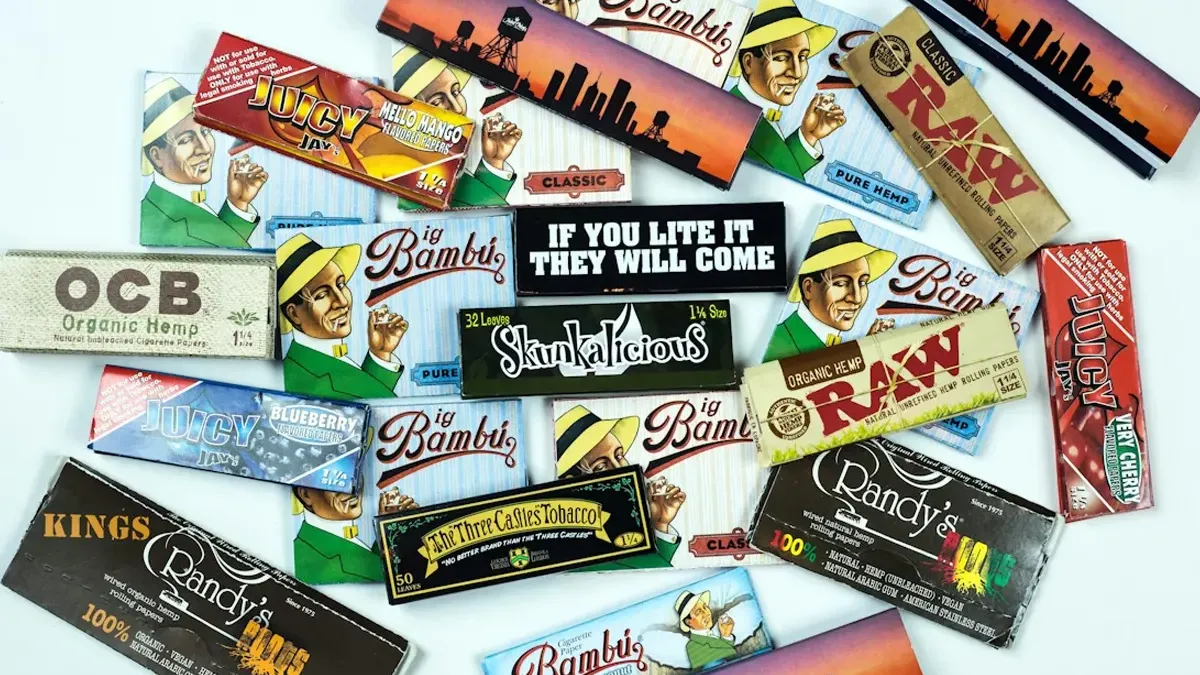
Rolling papers are among the oldest and most familiar smoking accessories. They differ in material, dimensions, thickness and production method. Rice-, hemp- and cellulose-based papers are common examples.
Names such as Regular, 1¼ and King Size describe size categories, although exact dimensions can differ between manufacturers.
Tips form a separate category. A simple cardboard tip maintains the rolled paper’s shape and serves as a mouthpiece. Reusable glass and wooden mouthpieces also exist. Natural material or an unbleached appearance does not make the resulting smoke safe to inhale.
7. Activated carbon filters
An activated carbon filter differs from a plain cardboard tip because it contains porous carbon. Activated carbon is used in many filtration technologies: its large internal surface can adsorb certain substances.
In smoking accessories, these filters alter smoke composition. Products differ in their carbon layer, diameter, housing and end-cap materials.
This does not make smoking safe. Filtration does not remove every harmful combustion product, and actual effectiveness depends on the particular filter.
A cardboard tip and an activated carbon filter therefore work differently, despite being used in similar settings.
8. Bongs and pipes
Pipes are among the oldest smoking devices. Their construction can be simple: a bowl, smoke channel and mouthpiece.
Materials include wood, metal, glass and ceramic.
A bong differs mainly through its water chamber. Smoke passes through water before reaching the mouthpiece, which can cool it.
Designs have become more complex over time, with different sizes, multiple chambers and percolators.
Joint sizes matter too: the bowl, downstem and adapters must match the device’s connections.
Cleaning and maintenance matter because residue and microorganisms can accumulate on dirty surfaces or in damp conditions.
Water filtration does not eliminate smoking’s health risks. Cooling smoke should not be confused with making it safe.
Our guide to bong bowls and adapters explains parts and joint sizes in more detail.
9. Vaporizers
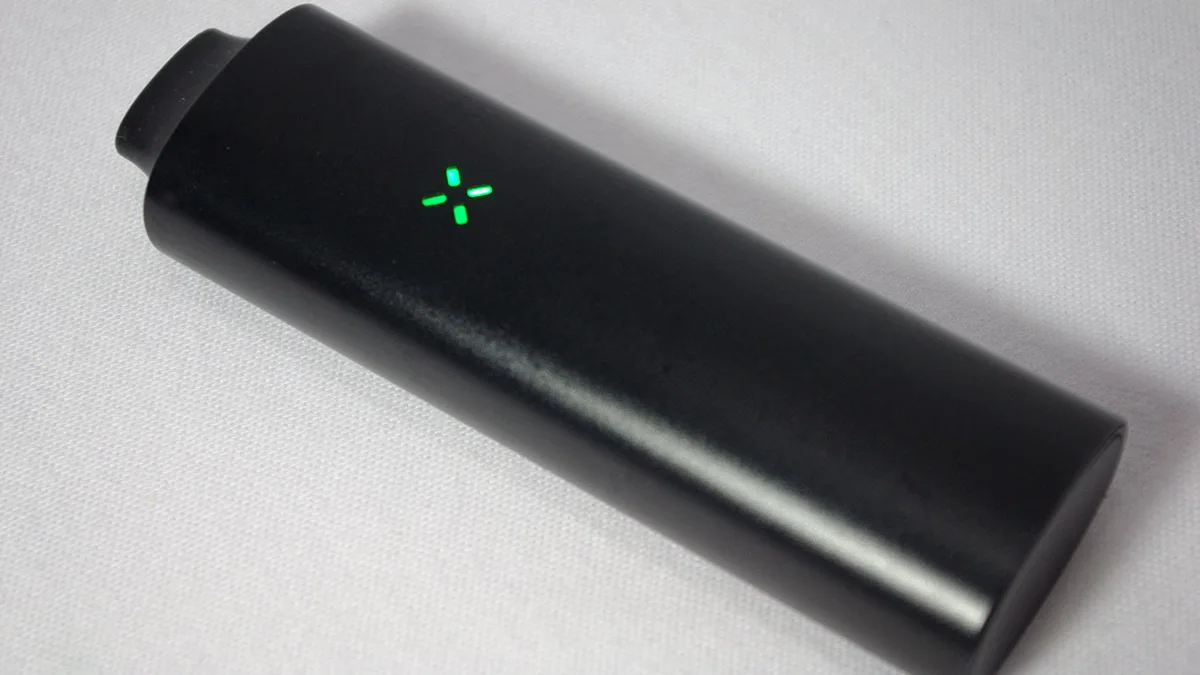
Vaporizers are among the fastest-developing accessory categories. Rather than ordinary combustion, they heat plant material or another substance specifically intended for the device.
Devices can be electronic or manual. Electronic models may have temperature controls, batteries and automatic heating programmes. Manual devices often use an external heat source.
Heating systems are usually described as conduction, convection or hybrid. Conduction transfers heat mainly through a hot surface, convection uses heated airflow and hybrid combines both.
Devices also differ in chamber size, airflow, battery design and maintenance requirements. Avoiding ordinary combustion may reduce exposure to some harmful smoke compounds, but neither the inhaled aerosol nor THC’s effects are risk-free.
For comparisons, see our 2026 vaporizer buying guide.
10. Cleaning tools
Different accessories become dirty in different ways.
Resin can collect on glass and metal, plant particles can enter moving mechanical parts, and deposits can build up in vaporizer air paths.
Cleaning tools include brushes, pipe cleaners and products formulated for particular materials. Follow the device manufacturer’s instructions: not every cleaner suits plastic, rubber seals or electronics.
Consider solvent flammability too. Alcohol-containing cleaners should not be used near hot devices or open flames.
Regular cleaning helps keep accessories in better condition and makes maintenance easier.
Does a beginner need all these accessories?
Certainly not. Different items serve different purposes, and many relate to particular methods of use or personal preferences.
Someone seeking information about plant storage, for example, does not need rolling papers. Nor are a multi-piece grinder, large tray or complex electronic device automatically essential.
Assess actual purpose, materials, maintenance and safety, rather than appearance or marketing promises alone. Learning about cannabis culture does not require owning smoking accessories.
Where can you learn about accessories in Estonia?
Estonia has several shops associated with cannabis culture and smoking accessories, commonly called headshops.
They differ in location, selection and specialisation. Some focus on smoking accessories; others also offer general-purpose storage, aroma products and other accessories.
One example in Tallinn is Bleiz Headshop, whose physical shop is on Narva maantee. General information and contact details are available on the Bleiz Headshop website.
Our map of Estonian cannabis-related shops lists headshops and CBD shops in different cities, with location information.
Frequently asked questions
What is a grinder and what is it used for?
A grinder is a mechanical tool for breaking plant material into more even pieces. Models differ in material, number of sections and construction.
How do bongs and pipes differ?
A pipe usually has a simpler design. A bong has a water chamber through which smoke passes. Water can cool smoke but does not make smoking safe.
How does vaporization differ from smoking?
A vaporizer heats material without ordinary combustion. This changes the composition of released compounds, but does not eliminate every potential health risk.
Does activated carbon remove every harmful substance from smoke?
No. Activated carbon can adsorb certain compounds, but cannot remove every harmful component of smoke.
Are cannabis accessories legal in Estonia?
Different requirements apply to different accessories. A general-purpose storage jar and a smoking pipe do not necessarily fall under the same rules. Special restrictions can apply to selling and advertising smoking accessories.
Summary
Cannabis accessories are a varied part of contemporary cannabis culture, ranging from simple storage and organisation tools to more complex smoking and vaporizing devices.
For each category, it helps to understand how it works, its construction, maintenance and potential risks.
Clear, factual information makes it easier to distinguish technical features from advertising claims and understand different aspects of cannabis culture.