
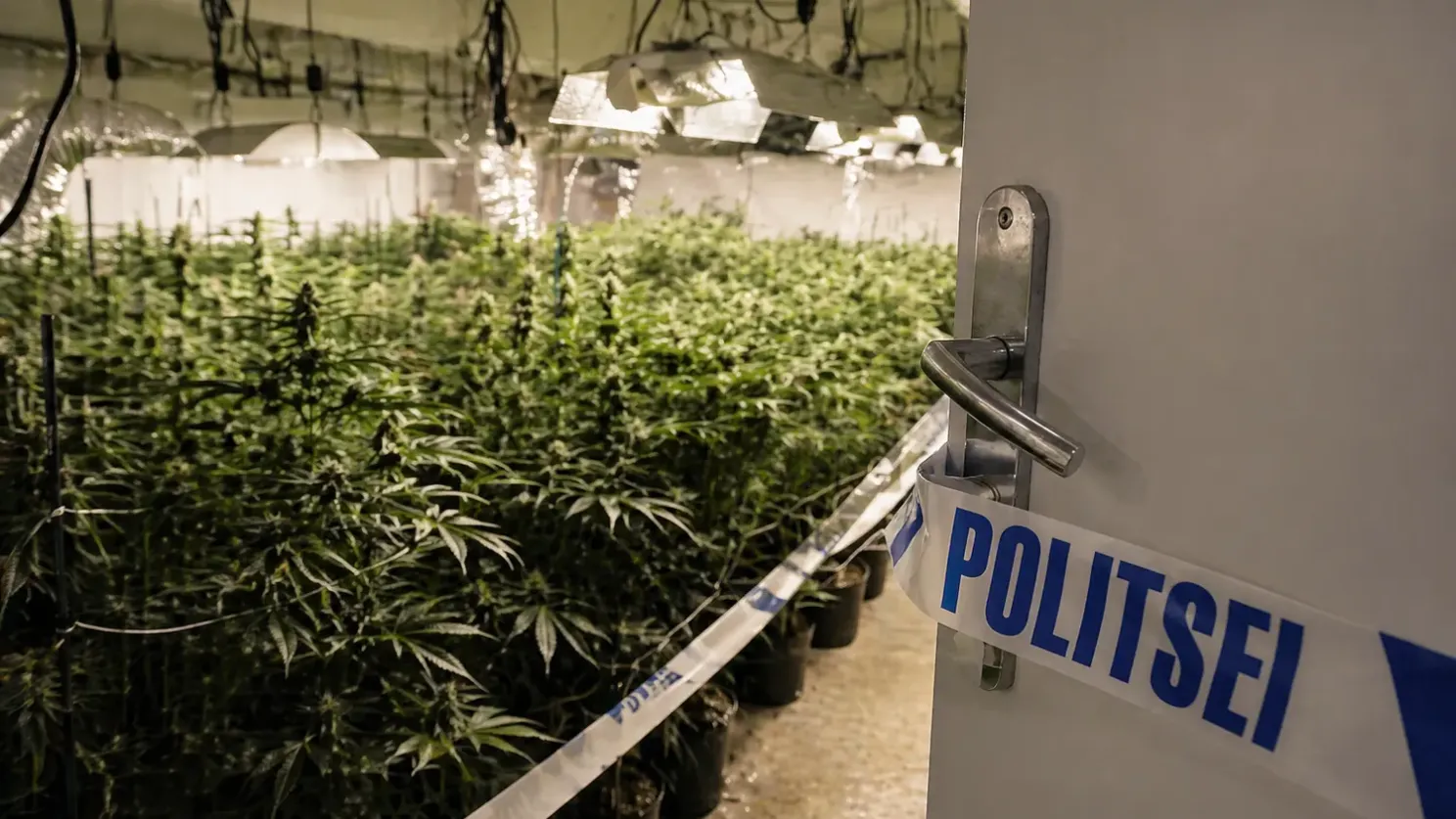
According to Delfi’s court report of 24 April 2026, two men received seven-year prison sentences. The later court account must be distinguished from an earlier police announcement. Police said in 2025 that they found 253 plants and seized 54 kilograms of plants and sale-ready material at a Tallinn grow. The case began in 2024, when two construction workers decided to enter the cannabis business.
Editorial clarification, 15 November 2026: 13 January 2025 was the date of the search and detention. The police’s 54-kilogram figure included plants and sale-ready material. Details and quotations concerning the later trial come from Delfi’s 24 April 2026 report. The judgment’s full text and whether it became final were not independently confirmed during this review.
| 📋 CASE FACTS AS REPORTED Location: Uus Maailm, Tallinn, between a nursery and Tallinna Humanitaargümnaasium Discovered: 13 January 2025, after a passer-by reported a cannabis smell Police’s 2025 account: 253 plants; the 54 kg seizure included plants and material ready for sale Reported investment: approximately €20,000 Defendants: Rain Viiralt (39) and Ermo Saar (48) Reported sentences: seven years each, counted from detention on 13 January 2025 |
How the grow was established
In summer 2024, Ermo Saar approached the owner of a dilapidated building in Tallinn’s Uus Maailm district. It had demolition permission and was in poor condition, making rent inexpensive. Saar had rented at the address years earlier, reportedly for a furniture business. That tenancy had caused no problems, so the new arrangement raised few questions.
The stated plan was handmade soap production, reflected in his company name, Soapmaker OÜ. Saar later told investigators he had not begun that activity. The actual intention was a cannabis grow.
Saar and fellow construction worker Rain Viiralt said they assembled approximately €20,000 for tents, drying equipment, LED lamps and ventilation. The operation eventually occupied both floors.
They obtained information online and from acquaintances. Viiralt’s account involved a third person, identified as RR, who funded major costs and had cultivation knowledge. Saar described only the two men. According to the report, RR was subject to separate proceedings that had not reached court.
The first crop: a failure
The first five plants reportedly yielded 300 grams, distributed among friends. Another attempt went worse: some plants rotted, others dried out, and the result was full of seeds and unusable. Viiralt described a large clean-up and financial loss.
Viiralt said the failed crop led to conflict with RR, who had financed the project, while Viiralt had paid only for small consumables. Losses and tensions were substantial.
A larger, more professional attempt
According to Viiralt’s account, RR proposed a new plan in 2024 with new LEDs, improved equipment and greater scale. The grow expanded across two floors, and a fourth person helped at harvest.
Sales began, but Viiralt said he received no proceeds. RR repeatedly cited rent, electricity and equipment bills. Without steady work at the time, Viiralt borrowed from relatives and his partner, while being told payment would follow once expenses were covered.
Viiralt said he wanted to leave but was afraid, describing months of stress. He had hoped the project would help him become financially established and buy a home.
Discovery and detention
On 13 January 2025, Viiralt arrived to water plants ahead of a planned harvest the following day. Police arrived first, following a passer-by’s report of a cannabis smell and suspiciously covered windows.
The police announcement described 253 plants and 54 kilograms of plants and sale-ready material, two detentions and subsequent charges. It did not describe a conviction already delivered on 13 January.
Trial and sentences
The report said prosecutors charged the men with drug offences committed for substantial financial gain, an offence category carrying a possible life sentence. The seized material’s estimated value, using retail and wholesale prices, exceeded €160,000.
Police seizure figures, estimated sales value and conduct ultimately established by a court must be distinguished. Dividing weight by the number of participants does not determine legal classification; the judgment’s reasoning is needed.
Saar declined to testify, so earlier statements were read out. Viiralt testified and expressed regret, saying he considered the activity wrong and did not intend to use cannabis again.
According to Delfi, the court convicted both men of unlawful cannabis cultivation and handling as a group and sentenced each to seven years. The terms were counted from detention on 13 January 2025.
Source: Delfi, reporting by Aleksander Pihlak
Discussion: r/420eesti on Reddit • 420eesti on Facebook