
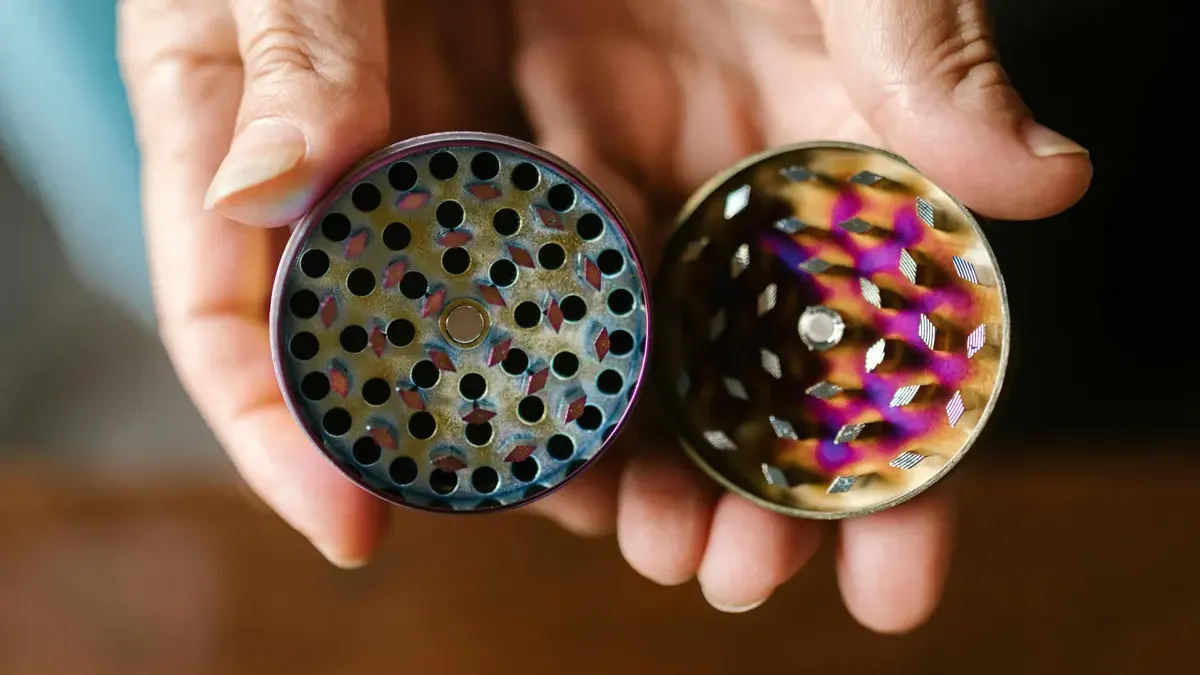
A grinder that turns stiffly or has resin-coated teeth or a blocked screen usually needs cleaning rather than replacement. Light deposits may take only minutes, while deeper cleaning and drying take longer. Identify the material first: metal, acrylic and wood need different care.
What do you need?
Usually:
- a soft toothbrush or small brush;
- cotton swabs;
- a wooden toothpick or another soft tool;
- paper towel or a microfibre cloth;
- warm water;
- mild unscented dishwashing liquid;
- if needed, IPA for compatible metal parts.
IPA is highly flammable. Use it with ventilation, away from flames and other ignition sources.
A five-step cleaning routine
1. Dismantle
Unscrew the grinder fully.
Separate every section of a three- or four-piece design.
Do not force stuck parts. Dry cleaning around the edges and threads may help first.
2. Brush away loose deposits
Gently tap out loose material and brush the teeth, edges and threads.
Do this before adding liquid: loose dry particles are easier to remove than wet deposits.
A wooden toothpick may help in corners. Avoid sharp metal tools that scratch surfaces.
3. Use IPA only on compatible metal parts
For stainless steel or metal with a suitable finish, IPA may help remove stubborn resin.
A quick clean does not necessarily require full immersion.
Use a lightly dampened swab or cloth on:
- teeth;
- internal edges;
- threads;
- a compatible metal screen frame.
For anodised, painted or coated products, check manufacturer instructions before using alcohol. Brief exposure is not universally safe, and prolonged soaking can damage some finishes.
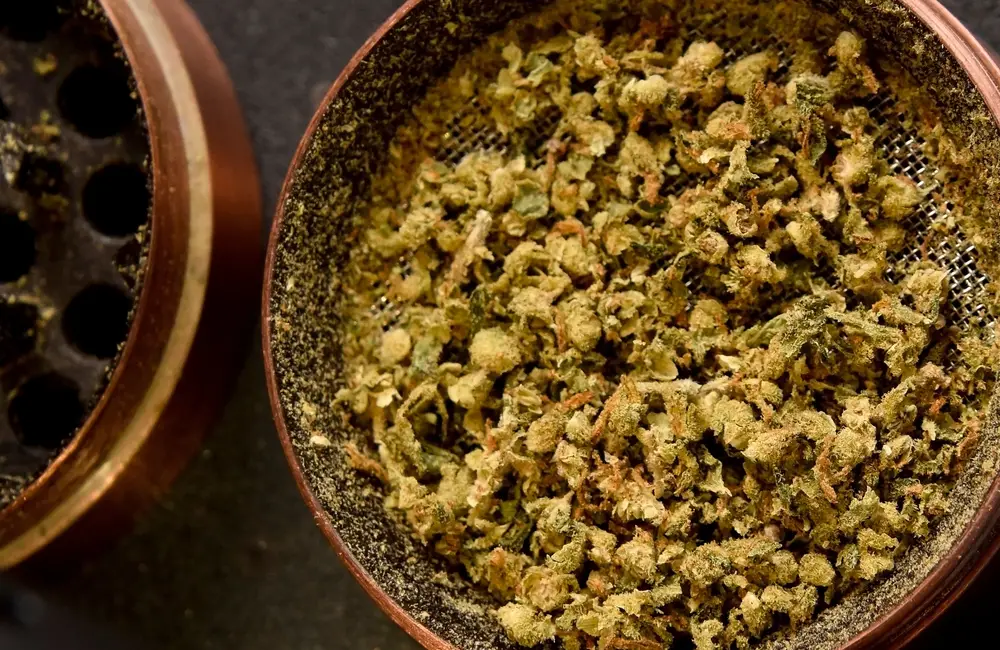
4. Rinse
After IPA or detergent, rinse compatible cleaned parts thoroughly with clean warm water as instructed.
No cleaning residue or strong solvent smell should remain.
5. Dry fully
Wipe off visible water, then let all parts dry fully before reassembly. If resistance remains, inspect threads for trapped particles.
Cleaning aluminium grinders
Many aluminium models are anodised or painted. Begin with:
- a dry brush;
- warm water and mild detergent where permitted;
- local IPA treatment only where the manufacturer confirms compatibility.
Do not recommend prolonged soaking for all aluminium models. Finish resistance varies. Avoid:
- steel wool;
- metal brushes;
- strongly abrasive pads;
- acetone;
- aggressive cleaners.
These can scratch surfaces or damage finishes.
Cleaning stainless steel
Stainless steel is generally resilient, although the complete product’s construction still matters.
Suitable methods may include:
- warm water and dishwashing liquid;
- a soft brush;
- IPA for stubborn deposits where compatible.
Long soaking is not necessary if a swab and brush remove the dirt.
Cleaning acrylic or plastic
Avoid IPA on acrylic: some plastics can become cloudy, weakened or cracked. A gentler approach is:
- separate the parts;
- use warm rather than boiling water;
- add a little mild detergent;
- brush softly;
- rinse thoroughly;
- allow complete drying.
Do not boil or dishwash plastic unless explicitly approved.
Cleaning wood
Wood requires particularly careful treatment.
Do not:
- soak it in water;
- immerse it in IPA;
- use strong cleaners;
- put it in a dishwasher.
Begin with a dry soft brush and wooden toothpick. If needed and compatible, use a barely damp cloth, then dry fully. Excess moisture can swell or distort wood.
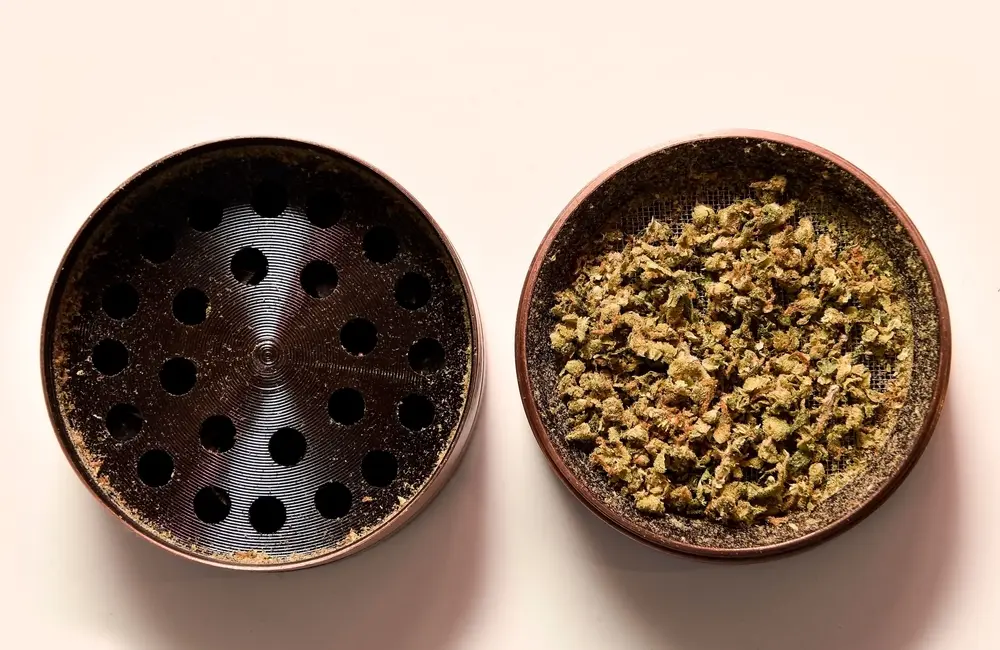
Cleaning a fine screen
A four-piece model’s screen is more delicate than solid teeth. Start by:
- tapping gently;
- using a soft brush;
- avoiding heavy pressure.
A lightly IPA-dampened swab may suit compatible metal mesh. Avoid prolonged alcohol exposure where adhesives or sensitive coatings are present.
Forceful brushing can stretch or damage mesh.
Should you use salt?
Salt and IPA are often used on glass because salt is abrasive. Grinders generally do not need this: coarse salt and vigorous shaking can scratch coatings. A soft brush and local cleaning offer more control.
Can a grinder be boiled?
Not as a universal method. Heat can damage:
- plastic;
- paint or glued parts;
- magnet attachments;
- some coatings;
- wood.
Warm water is sufficient for many compatible products.
Can it go in a dishwasher?
Only if the manufacturer permits it.
Heat and strong detergents can damage anodised, painted and other finished surfaces.
Metal construction alone does not establish dishwasher compatibility.
What mistakes should be avoided?
Common examples include:
IPA on acrylic or plastic.
It can cloud or damage the material.
Soaking wood.
It may swell or distort.
Sharp metal tools.
They can scratch surfaces.
Aggressive solvents.
Acetone and similar products can damage plastics and coatings.
Reassembling while wet.
Every section should dry fully.
Long IPA baths for coated models.
Some finishes can dull or discolour.
How often is cleaning needed?
No single schedule suits every grinder.
Clean when:
- turning becomes harder;
- dirt accumulates in threads;
- teeth are heavily coated;
- the screen clogs;
- an unpleasant smell develops.
Regular light dry brushing reduces the need for deep cleaning.
When should a grinder be replaced?
Cleaning does not repair structural damage. Consider replacement for:
- broken teeth;
- flaking or crumbling coatings;
- cracked plastic;
- a distorted body;
- physically damaged threads;
- broken or detached mesh.
See our grinder choosing guide before replacing it. A flaking coating should not simply be repeatedly cleaned and ignored.
Frequently asked questions
Is IPA suitable for cleaning a grinder?
IPA can suit compatible metal, depending on finish and care instructions. Avoid it on acrylic, plastic and wood.
Can 70% IPA be used?
70% IPA may work on compatible parts. Higher concentrations contain less water and evaporate faster, but material compatibility, ventilation, rinsing and complete drying matter more than choosing a percentage alone.
Can vodka replace IPA?
Vodka is not a preferred routine cleaner: it contains substantial water and may contain other ingredients. Mild washing or manufacturer-approved IPA is more controlled.
Why does it still turn poorly after cleaning?
Deposits may remain around threads or the lid. Dismantle and inspect those areas, using a brush or swab.
If a completely clean grinder still jams, threads may be worn or damaged. For suitable tools and products, see Bleiz Headshop’s cleaning accessories.
Summary
A light clean can take around five minutes, but drying may take longer. Metal: dry brushing and approved local solvent treatment if needed, followed by appropriate rinsing and full drying. Plastic: gentle warm washing. Wood: mainly dry care and minimal moisture.
Avoid aggressive solvents, metal scraping and indiscriminate soaking. Light regular maintenance keeps movement smoother and reduces later work.