
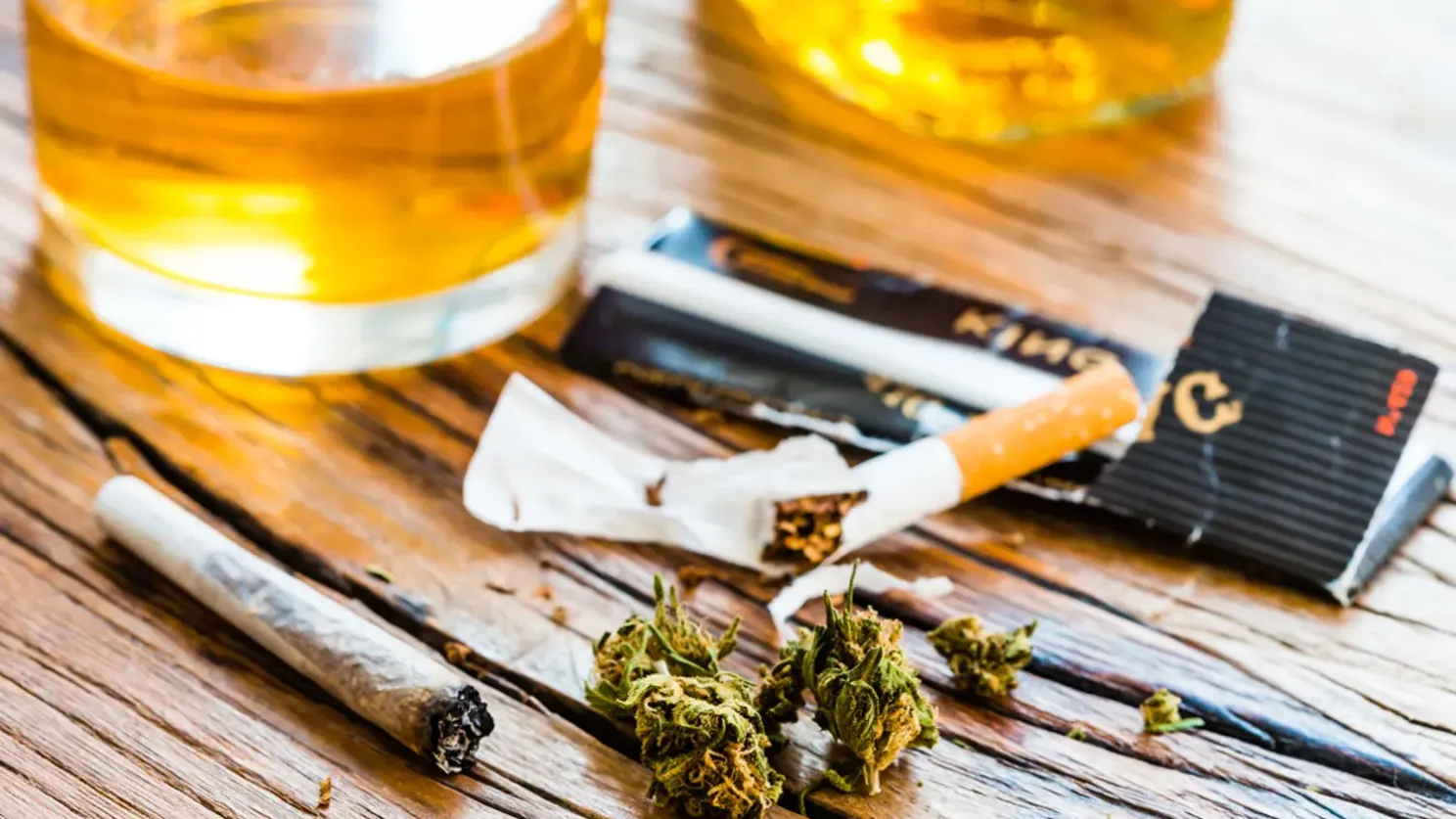
Cannabis and tobacco smoking are often treated as equivalent, but their effects on human airways may differ. A University of California, Davis study found that certain inflammation-related compounds in cannabis users’ exhaled breath more closely resembled those of non-users than tobacco smokers.
Published in Respiratory Research, the study analysed exhaled breath from 254 people, comparing biological differences associated with tobacco, cannabis and electronic delivery devices.
The findings need cautious interpretation. Tobacco users had higher levels of several compounds associated with inflammation and oxidative stress, while cannabis users’ measurements were often closer to those of non-users.
This does not establish that cannabis smoke is safe for lungs. The study examined particular biological markers rather than long-term lung disease. It mainly helps explain why different inhaled products should be investigated separately.
What did the researchers investigate?
UC Davis researchers conducted the study, published in February 2025.
It included 254 participants: 132 had used at least one tobacco or cannabis product during the previous 30 days, while 122 had used neither.
The researchers distinguished tobacco smokers, nicotine vapers, cannabis smokers and people vaping THC or CBD products. Some used multiple products, so groups overlapped.
For example, 75 participants reported cannabis smoking and 63 reported vaping THC or CBD. These were not wholly independent groups.
The aim was not to establish whether particular products cause lung cancer or chronic disease. Instead, the researchers examined differences in the airway’s biological environment associated with use patterns.
They analysed metabolic compounds collected from exhaled breath.
How can breath reveal inflammation-related changes?
Airway health is commonly assessed through lung-function tests, X-rays or CT scans. This study used a different approach.
Participants breathed through a collection system for approximately 20 minutes. Tiny droplets in their breath were cooled and collected.
The resulting fluid is called exhaled breath condensate.
It contains metabolic compounds that can help researchers investigate biological processes in the airways.
The team focused on oxylipins: fatty-acid-derived signalling molecules involved in processes including inflammation and oxidative stress.
Oxidative stress occurs when reactive compounds and the body’s mechanisms for neutralising them become unbalanced. Over time, this can damage cells and tissues.
A change in oxylipin levels does not automatically establish disease. These compounds participate in normal and disease-related processes; their significance depends on context.
Inflammation-related markers were higher in tobacco users
One of the clearest findings concerned tobacco smoking.
Several oxylipins associated with inflammation and oxidative stress were higher in tobacco users than in non-users.

This is consistent with established evidence about tobacco smoke’s harmful airway effects.
Tobacco smoke contains many chemicals that can damage cells and promote inflammatory processes.
Long-term tobacco smoking is an established cause of lung cancer, chronic obstructive pulmonary disease and other conditions.
The UC Davis work added information about how smoking-related differences can appear in metabolic compounds measured in breath.
Cannabis findings surprised the researchers
The cannabis results attracted particular attention.
These participants’ oxylipin profiles more closely resembled non-users than tobacco smokers. Some measured compounds were lower than in non-users.
In the university’s account, pulmonologist and co-author Nicholas Kenyon described the findings as unexpected.
Earlier laboratory research had found inflammation- and oxidative-stress-related cellular changes from both tobacco and cannabis smoke.
Differences in human samples suggest the biological response may be more complex than findings from isolated cells.
Cannabis compounds may influence some inflammatory processes. Cannabinoid–immune-system interactions remain an active research area.
However, this study did not show that cannabis protects lungs against inflammation. Lower levels in one marker group do not rule out other damage mechanisms.
Does this mean cannabis smoke is safer than tobacco smoke?
A single study cannot settle that question.
The researchers measured airway-related markers rather than directly assessing the risk of lung cancer, emphysema or other chronic respiratory diseases.
The study supports different metabolic profiles associated with cannabis and tobacco use. It does not establish that inhaling cannabis smoke is harmless.
Burning cannabis, like other plant material, produces smoke containing particles and chemical compounds.
Even without tobacco, inhaling smoke can irritate airways and cause coughing and other symptoms.
Two questions must be separated: whether cannabis and tobacco produce identical biological changes, and whether cannabis smoking carries long-term health risks.
This study informs the first question. Addressing the second requires broader, longer-term research.
What do newer studies show?
Subsequent research has used other methods to investigate cannabis smoking.
The Canadian CANUCK study, published in the European Respiratory Journal in January 2026, compared 139 cannabis-smoking participants with 57 never-smokers.
Alongside symptom assessments, researchers used lung-function tests, CT scans, specialised MRI and airway-cell analysis.
Cannabis-smoking participants reported more respiratory symptoms. Greater cumulative exposure was also associated with differences in lung function, imaging and airway immune responses.
A major limitation was overlapping exposure: 84% of cannabis-smoking participants also reported cigarette smoking and/or vaping. This makes cannabis smoke’s independent contribution harder to isolate.
CANUCK does not automatically contradict UC Davis. They measured different outcomes.
UC Davis examined metabolic compounds in exhaled breath; the Canadian team also examined symptoms, lung function and airway changes.
Together, they show why a few inflammatory markers cannot provide a complete assessment of smoke exposure.
Smoking and vaporisation are different
The method of use matters when evaluating health effects.
Smoking heats plant material to combustion, producing smoke with many compounds beyond the desired active ingredients.
Vaporisation heats material without the same combustion, changing the composition and quantities inhaled.
UC Davis distinguished cannabis smoking from vaping THC and CBD products, finding metabolic differences between those groups too.
That does not make every vaping device equally safe.
Dry-herb vaporisers, liquid-based electronic devices and concentrate devices can produce very different aerosols.
Temperature, device design and product composition all influence risk.
Reduced exposure to some combustion compounds does not automatically establish an equivalent reduction in long-term disease risk.
Smoking and vaporisation therefore deserve separate investigation rather than being treated as interchangeable.
Why are comparisons difficult?
Comparing tobacco and cannabis presents several scientific challenges.
First, patterns differ. Someone may smoke tobacco daily but cannabis only occasionally; others regularly use both.
Second, cannabis is sometimes mixed with tobacco, making the source of biological changes harder to distinguish.
Third, studies measure different outcomes: cough, lung capacity or inflammatory markers, for example.
Short-term biological changes may also fail to predict diseases that develop over decades.
The UC Davis classifications relied on self-reported use. Participants were recruited mainly around university facilities and had an average age below 30.
The findings therefore cannot automatically be generalised to every age group or to people with decades of exposure.
Why does this research matter?
Legal restrictions, social attitudes and practical barriers have shaped cannabis health research for decades.
One question has been whether tobacco-smoke risks can be transferred directly to cannabis smoke.
New research indicates that the answer is not always straightforward.
The plants contain different bioactive compounds and are often used differently. However, burning either produces inhaled combustion products.
Research needs to go beyond a simple smoker/non-smoker distinction and consider frequency, amount, method and concurrent tobacco use.
Investigating both harms and differences can help develop more precise health guidance.
Our article Cannabis Explained: Effects and Essential Facts covers plant composition, cannabinoids and their mechanisms in more detail.
Conclusion: what did UC Davis actually show?
Several inflammation-related compounds in cannabis users’ breath were closer to non-user levels than to tobacco-smoker levels.
This suggests that biological changes associated with the two products need not be identical.
It did not establish that cannabis smoke is safe or directly assess long-term lung disease risk.
Later studies have identified respiratory symptoms and potential injury associated with cannabis smoking. Findings need to be considered together.
The most useful conclusion is that cannabis effects require precise, independent investigation without oversimplified assumptions.
Cannabis is different from tobacco, but inhaling smoke is not risk-free.
Continuing research can clarify which differences matter clinically and how smoking-related harm can be reduced.
Discuss new findings in the 420Eesti Reddit community, which shares cannabis news, research and experiences.
Sources
Rojas et al. (2025): exhaled breath condensate study