
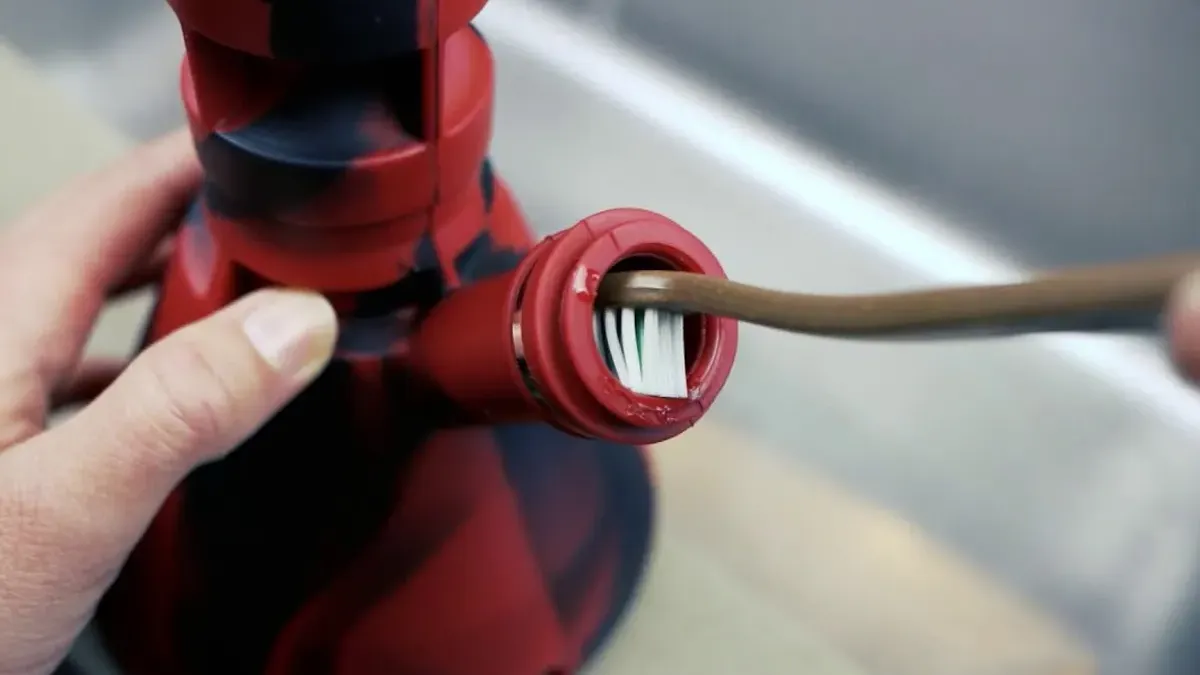
Silicone resists drops, but resin and odours can collect on its surface. Light deposits can often be removed with warm water, mild dishwashing liquid and a soft brush.
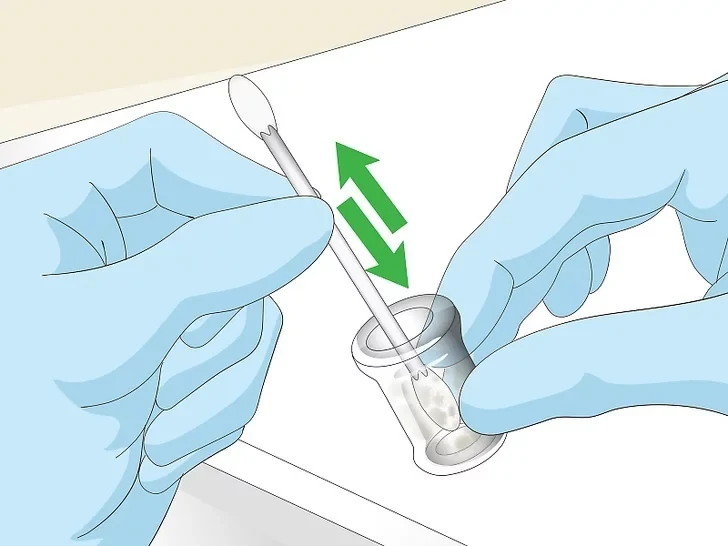
A short cleaning routine
You need: warm water, mild dishwashing liquid, a soft bottle or pipe brush and a cloth. Baking soda or a cotton swab may help where compatible.
Remove glass bowls and downstems and clean them separately.
- Separate parts
Dismantle only as far as the design allows, removing bowls and inserts. - Pre-rinse
Rinse silicone surfaces with warm water and gently dislodge loose debris. - Wash
Use warm soapy water and a soft brush. A brief soak may loosen deposits where the manufacturer permits it. - Odour and residue
A little baking-soda paste may help on compatible surfaces. Brush gently and rinse thoroughly; adding acidic ingredients is unnecessary. - Rinse and dry
Remove all detergent with clean water. Wipe excess moisture away and let every part dry completely. A fixed two- or three-minute wait does not guarantee dryness.
For a quick rinse, gently agitate compatible parts with warm soapy water for around 20–30 seconds, then rinse thoroughly.
For stubborn deposits
- Chilling
Some silicone products tolerate a freezer treatment that makes residue brittle. Use this only if the manufacturer permits it for the complete part, without incompatible inserts or adhesives. Remove residue gently, then wash normally. - Alcohol compatibility
Do not assume a short isopropyl-alcohol rinse is safe for every silicone product. Use it only where explicitly permitted for that part, follow the specified procedure and rinse where instructed. Allow complete drying away from ignition sources. - Avoid
Acetone, chlorine-based cleaners and abrasive pads. Do not boil assembled parts with adhesives or incompatible inserts unless the manufacturer explicitly allows it.
Glass bowls and downstems
Clean removed, cool glass parts separately using a compatible product. IPA may be appropriate for plain glass under the care instructions; avoid forceful shaking or contact between fragile pieces. Rinse thoroughly and dry completely.
How often should it be cleaned?
- After use: empty, rinse where appropriate and allow to dry.
- Regularly: use a gentle soap-and-brush clean before residue builds up.
- Heavy use or persistent residue: use the manufacturer’s approved deeper-cleaning method rather than applying a universal monthly solvent routine.
Safety and disposal
- Ventilate the area and keep flammable IPA away from heat and flames.
- Never mix IPA with bleach or chlorine-based cleaners.
- Dispose of solvent waste according to local requirements; do not pour substantial amounts down drains.
Frequently asked questions
Can it go in a dishwasher?
Only if the manufacturer permits the particular product. Remove incompatible inserts and follow the specified programme. Do not assume every silicone assembly is dishwasher-safe.
Why does it still taste or smell of soap?
Use less detergent and rinse for longer with clean warm water.
Does salt help?
Coarse salt is generally less useful here than on glass. A soft brush and compatible gentle cleaning are more controlled options.
Related reading: how often to clean bongs and pipes and choosing between bong materials.