
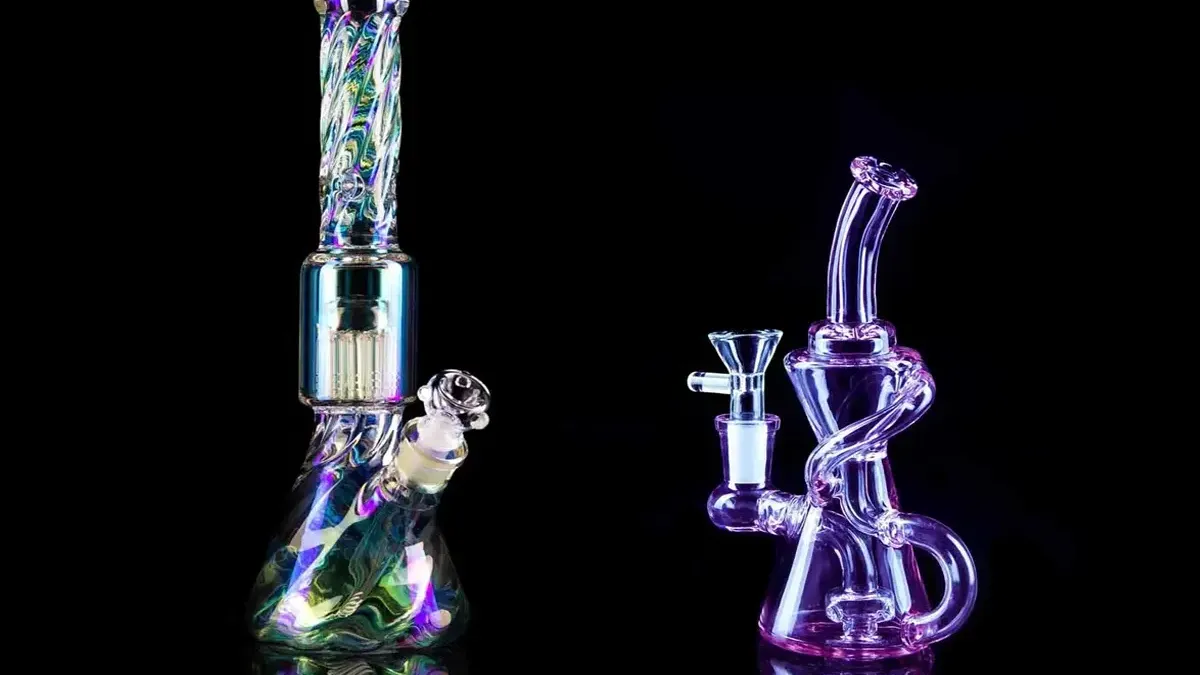
Size is an early question when comparing bongs: a compact model or a larger chamber with more accessories? Neither is universally better.
Small models may cost less, store easily and clean quickly. Larger designs provide more room for cooling, downstems and percolators. Height alone does not determine the experience: a well-designed 25 cm model may be more practical than an inexpensive 50 cm tube.
What does size affect?
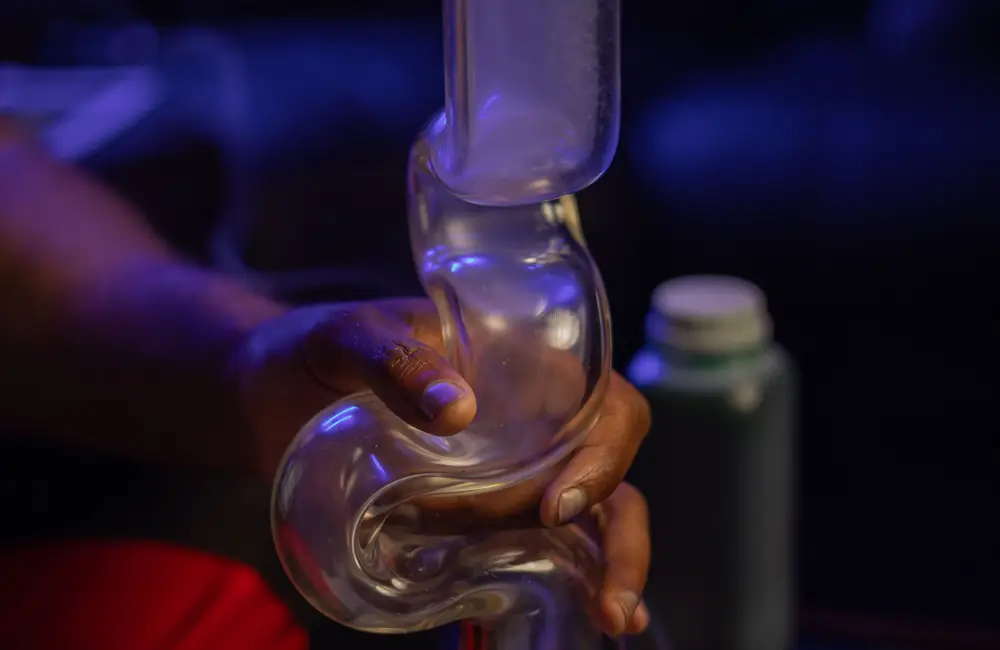
The most direct differences are chamber volume and path length. A larger body generally offers more space and a longer route to the mouthpiece. Greater contact with water and glass may aid cooling.
A small chamber fills quickly and has a shorter path, which can feel more immediate. Size remains only one factor.
Other influences include:
- internal diameter;
- downstem design;
- water level;
- percolator number and type;
- bowl and joint size;
- narrow restrictions along the air path.
Do not judge solely by centimetres.
What counts as small?
There is no official threshold. One convenient comparison is:
Small: up to 25 cm.
Medium: roughly 26–40 cm. Large: 41 cm and above. These are descriptive categories, not standards; identical heights can conceal very different designs.
Advantages of small models
Compactness saves shelf or cupboard space and makes carrying easier.
They usually need less water and simpler models empty and rinse quickly. Prices tend to be lower, although materials and design create exceptions.
Typical advantages include:
- less storage space;
- easier carrying;
- often lower prices;
- less water;
- easy cleaning with simple construction;
- less bulky glassware at home.
Drawbacks of small models
A shorter path leaves less space and time for cooling. Very small designs may feel hotter or harsher than a larger well-designed model.
Compact bodies have less room for complex percs or large chambers. A small footprint and high centre of gravity can also make them easier to tip.
Advantages of large models
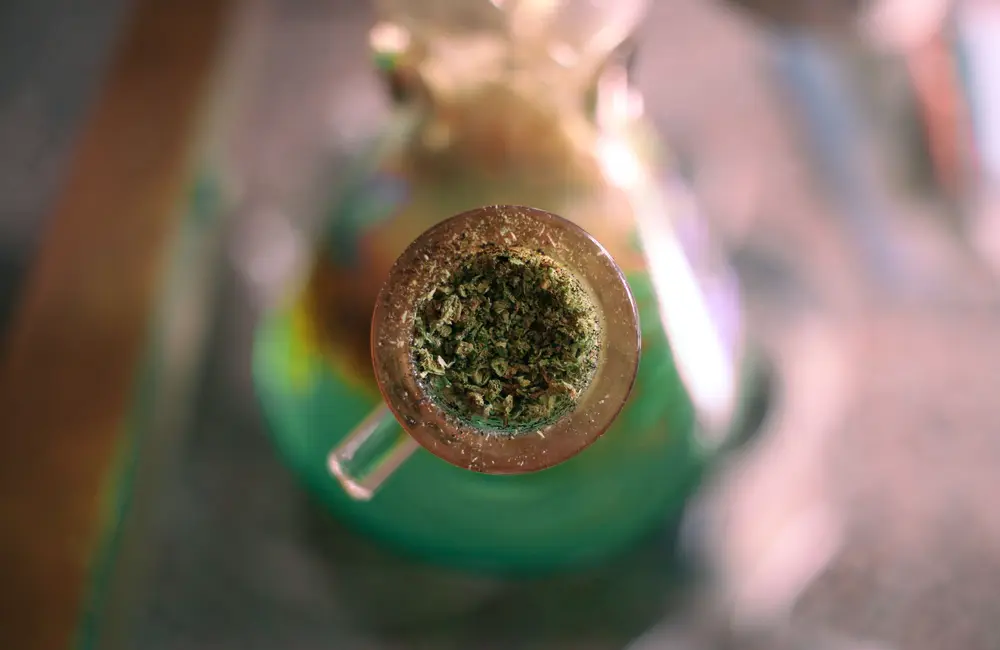
More room allows longer paths and additional cooling features, often including:
- diffuser downstems;
- percolators;
- ice catchers;
- larger water chambers;
- wider stable bases.
These can matter more than height alone. Large, simple straight-tube or beaker designs can also provide good cleaning access.
Drawbacks of large models
A 40–60 cm glass piece requires a secure dedicated place and does not fit easily in a drawer.
It is harder to transport, and breakage can be costly. Multiple percs, narrow chambers and complex internals can make cleaning substantially more demanding.
Larger does not automatically mean simpler.
Does a larger bong cool more?
Often, but not because of size alone.
Water removes heat, and a longer route allows more heat transfer. Larger bodies often accommodate more water and diffusion.
A well-designed small perc model can outperform a large simple tube for cooling. Consider size + chamber + downstem + percolator + airflow together.
Cooler or less irritating smoke is not harmless. Water can trap some particles, but does not remove every harmful compound.
Does larger mean better flavour?
There is no simple rule. Extra cooling and diffusion may feel smoother, while some prefer a simpler design for a more direct flavour.
More percolators do not universally improve taste. Material, cleaning and stale water also matter; dirt may influence flavour much more than a 10 cm height difference.
14.5 mm or 18.8 mm?

Larger models often use 18.8 mm joints, smaller ones 14.5 mm, without either being inherently better. Size mainly determines component compatibility.
Overall airflow can still be limited by a narrow perc or downstem. Choose compatible parts rather than assuming a bigger number guarantees an easier draw.
What about percolators?
A perc divides airflow into smaller bubbles and increases water contact, potentially changing cooling and feel.
Complex systems may increase resistance and cleaning effort. A simple design with a well-made diffuser downstem can be more practical than multiple percs.
What suits a first purchase?
A simple model around 20–35 cm can provide a useful balance:
- reasonable compactness;
- adequate chamber room;
- manageable cleaning;
- a wide range of designs;
- no need for a high price.
Experience with the basic design can clarify whether a smaller model or additional features would be useful later.
When does a small model make sense?
Reasons include:
- limited storage;
- occasional carrying;
- a small budget;
- a preference for simple construction;
- quick maintenance;
- finding large glassware impractical.
Small silicone or robust designs can appeal when drop resistance matters more than appearance.
When does a large model make sense?
Reasons include:
- mainly home use;
- wanting a larger chamber;
- specific perc or ice-catcher features;
- having secure storage;
- accepting additional maintenance;
- preferring a larger, stable glass body.
Do not buy one solely because greater height looks impressive.
Design and convenience matter more than maximum height.
Material may matter more than dimensions
A 20 cm silicone model and a 40 cm thin-glass model differ in much more than size. Glass, silicone, acrylic and ceramic have different durability and care needs.
Glass thickness and composition also matter. Consider at least:
size, material, construction and maintenance. Appearance and extra features follow.
Quick comparison
Small: compact, portable and often affordable. Simple models clean easily, but tiny chambers offer less cooling room.
Medium: a versatile compromise, with manageable dimensions and room for a reasonable chamber and simpler diffusion.
Large: more room for water and features, mainly suited to home use. More storage and potentially greater cleaning effort are required.
How should you choose?
Without a clear preference, a simple 25–35 cm model is a balanced starting point rather than either extreme.
Choose smaller for storage and portability, or larger for particular chamber and cooling features when it will stay mainly at home.
A well-built, regularly cleaned medium model can be more practical than a large complex one that becomes difficult to maintain.
Compare dimensions, weight, stability and ease of cleaning using the same criteria for each design.
Summary
Size changes chamber volume, storage, carrying and space for cooling or diffusion. Small models prioritise compactness, large ones additional space, with medium designs often offering a versatile compromise.
Also consider materials, downstem, perc, joint compatibility and cleaning. Our complete bong choosing guide covers dimensions and construction in more detail.