
Many people experience anxiety occasionally, but persistent anxiety that disrupts everyday life may require professional help. It can involve constant worry, a racing heart, tension or sleep problems. When it persists and interferes with daily functioning, an anxiety disorder may be involved.
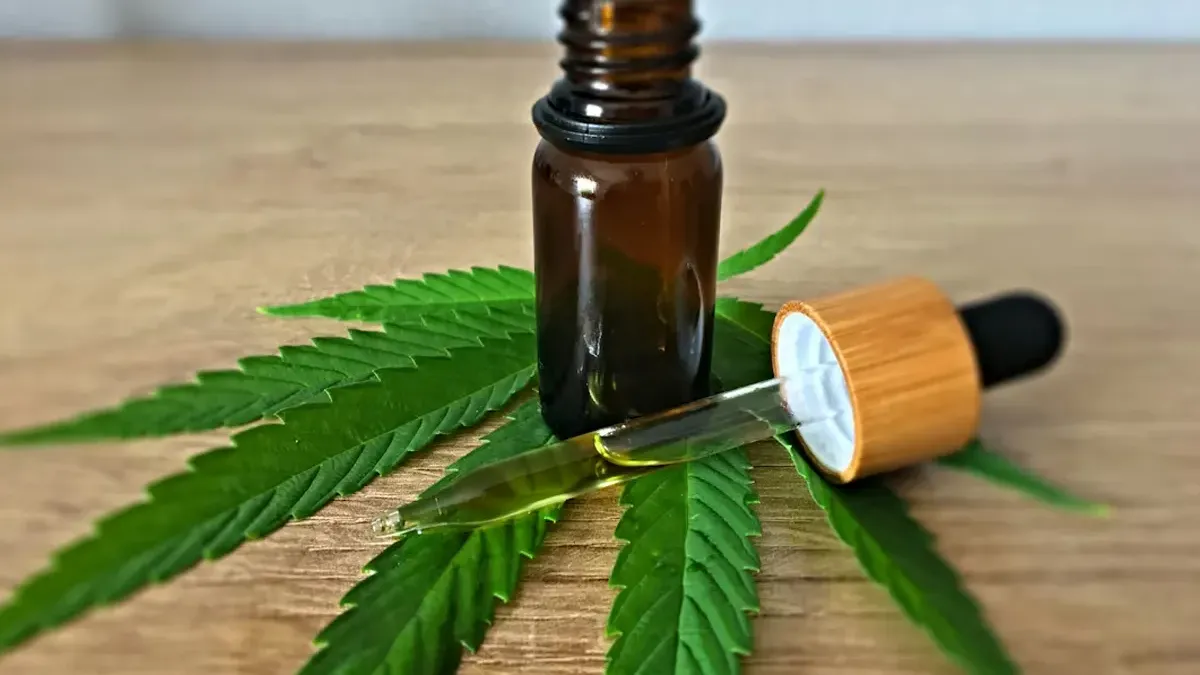
CBD, or cannabidiol, has attracted increasing interest as a possible way to relieve anxiety. It is a cannabis cannabinoid that, unlike THC, does not usually produce the characteristic high.
Possible calming effects are discussed in cannabis communities and research. Some findings are promising, but how strong is the evidence?
Could CBD become part of future anxiety-disorder treatment? Here is what trials show, the possible risks and the relevant legal distinctions in Estonia.
What is anxiety, and when is it a problem?
Anxiety is a natural response to stress and uncertainty. An important meeting, exam or public speaking can cause nervousness, a faster heartbeat and difficulty concentrating.
This response is not inherently an illness. It helps people notice possible threats and prepare for difficult situations.
Problems arise when anxiety is excessive, prolonged or occurs without a meaningful threat, affecting sleep, work, relationships and quality of life.
Common disorders include generalised anxiety disorder, social anxiety disorder and panic disorder. Anxiety is also important in other conditions, such as post-traumatic stress disorder.
Treatments include psychotherapy and medicines. Cognitive behavioural therapy and certain antidepressants, including SSRIs and SNRIs, are particularly well studied.
No approach suits everyone. Some obtain insufficient relief or troublesome adverse effects, prompting research into additional options, including cannabinoids.
What is CBD and how does it work?
CBD occurs naturally in cannabis. Our overview of CBD, CBG and CBN explains cannabinoid differences.
THC acts strongly through brain CB1 receptors and produces characteristic intoxication. CBD acts differently and usually does not produce the same high, but remains biologically active.
Researchers study several pathways, including serotonin signalling and the endocannabinoid system.
The serotonin receptor 5-HT1A, involved in anxiety and stress regulation, attracts particular interest. Laboratory findings suggest relevant effects, but mechanisms in people are more complex and not fully understood.
Research also examines brain regions involved in fear, emotion and threat processing. These findings explain the research interest, but mechanisms alone cannot establish clinical efficacy. Proper trials are needed.
What does the evidence show?
Earlier experiments often studied a single administration and responses to stressors such as public speaking.
Some found reduced subjective anxiety under particular conditions; others found no statistically significant benefit over placebo.
Recent reviews try to assess the overall picture.
A 2024 meta-analysis found promising results
A 2024 Psychiatry Research meta-analysis pooled eight studies involving 316 participants.
It suggested a statistically significant reduction in anxiety symptoms overall, but with substantial uncertainty.
Pooling studies is useful because it goes beyond a single small experiment.
The authors nevertheless highlighted small numbers and differences in CBD amounts, populations and measurement methods.
The analysis therefore suggests potential rather than proving CBD is an effective anxiety-disorder medicine.
Another review found inconsistent results
A systematic review of randomised controlled trials also appeared in Life in 2024.
Some trials showed reduced anxiety, while several found no advantage over placebo.
Study populations differed substantially: some involved diagnosed patients, others healthy volunteers exposed to temporary stress.
These situations are not equivalent. Reducing public-speaking anxiety does not establish long-term treatment of generalised anxiety disorder.
The overall conclusion was cautiously positive about further research, with larger, better-designed trials needed for efficacy and safety.
Could CBD help social anxiety?
Social anxiety is among the more studied areas.
Social anxiety disorder involves substantial fear of being observed or judged, which may lead to public-speaking fears, difficulty interacting or avoidance.
Small studies have sometimes found reduced public-speaking anxiety. Controlled stress tasks help researchers investigate possible effects.
A one-off experiment differs from treating a chronic disorder. Less anxiety on one day does not establish improved long-term mental health with daily use.
This remains a promising research direction rather than an established treatment.
What about generalised anxiety and panic disorder?
Generalised anxiety disorder involves prolonged, difficult-to-control worry about everyday situations.
Panic disorder involves recurrent intense episodes that can include palpitations, breathing difficulties, dizziness and fear.
Preliminary clinical data on CBD exist, but evidence is limited.
Formulations and schedules differ, and strong evidence on long-term effects or comparisons with standard medicines is lacking.
CBD is therefore not currently established as standard anxiety-disorder care. That does not make research pointless; it means evidence is insufficient for firm treatment recommendations.
Do CBD and THC affect anxiety similarly?
Their effects can differ substantially. THC may feel relaxing to one person but cause anxiety, palpitations, paranoid thoughts or panic in another, particularly at higher exposure.
CBD usually lacks THC-like intoxication, and possible anxiety-reducing effects are studied separately.
Some trials examine whether CBD changes THC-related anxiety, with results depending on amounts, route and study conditions.
CBD cannot be assumed to neutralise unwanted THC effects reliably. Nor should all varieties or cannabinoid combinations be treated as equivalent.
Is CBD better than conventional medicines?
Evidence is insufficient to establish greater effectiveness or safety, despite marketing as a natural alternative to antidepressants or sedatives.
Cognitive behavioural therapy and certain antidepressants have been studied in much larger populations and over longer periods. Comparable CBD evidence is more limited.
Natural origin does not automatically reduce adverse-effect or interaction risks. Cannabis compounds are pharmacologically active.
Lack of a characteristic THC high may be a useful distinction, but does not automatically make CBD a better anxiety treatment.
What amounts have researchers studied?
Trials use widely differing amounts, ranging from single administrations to several weeks of use, with many-fold differences between studies.
More does not necessarily mean better. Effects depend on formulation and condition, among other factors. There is no adequately established universal CBD dose for anxiety.
Online milligram schedules and escalation advice are not equivalent to clinically validated guidance.
Purified CBD or standardised medicines used in trials also cannot automatically be equated with commercial products of variable composition and quality.
What adverse effects and risks are possible?
CBD is not risk-free, even when well tolerated. Reports include fatigue, drowsiness, nausea, diarrhoea and appetite changes.
Higher amounts can affect liver enzyme levels. CBD can also alter other medicines’ metabolism, increasing or decreasing their effects.
Prescription medicine users need particular attention, with interactions depending on the medicine and CBD exposure.
Avoid use during pregnancy and breastfeeding because safety information is inadequate. Long-term safety data for adolescents are also limited.
‘Does not cause a high’ is not the same as ‘has no adverse effects’.
Is CBD legal in Estonia?
Its legal position is often misunderstood.
CBD itself is not on Estonia’s narcotic and psychotropic substance list. That does not permit unrestricted sale or marketing of every CBD product.
Composition, origin, manufacturing and intended use affect a product’s status.
CBD supplements and oils
CBD foods and supplements generally fall under EU novel food requirements, requiring appropriate authorisation.
The Agriculture and Food Board explains that foods and supplements containing CBD cannot be sold without required permission. Labelling an ingestible product as an external-use oil does not automatically circumvent its actual intended use.
A listing in an Estonian or foreign online shop does not establish lawful marketing as food.
CBD as a medicine
CBD can also be a medicinal active ingredient.
The authorised medicine Epidyolex is used in Estonia for certain severe epilepsies.
It is not approved as an anxiety treatment. The State Agency of Medicines assesses possible medicinal status product by product, considering composition, effects and intended purpose.
The plant’s 0.3% THC threshold does not automatically authorise every extract, oil or derivative.
Our 2026 Estonian cannabis law guide provides more detail on cannabis, CBD and other cannabinoids.
Why does scientific research matter?
Strict drug policies historically complicated some research into cannabis’s medical potential.
Conditions have changed in several countries, allowing more evidence to accumulate.
Another area is cannabis and migraine, covered in our overview of recent clinical studies.
Anxiety research illustrates why medical questions should guide investigation rather than prejudice about cannabis.
If a cannabinoid proves effective and safe for a particular disorder, it could expand options for people insufficiently helped by existing care.
Unexpected or negative results must also be accepted: that is part of building reliable knowledge.
A cannabis-friendly outlook and critical scientific thinking are compatible.
Frequently asked questions
Does CBD help anxiety?
Some trials and reviews suggest reduced anxiety under certain conditions. Findings remain inconsistent and insufficient to establish CBD as standard treatment.
Does CBD cause intoxication?
CBD does not usually produce THC’s characteristic high, but it is not inactive or free of adverse effects.
How quickly might CBD affect anxiety?
No universal onset time for anxiety relief is established. Different formulations and routes prevent a reliable promise for everyone.
Can CBD be taken with antidepressants?
CBD can affect medicine metabolism. Discuss antidepressant or other prescription combinations with a doctor or pharmacist.
Is CBD oil legal in Estonia?
CBD itself is not scheduled, but not every oil is permitted. Foods and supplements must meet novel food requirements.
Can CBD replace anxiety medicines?
Evidence does not support broadly replacing established care with CBD. Treatment changes should be made with a healthcare professional.
Summary: does CBD have a future in anxiety treatment?
Anxiety is an interesting cannabinoid research area, with promising trials and plausible biological mechanisms.
Evidence is not yet strong enough to establish an effective anxiety medicine. Larger, longer, better-controlled studies must assess both benefit and safety.
Medical potential should neither be dismissed nor exaggerated. Both extremes hinder useful discussion.
Supporting research, transparent regulation and access to properly assessed treatments offers a more constructive approach.
That could also support more open, evidence-based cannabis policy in Estonia.
Our overview of earlier CBD and anxiety research discusses additional findings and limitations. CBD does not replace evidence-based anxiety care.