
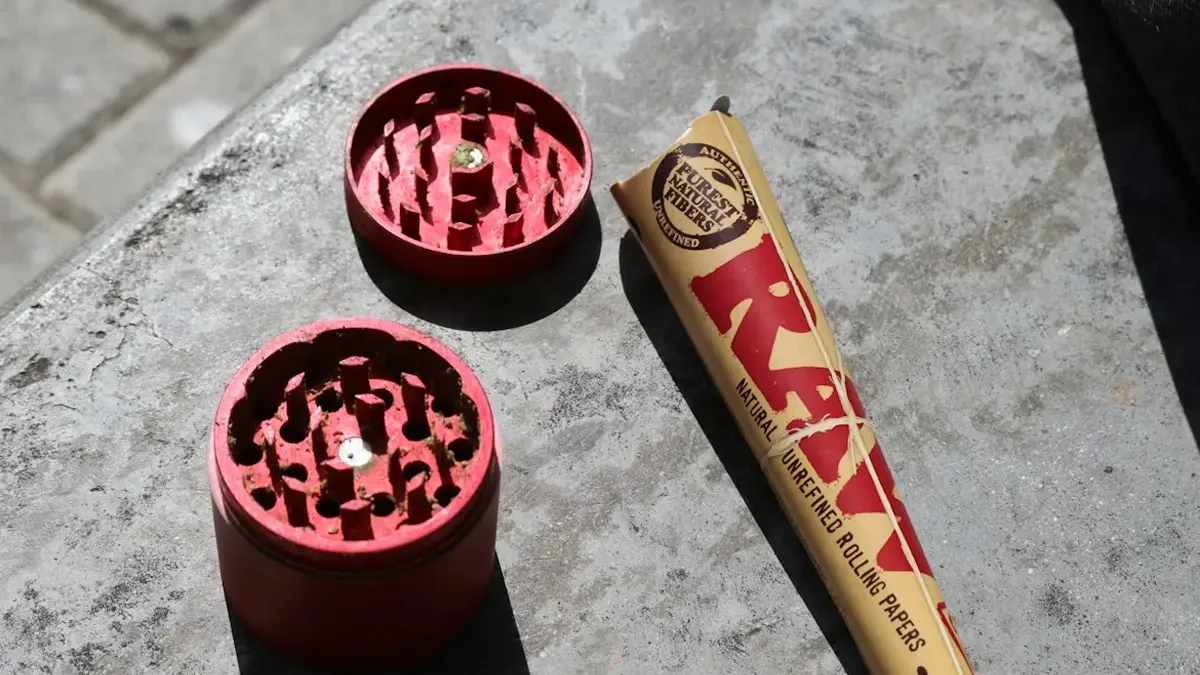
A grinder breaks cannabis flower into smaller pieces. Material, tooth design and ease of cleaning affect how comfortable it is to use. An inexpensive model may do the job, but poor teeth, sticky threads or an awkwardly small chamber can make a simple task frustrating.
A good grinder produces an even texture, turns smoothly and lasts with normal maintenance. Greater weight, larger dimensions or four-piece construction do not automatically mean better quality.
Focus on material, size, number of sections, tooth design and cleaning access.
Why use a grinder?
Flower can be broken apart by hand, but a grinder makes the process faster and more consistent. An even texture is easier to handle across the batch.
It also reduces contact between fingers and sticky flower, a practical difference with resinous material.
For regular use, convenience is the main benefit: place the material inside and turn the lid.
Two, three or four pieces?
The section count mainly indicates where ground material goes and whether there is a separate screen.
Two-piece grinder
The simplest design has upper and lower halves. Material sits between the teeth and remains in that chamber after grinding.
Its strengths are simplicity, compact size, low cost and fewer parts to clean.
The drawback is having to remove material from between the teeth. It suits someone seeking a simple design or a small pocket grinder.
Three-piece grinder
A three-piece model has holes beneath the grinding chamber. Material falls into a collection chamber once small enough, separating it from the teeth.
For many people, this is a practical compromise: simpler than four pieces and more convenient than two.
Four-piece grinder
A four-piece grinder adds a fine screen beneath the collection chamber and another chamber below. Some trichomes and fine particles pass through over time. The collected powder is commonly called kief.
Four pieces make sense if separate kief collection matters. Otherwise, the additional section does not automatically improve the grinder.
Is a four-piece grinder always best?
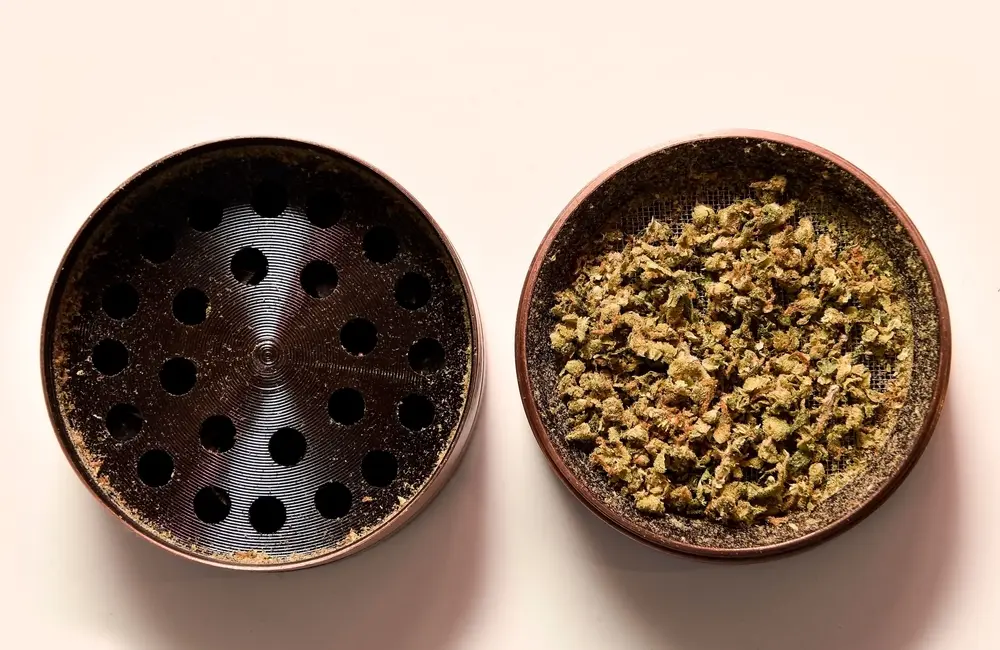
Not necessarily. An earlier version of this guide recommended four-piece models for most people, but the choice depends on the user. A well-made two- or three-piece model may be easier to maintain. Choose four pieces for separate kief collection; overall construction matters more than section count.
Which material should you choose?
Common options include acrylic, metal alloys, aluminium and wood.
Acrylic and plastic
Plastic models are inexpensive, sometimes costing only a few euros. They can suit occasional use or a minimal budget.
Durability is the main drawback. Teeth and connections can wear or break, and very sticky material can make operation difficult.
Plastic can be a reasonable temporary or spare option; metal is generally worth considering for regular use.
Zinc alloy
Zinc-alloy models are usually heavier than aluminium and feel substantial.
They can offer robust metal construction at a modest price, but quality varies. The words zinc alloy alone do not establish quality.
A well-made example can balance price and durability effectively.
Aluminium
Aluminium is popular because it is relatively light and strong and allows precise teeth and connections.
A good aluminium grinder generally offers smooth movement and lower weight than a similarly sized heavy-alloy model.
They still vary: inspect tooth shape, surface finish and threads as well as material.
Wood
Wooden grinders are often chosen for appearance and feel.
Construction differs substantially, with metal teeth in some models and other grinding mechanisms in others.
Wood needs appropriate cleaning and should not simply be soaked in a strong solution. When comparing metal models, consider diameter, tooth design and how the parts fit together.
What size should you choose?
Diameter is usually stated in millimetres. Common sizes are roughly 40–63 mm.
40 mm: small and compact
A 40 mm model fits easily in a pocket and can be sufficient for small amounts.
Larger amounts simply require more frequent refilling.
Around 50 mm: a versatile size
Around 50 mm offers a balance of capacity, size and weight. It is a reasonable starting point without a strong size preference.
That does not mean it suits ‘99% of people’; it is simply a useful compromise between compactness and capacity.
60–63 mm and larger
Large models hold more material and a wider lid may be easier to turn. Their drawbacks are bulk and weight: a 63 mm metal grinder is less pocket-friendly. At home, the extra capacity may be convenient.
Why does tooth shape matter?

Diamond-shaped teeth are common, alongside other designs. A grinder should cut and break flower into relatively consistent pieces rather than merely flattening it between surfaces.
Widely spaced teeth may leave a coarse result; very close spacing may clog faster with sticky flower. There is no magical ideal tooth count: the whole design matters.
Magnetic lids
A magnetic lid is a useful feature on a metal grinder. It holds the top in place without threading it on each time, speeds opening and reduces the chance of the lid falling off in a bag.
A magnet alone does not establish quality, but it is practical on a well-made model.
Friction rings
Many metal grinders have a thin plastic or nylon ring between the upper halves. It reduces metal-to-metal contact and helps the lid turn smoothly without scraping.
Why inspect the threads?
Three- and four-piece chambers are usually threaded together. Poorly made threads can cross-thread, jam or become loose.
Check how the lower sections open and close. They should turn smoothly without force. How the parts fit matters more than a marketing term such as ‘CNC’.
Do you need a kief catcher?
No. The screen is an extra function, separating some fine material into a lower chamber. It is useful for separate collection; a three-piece design may make more sense if you prefer keeping everything together.
A finer screen is not automatically better. Very fine mesh can clog faster with resin, and screen quality varies.
How much should a grinder cost?
Good results do not necessarily require a large budget. Basic plastic models can cost a few euros, while the €10–€20 range includes many metal designs. Above that, material, size, design, brand and precision influence cost.
A €20–€30 model is not automatically a lifetime product, nor is a €10 one automatically poor. Check movement, teeth, threads, size and whether a screen is useful before paying more.
What suits a beginner?
An expensive model is unnecessary at the start. A metal grinder around 50 mm with three or four pieces is a reasonable starting point: three for simplicity, four for separate kief collection.
A low-cost plastic model may also be sufficient initially, although it is unlikely to match a good metal model’s service life.
What suits frequent use?
Prioritise solid metal construction, a smooth magnetic lid and good threads. Around 50 mm is compact and versatile; 60–63 mm offers more capacity.
Four sections are not essential. An excellent three-piece model can be a better purchase than an average four-piece one.
What suits a pocket or travel?
A 40 mm model has a portability advantage. A small two-piece metal grinder takes little space, while small four-piece versions also exist for those wanting a screen. Smaller chambers hold less material.
What about distinctive designs?
A grinder need not be a plain grey disc. Options include:
- coloured models;
- engraved designs;
- square grinders;
- transparent models;
- different artwork and logos;
- large models above 60 mm.
If the basic construction is sound, appearance is a reasonable preference too. An accessory used for years can also be something you enjoy looking at.
How should a grinder be used?
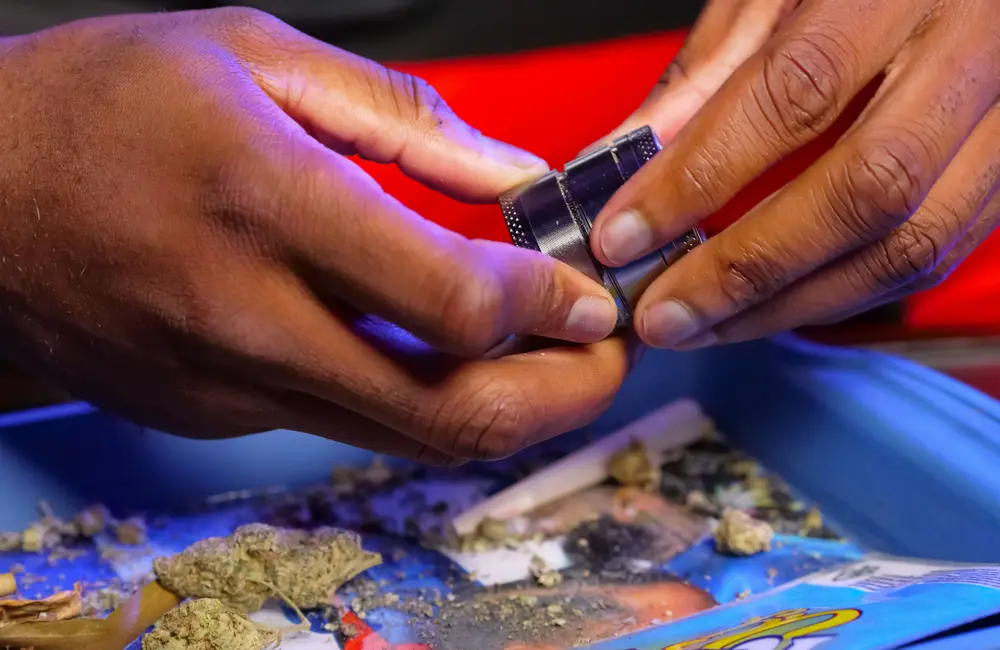
Avoid overfilling: teeth need room to move material. Remove large, tough stalks, which do not break down like flower and can obstruct a small mechanism.
Place smaller pieces between the teeth and turn the top back and forth without forcing it. Difficulty turning is often a sign that cleaning is needed, rather than a reason to apply more strength.
When should it be cleaned?
A fixed calendar is unnecessary. Clean when:
- turning becomes harder;
- teeth are heavily coated in resin;
- threads become sticky;
- the screen no longer passes fine material effectively.
Maintenance frequency varies, with particularly sticky flower producing deposits faster.
Basic cleaning
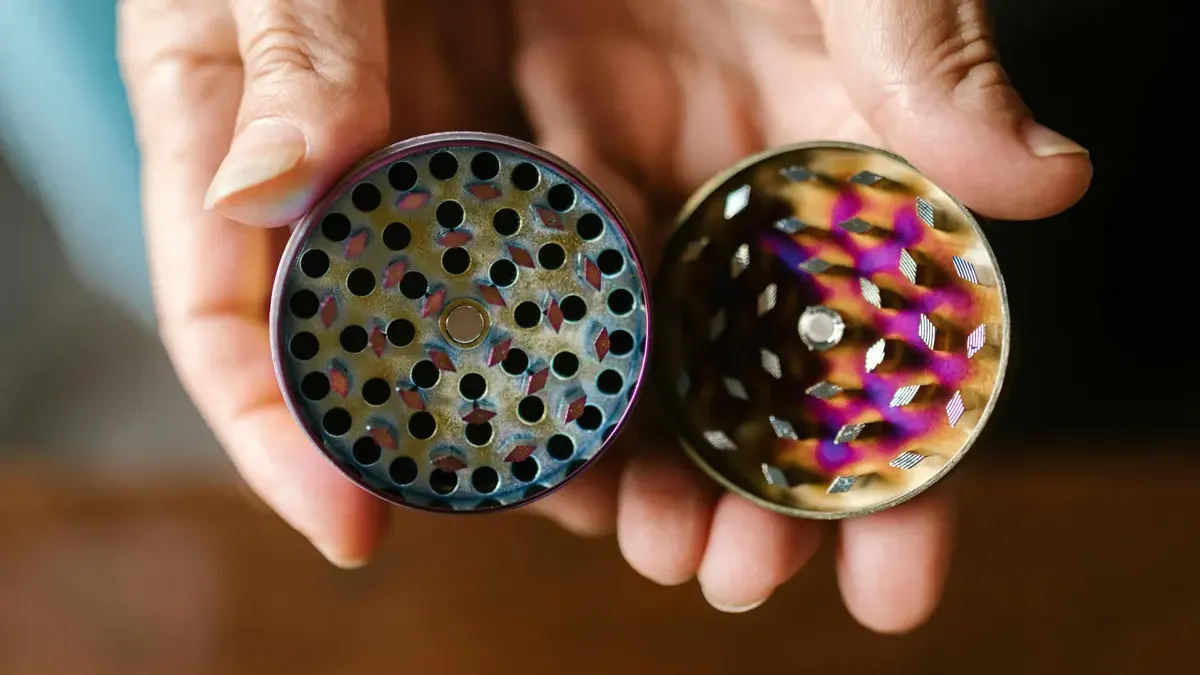
Dismantle the grinder and brush away loose dry material first. A small firm brush or clean old toothbrush can help.
Isopropyl alcohol may suit resinous metal parts, but check the finish and manufacturer guidance. Strong solvents can damage painted or coated surfaces. Keep flammable cleaners away from heat and ignition sources.
Do not automatically soak plastic or wooden models in alcohol. Follow material-specific instructions. Brief chilling can make deposits more brittle where the manufacturer permits it; avoid moisture or temperature treatment unsuitable for the particular construction.
After wet cleaning, let every part dry fully before reassembly. Our separate guide explains how to clean a grinder quickly.
When should an old grinder be replaced?
A used appearance alone does not require replacement. Consider it when:
- teeth are damaged;
- the magnet no longer holds properly;
- threads are worn;
- jamming persists after cleaning;
- plastic components are cracked;
- the screen is damaged beyond repair.
A well-made metal grinder can last a long time with normal care.
Plastic or metal?
Plastic if minimum cost is the main priority.
Metal for regular use.
Metal usually costs more but offers better durability, stronger teeth and smoother construction. Plastic can still be a practical inexpensive backup or portable option.
Three or four pieces?
Three for simplicity; four for separate kief collection.
Do not choose four merely for the extra section. Overall quality matters more.
40, 50 or 63 mm?
40 mm is compact; around 50 mm is versatile; 60–63 mm offers more room. The best size depends on how much you grind and whether it travels with you or stays at home.
Where can grinders be bought in Estonia?
Estonian headshops offer plastic, wood and metal grinders in different diameters and two-, three- and four-piece designs, with differences extending beyond colour.
When comparing prices, consider materials, dimensions, build quality and ease of cleaning. A higher price alone does not establish better quality.
In-person comparison can make size differences clearer than product photographs. A 40 mm and 63 mm model can look similar on screen but feel very different in the hand.
Quick comparison
Lowest cost:
a simple plastic grinder.
Versatile general use:
a metal three- or four-piece model around 50 mm.
Pocket size:
a 40 mm two- or three-piece grinder.
Separate kief collection:
a four-piece model with a screen.
Greater capacity:
a 60–63 mm model.
Long-term use:
well-made metal construction, a secure magnetic lid and smooth threads.
Summary
There is no single best model. Choose size and construction for your needs: a compact 40 mm two-piece design may suit one person, while another prefers a large four-piece model.
Around 50 mm in metal is a useful general starting point. Then decide between a simpler three-piece design and a separate-screen four-piece model. Metal generally suits regular use, while inexpensive plastic can still serve a purpose.
The best grinder is not necessarily the biggest or most expensive. It is comfortable, consistent and manageable to clean. If assembling an initial accessory kit, see our beginner’s cannabis accessory guide.