
Europe’s cannabis culture has changed considerably. Amsterdam is no longer the only city associated with it. A cannabis-friendly reputation does not mean unrestricted purchase or use, however. Germany has allowed limited personal cultivation, Malta has established regulated associations and Czechia took a significant step towards permitting personal use in early 2026.
Distinct cultures have developed across cities. Barcelona has social clubs, Zürich studies controlled sales through research projects, and Lisbon represents decades of policy focusing more on health than criminal punishment of users.
A welcoming culture does not necessarily mean legal purchases. Some places permit home growing but prohibit retail sales; others have well-known clubs with disputed legal positions. Some systems serve residents rather than visitors.
Here are eight cities and urban areas notable for their culture, policy changes or regulatory experiments.
Amsterdam, Netherlands: a symbol of European cannabis culture
Amsterdam remains the best-known name. Its coffeeshop culture developed over decades and became part of the city’s international identity, associated with alternative culture, tourism, music and tolerance.
Cannabis culture is visible rather than entirely hidden. Coffeeshops operate in the streetscape under local rules.
Is cannabis legal in Amsterdam?
Dutch policy is known as gedoogbeleid, or tolerance policy. Production, possession and sale are generally prohibited by law, but small sales in compliant coffeeshops are normally not prosecuted.
Conditions include no sales to minors, no drug advertising and no more than five grams sold per person in a transaction. Personal possession up to five grams is also generally tolerated.
This is not full legalisation. A longstanding contradiction has been tolerated retail sales without equivalently regulated supply to coffeeshops.
The Netherlands is now also testing controlled supply chains to study regulated production and distribution.
What should visitors know?
National rules specify a resident requirement, but local enforcement differs. Tourist access has been widespread in Amsterdam in practice. The city has also restricted disruptive tourism, including cannabis smoking on specified public streets in the historic centre.
Amsterdam remains a major cultural centre, but tolerance does not mean unrestricted use.
Barcelona, Spain: a centre of cannabis social clubs

Where Amsterdam centres on coffeeshops, Barcelona has a strong history of membership-based associations. The social club concept brings adult users together in a private nonprofit community.
These associations have long formed part of alternative culture and policy debate, including user rights and regulation outside conventional commercial markets.
Are Barcelona’s cannabis clubs legal?
Their popularity can conceal legal complexity. Private personal adult use is not inherently criminal in Spain, but public consumption or unlawful possession can attract substantial administrative fines.
Case law has shaped clubs for years. Courts have limited large-scale collective cultivation and distribution, particularly where activity resembles commercial sales.
Barcelona has tightened oversight in recent years. Several clubs closed in 2025, with disputes and inspections continuing in 2026. Many associations still operated, but a club is not equivalent to a nationally licensed cannabis shop.
Why include Barcelona?
Barcelona’s significance extends beyond availability: it has been a major centre for associations, activism and regulatory debate, influencing discussions of nonprofit models elsewhere.
It illustrates how strong culture can coexist with uncertain legal boundaries. Our article ‘Is Cannabis Legal in Spain? What Estonian Visitors Should Know’ explains the rules and visitor restrictions.
Berlin, Germany: a centre of European reform
Berlin’s alternative reputation predates reform. Clubs, art, music, social movements and open debate have shaped its identity.
Germany’s policy change therefore fitted its image. A new law took effect in April 2024, allowing limited adult possession and home cultivation under conditions.
What does German law allow?
Adults may possess up to 25 grams in public and 50 grams of dried cannabis at home. Adults resident in Germany for at least six months may grow up to three plants at their residence.
Compliant nonprofit cultivation associations may supply registered members. Members must be at least 18 and have resided or habitually stayed in Germany for at least six months.
The system is therefore not designed to serve cannabis tourists.
Is Berlin the new Amsterdam?
Not really.
Germany did not create an open retail market comparable with Dutch coffeeshops.
Berlin’s significance lies more in expanded personal-use rights and their cultural effects. Public-use restrictions remain, particularly near childcare facilities, playgrounds and other protected locations.
Germany’s size and influence make the reform important across Europe, where its operation is being closely watched.
Valletta and Malta’s urban areas: pioneering European reform
Malta has had an influence beyond its size. A December 2021 reform allowed limited personal adult use and nonprofit cannabis associations.
The regulator ARUC describes this as partial decriminalisation with regulated access, rather than full legalisation.
What are Malta’s rules?
Under conditions, adults may possess up to seven grams in public, grow up to four plants per household and keep up to 50 grams of dried cannabis at home. Registered nonprofit associations provide regulated access to eligible members.
Public consumption is not freely permitted and can attract a fine.
Can tourists join Maltese cannabis associations?
No. ARUC explicitly states that tourists cannot join licensed associations. Membership requires proof of Maltese residence. Reform did not create tourist-facing cannabis shops.
Why include Valletta?
The change is national, rather than limited to Valletta. Associations operate in different areas, and culture extends to Sliema, St Julian’s and other towns. The capital serves as a symbol of the reform.
Malta’s main significance is establishing a clearer regulated framework for adults’ personal use.
Luxembourg City: a quiet but important reform
Luxembourg is not known for cannabis tourism or a large club scene, but its capital represents an important policy change. The country was among the first EU states to permit limited home cultivation and private consumption by adults.
What does Luxembourg allow?
Up to four plants per household may be grown at a home or habitual residence, out of public view.
Private consumption of home-grown cannabis is allowed. Public use, possession, transport and acquisition are not permitted on the same basis. Simplified penalties for up to three grams do not make those activities legal.
Why does this reform matter?
This shows that reform need not begin with retail sales. Luxembourg initially focused on home growing and personal use, leaving commercial sale tightly restricted.
Its culture may be less visible than Amsterdam’s or Barcelona’s, but the legal distinction between personal activity and commercial distribution matters in Europe.
Zürich, Switzerland: testing future regulation
Switzerland is outside the EU but prominent in European policy experiments. Zürich, Basel, Lausanne and other areas host scientific pilots studying regulated sales.
The Federal Office of Public Health has authorised several projects to examine health, consumption habits, illegal markets and public order under different distribution models.
How do the Swiss pilots work?
Eligible adult participants obtain quality-controlled products through legal channels, including pharmacies, specialised outlets or nonprofit associations, depending on the project.
Scientific evaluation is central: researchers examine whether access reduces illicit supply and how it affects use and health behaviour.
Early official overviews covered about 10,500 participants across seven pilots. Initial findings indicated satisfaction with controlled quality, with legal channels becoming the main source for many participants.
These are preliminary results, rather than proof that every model will perform identically over time.
Can tourists buy cannabis in Zürich?
Participation requires local cantonal residence and compliance with study conditions. Tourists cannot simply arrive and enrol to buy cannabis. Zürich’s importance is the attempt to shape policy using controlled evidence rather than assumptions.
Lisbon, Portugal: decriminalisation and health-centred policy
Since 2001, Portugal has generally treated possession of small quantities for personal use as an administrative and health matter rather than a criminal offence.
This includes cannabis, but decriminalisation is not legalisation.
Is cannabis legal in Portugal?
No general legal recreational retail market exists. Small personal possession may lead to administrative proceedings, but is normally distinguished from trafficking.
Unlawful sale and distribution remain punishable. Decriminalisation also does not permit unrestricted public consumption.
What makes Lisbon different?
Lisbon represents the broader policy shift towards treatment, prevention and harm reduction, reducing the role of criminal punishment for users.
This has influenced debate worldwide. Portugal differs from Malta and Germany, demonstrating a changed approach to users without legalising a commercial market.
That is why Lisbon belongs in this overview.
Prague, Czechia: a new phase in 2026
Prague has long been associated with alternative culture, music, nightlife and relative tolerance.
Personal use and cultivation have been debated in Czechia for decades.
A significant amendment took effect in January 2026, making the country a notable reform example.
What does the Czech reform allow?
Adults over 21 may grow up to three plants for personal use under specified conditions.
They may also keep up to 100 grams at home and 25 grams outside it.
These limits are subject to statutory conditions. Exceeding them can result in administrative or criminal liability. Unlawful sale and supply remain prohibited, so Prague has not gained an unrestricted recreational retail market.
What does reform mean for Prague?
The reform gives personal use a clearer legal framework, adding a concrete change to Prague’s existing cultural reputation.
Unlike Amsterdam, the model does not centre on coffeeshops; unlike Zürich, it is not solely a research pilot. Czechia focused on personal growing and limited possession, making it important for observers of European policy.
What about Copenhagen and Christiania?
Copenhagen often appeared in such lists, especially Christiania, whose Pusher Street symbolised illicit cannabis trading for decades. In April 2024, residents began physically redesigning the street to end organised dealing and reduce violence.
This was significant for the community and its cannabis history. Christiania remains important to alternative culture, but the old image of an unrestricted market no longer describes the situation.
Copenhagen is therefore not among the eight main entries here.
Which cities are really the most cannabis-friendly?
No objective ranking captures every meaning of the term. For public culture and recognition, Amsterdam remains prominent.
Barcelona stands out for association history and community organisation. Berlin, Prague, Malta and Luxembourg represent personal-use reforms; Zürich represents research pilots; Lisbon symbolises a more health-centred, less punitive approach. Their differences make the map interesting.
A city can be culturally open but legally restrictive, or legally progressive without a visible tourism or club scene.
What should Estonian visitors know before travelling?
Rules vary more than they may appear. One country may allow growing but not purchases; another may have licensed associations restricted to residents.
Elsewhere, small possession may be decriminalised while public consumption remains punishable. A country’s domestic rules do not create a right to carry cannabis across borders.
An activity permitted privately may still be prohibited in streets, parks, hotels or public events. Exploring culture can also mean organisations, exhibitions, communities and businesses discussing history, policy, industry and society, rather than consumption.
Our article ‘Cannabis: What It Is, How It Works and What You Should Know’ covers the plant’s history, compounds and uses.
How does Estonia fit into these changes?
European reforms provide useful comparisons for Estonia, where nonmedical use and possession remain restricted while public debate continues.
Examples help assess the opportunities and problems of home cultivation, decriminalisation, nonprofit associations and regulated sales. The models differ and do not offer identical answers.
They show alternatives to blanket prohibition. Discussion can also be followed in the Kanep legaalseks Facebook group and 420Eesti Reddit community, which share news, policy debate and experiences.
Summary: Europe’s cannabis map is changing
Cannabis friendliness is no longer measured only by coffeeshops. Amsterdam retains its historical place, while Berlin, Prague, Malta, Luxembourg and Swiss cities illustrate different changes.
Barcelona highlights clubs’ possibilities and legal contradictions. Lisbon shows that policy change can mean fewer penalties and greater attention to health. Cannabis has become part of public, scientific and political discussion rather than only a hidden subculture.
Europe is not moving towards one model. Different experiments will shape future debate. Following them helps Estonia compare both benefits and limitations.
Cannabis-friendly Europe is a changing map of cultures, communities and countries seeking different answers, rather than one city or one law.
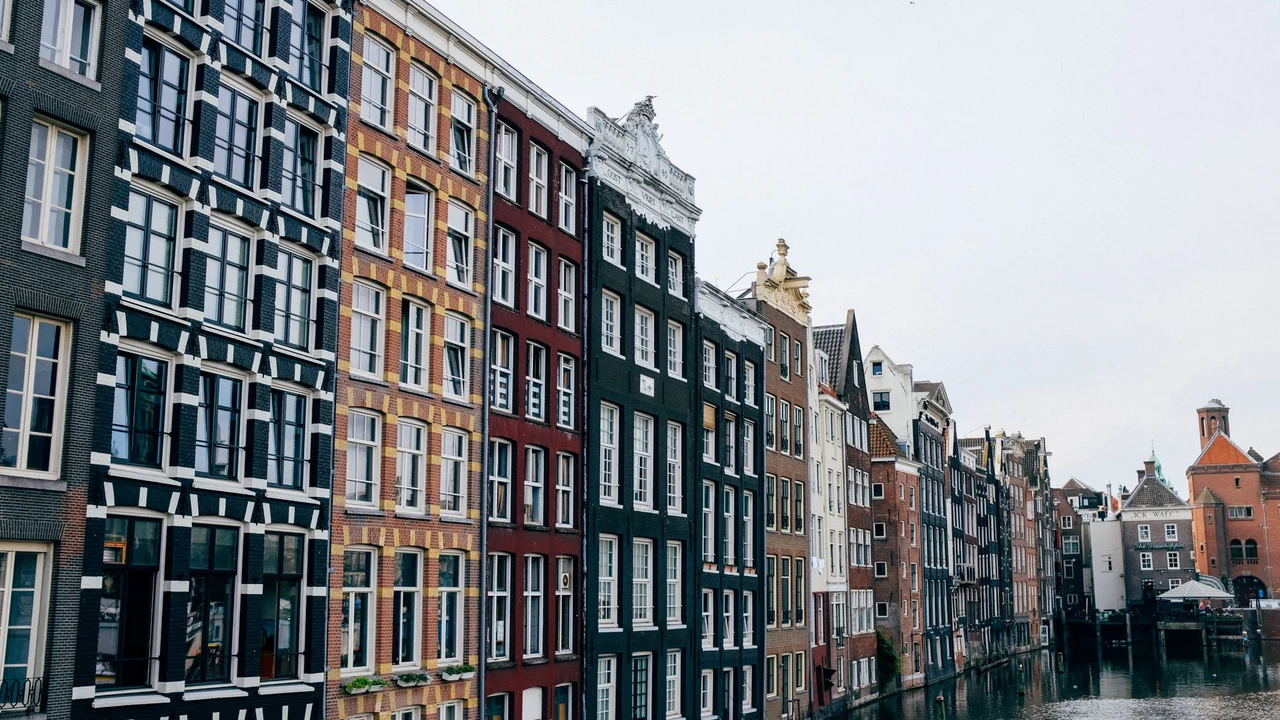
Illustrative featured photo: Adrien Olichon / Pexels (Pexels License). Cropped to 16:9.
For Germany, see our article on its cannabis law and restrictions in 2026. Inclusion in this comparison does not imply that retail sales are permitted everywhere.