
Forensic testing found a prohibited semi-synthetic cannabinoid in a CBD joint sold in Tallinn’s Old Town. Estonia’s Poison Information Centre recorded reports describing health complaints involving 26 people across a group of related incidents in August and September 2026. Police have opened an investigation.
What did the laboratory find?
According to Estonian public broadcaster ERR’s report of 19 November, the Estonian Forensic Science Institute examined a CBD-containing joint referred to as CBCX60%. Testing found 11% CBD and 0.32% THC. It also detected a semi-synthetic cannabinoid classified as a new psychoactive substance, about whose effects and health risks relatively little is currently known.
Katri Abel-Ollo, head of the drug field at Estonia’s National Institute for Health Development (TAI), explained that semi-synthetic cannabinoids were added to Estonia’s list of controlled narcotic and psychotropic substances in August 2026. The product therefore contained a controlled substance that could not legally be marketed in this way. TAI also noted that, taking analytical uncertainty into account, its THC concentration might have been at a level not permitted under Estonian rules. The reported 0.32% figure alone should not be presented as a final legal determination.
Health complaints involving 26 people
According to the Poison Information Centre, between 21 August and 21 September 2026 at least 10–12 related incidents were documented, with complaints involving a total of 26 people. All incident descriptions mentioned cannabis-like products purchased from the CBD Italy shop in Tallinn’s Old Town. Products were referred to by names including CBCX60% and “the Old Town CBD shop joint.”
Reported symptoms included hallucinations, paranoia, confusion, impaired consciousness, aggressive behaviour, uncontrolled vomiting, severe tremors, palpitations and increased blood pressure. In one case, a person who had smoked the product developed a seizure, involuntary urination and prolonged confusion and subsequently sought emergency medical care.
TAI described an unusually long duration in some cases. Impaired consciousness reportedly lasted over 36 hours in some individuals, sleep periods of 24–30 hours were described, and complaints could persist for days or even several weeks.
Important distinction: the figure of 26 people comes from linked reports made to the poison information service. The public evidence does not establish that the individual product used by each person was separately laboratory-tested, or that every reported symptom was definitively caused by the exact compound detected in the tested sample.
Police are investigating how the products reached the market
Artur Kamnerov, head of the North Prefecture’s narcotics and organised crime unit, told ERR that the real ingredients and effects of products sold as cannabis-like substances may be unknown to both customers and retailers. Police are investigating how the products reached the Estonian market and who was responsible for their distribution.
An investigation is not a finding that a retailer or any individual has committed a crime. Nor do the published facts establish a connection between this case and any other incident involving a cannabis-related shop in Tallinn.
What should consumers know?
A CBD label or the fact that an item is sold openly does not guarantee that its contents match its description. Particular caution is warranted with unfamiliar products bearing unclear cannabinoid names or ingredient claims. For background, see our guide to cannabis laws in Estonia and our overview of cannabis effects and risks.
For suspected poisoning in Estonia, contact the Poison Information Centre on 16662. For seizures, severe loss of consciousness, breathing difficulties or another immediate emergency, call 112.
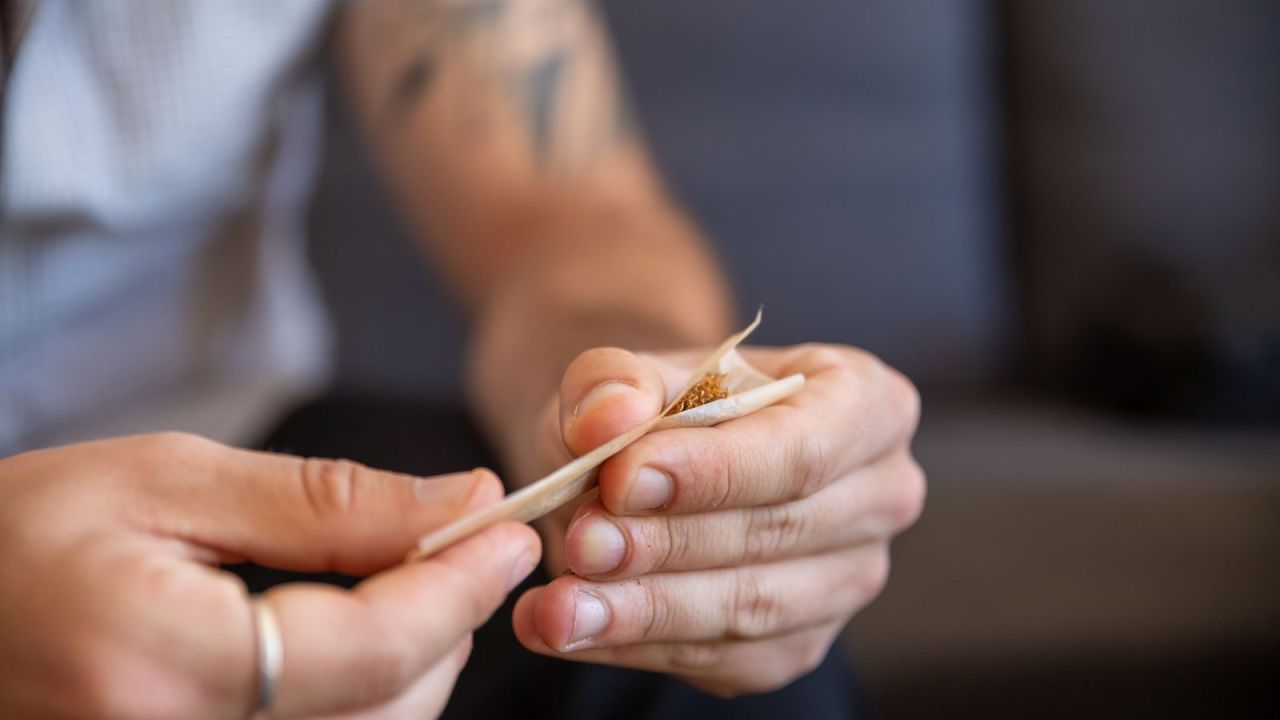
Featured image: an illustrative stock photograph of someone preparing a cannabis joint. It does not show the CBCX60% product, the CBD Italy shop or the reported incidents. Photo: Kampus Production / Pexels, Pexels License; cropped to 16:9.