
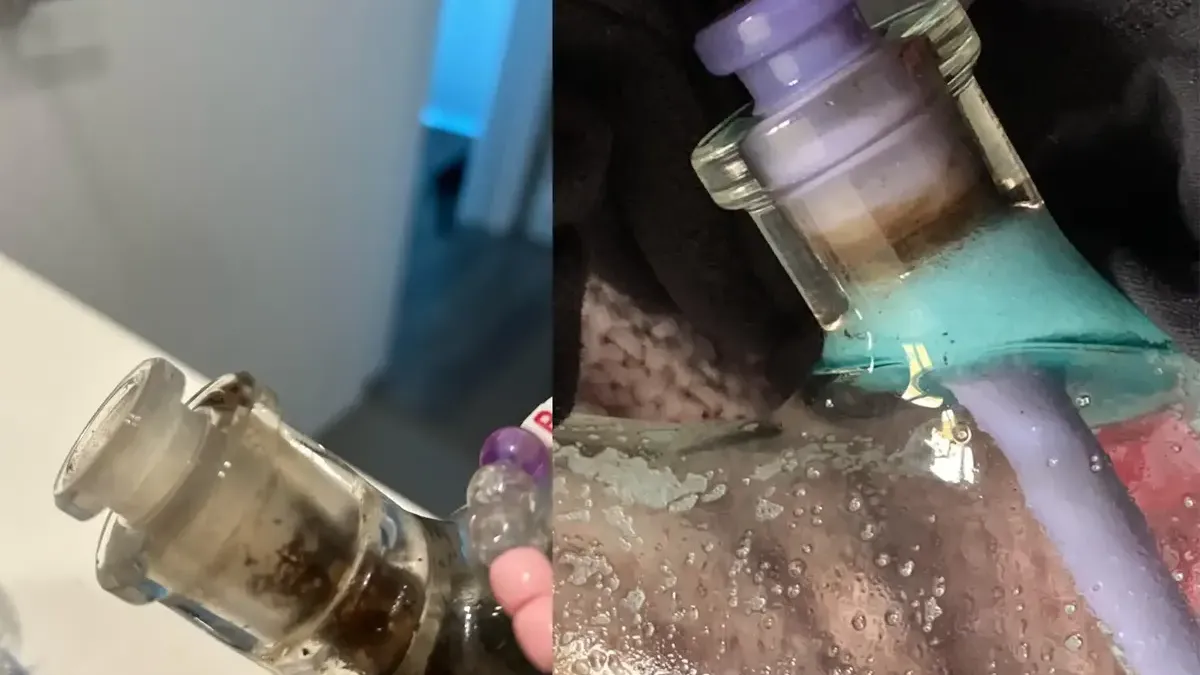
A stuck downstem is common: resin can bind the glass joint together. Work carefully to avoid breaking the glass. Patient cleaning and gentle handling may resolve it without force.
Prepare the bong
Empty the water and dry around the joint. Put the bong on a stable surface and wear rubber gloves for grip. Remove a detachable bowl first.
Soften resin around the joint
If compatible with the manufacturer’s care instructions, apply a little 70–99% isopropyl alcohol around the downstem joint and leave for 2–5 minutes. Gently twist or rock it through a very small range. The aim is to loosen resin rather than jerk the joint apart. Isopropyl alcohol is flammable: keep it away from flames, sparks and heat.
Temperature differences require caution
Only after removing the solvent and rinsing thoroughly, a cool cloth around the downstem and gently warm water around the outer joint may help create a small temperature difference. Avoid boiling water and sudden changes, which can fracture glass. Do not use a hairdryer, flame or other heat source around alcohol or its vapour.
Soaking
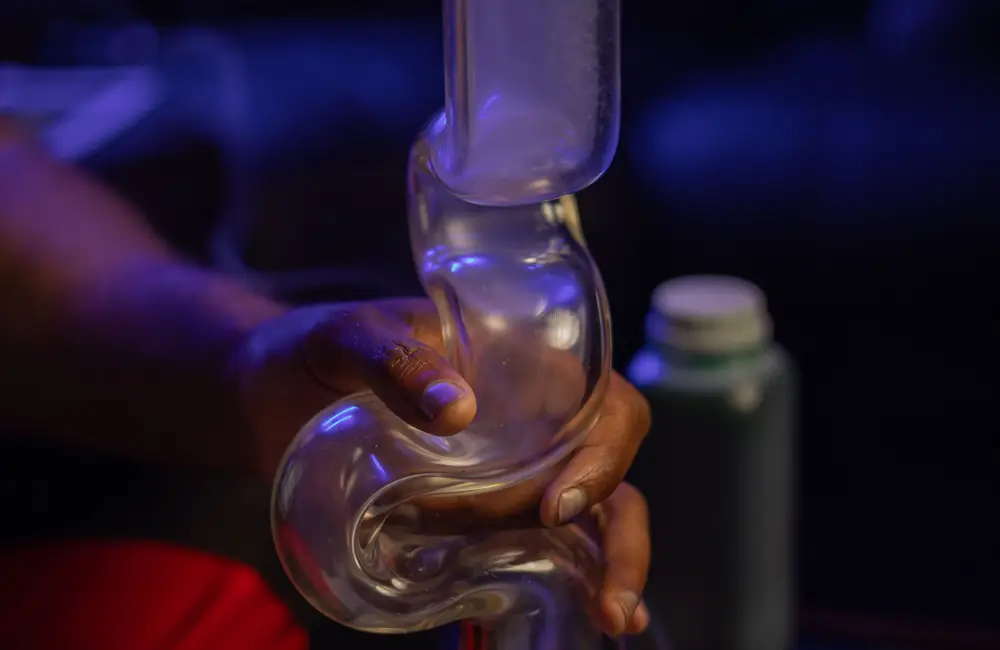
Where the manufacturer’s instructions allow, position the joint area in a shallow container of isopropyl alcohol, leaving other components clear. After 5–10 minutes, try gentle movement again. Keep solvent work ventilated and away from ignition sources. Avoid striking the glass; stop rather than increasing force.
Improve grip
A thick rubber band around the downstem collar can improve controlled grip. Avoid metal pliers or pulling at full force. Breakages often happen when a hand slips or force is applied at an angle.
Downstems with rubber or silicone grommets
For a compatible grommet fitting, moisten the seal with warm soapy water and use gentle twisting with an even pull. Rinse away soap afterwards. Check material compatibility before using solvents on seals.
When to stop
Stop immediately if you notice a fine crack or hear cracking. Seek specialist advice rather than risking a broken joint and cuts.
Preventing future sticking
Clean the downstem and joint using a product suitable for the materials, rinse and allow them to dry fully. Use a joint lubricant only if specifically recommended by the manufacturer, sparingly and away from surfaces exposed to heat or the smoke path. Do not assume an ordinary food-grade oil is suitable for every application.
Brief FAQ
Can household oil or aerosol lubricant be used? Avoid petroleum-based household products, which can leave residues and odours.
Can warm water alone help? Modest temperature differences may help after all solvent is removed; avoid sudden thermal changes.
How much force? Only gentle, controlled movement. Stop at any sign of cracking.